Advanced Solid Electrolyte for High-Performance Batteries
The invention presents an innovative approach to solid electrolytes, addressing critical challenges in lithium-ion battery (LIB) performance, manufacturability, and compatibility with battery components. An ionogel based on a liquid electrolyte confined in a solid matrix is a promising type of solid electrolyte. To be used in commercially viable processes, the ionogel should however combine good functional properties, manufacturability and compatibility with the other battery materials. Current state-of-the-art technologies cannot meet all of these criteria.
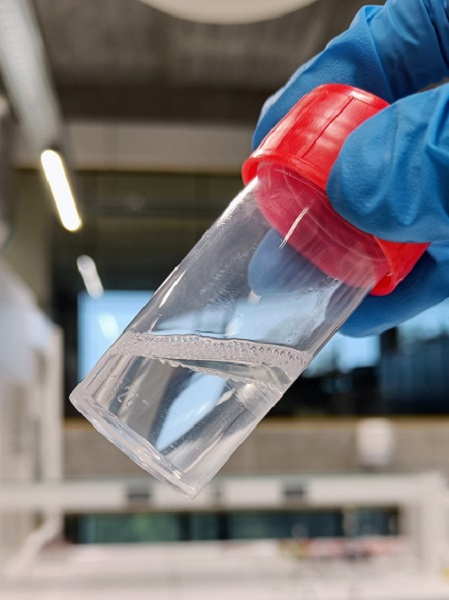
The current innovative solution developed by IUMAT (the joint research institute of Hasselt University and imec), centers on a specially formulated liquid precursor capable of rapid, controlled solidification into a highly conductive, stable, and compliant solid electrolyte.
Key innovation
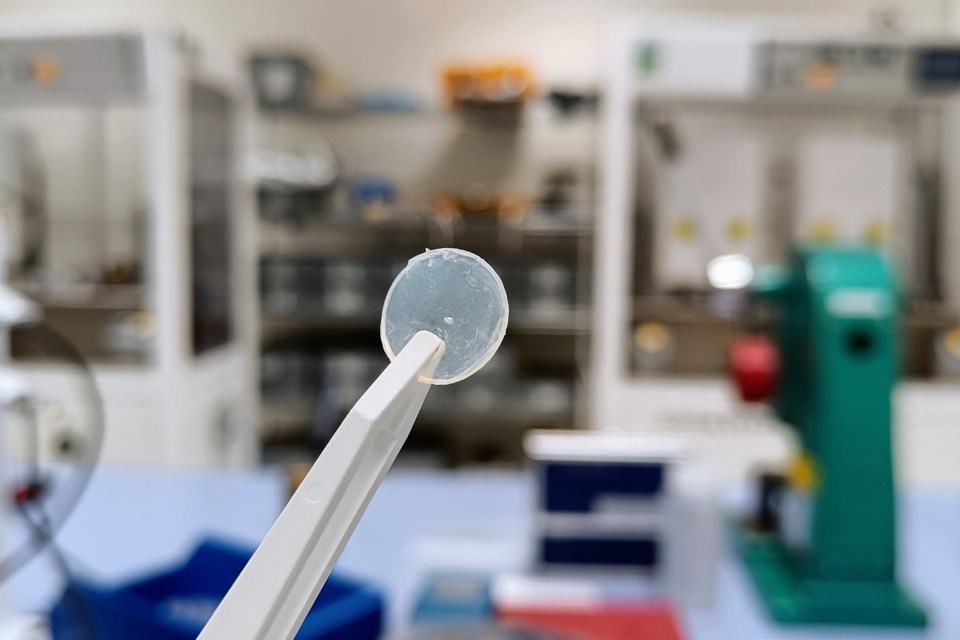
The liquid precursor comprises of a porous silicon oxide matrix functionalized with organic moieties. These moieties form robust covalent linkages upon activation by radical initiators, creating a solid electrolyte with a continuous conductive path for lithium ions. This design overcomes the ionic conductivity limitations of polymer-based ionogels and conventional composites.
The precursor solution remains stable for extended periods (over 1 year), allowing storage and ease of integration into roll-to-roll manufacturing processes. The solidification is triggered by UV light or heat, enabling precise control within minutes. This rapid solidification process aligns with high-speed production techniques, unlike existing solutions that require days for solidification.
Free of corrosive acids or bases, the precursor solution ensures compatibility with sensitive electrode materials, preserving their structural integrity and performance. This feature facilitates impregnation into porous electrodes without adverse reactions, simplifying the integration process.
Unique features and advantages
- Advanced manufacturability: the liquid precursor can readily be impregnated in porous electrodes and then solidified within a short timeframe, making the procedure compatible with roll-to-roll processes.
- Versatility: different types of liquid electrolytes can be incorporated, allowing to emphasize compatibility with the desired electrode materials.
- Electrode compatibility: the acid- and base-free precursor solution ensures chemical compatibility with electrodes, without adverse reactions between these components that would reduce functionality.
Market potential
The patented technology positions itself as a critical enabler for advancing LIB technology. By addressing longstanding trade-offs in ionic conductivity, manufacturability, and electrode compatibility, it offers battery manufacturers a pathway to high-performance, solid-state systems for widespread adoption in electric vehicles, consumer electronics, and grid storage.
Opportunity
The invention has been protected through a patent application (WO2023222511A1). We are looking for companies interested in licensing this technology and/or in setting up an R&D collaboration.