Collaboration & Valorisation
Why work with us?
-
Driven by real clinical needs
Our research starts from concrete patient challenges, ensuring relevance and direct value for healthcare practice. -
From idea to implementation
We translate our research into practical applications, supporting the full pathway from concept to validation and use in real-world settings. We strive to implement our findings so that patients and society can directly benefit. - Strong partnerships, broader impact
Through close collaboration with clinical, academic and industry partners, we accelerate innovation and maximise impact.

How to collaborate?
1. Building research together
1. Building research together
LCRC strongly focuses on collaborative research projects that bring together clinical expertise and academic knowledge. We support partners in setting up and executing research projects, including identifying suitable funding opportunities (such as FWO, VLAIO, Horizon Europe, Interreg, …). Our dedicated research manager guides partners throughout the entire process, from project design to submission and follow-up. Together, we develop innovative solutions driven by clinical needs with direct impact on patient care.
2. Expert support & services
2. Expert support & services
LCRC supports partners throughout the full research trajectory, from study design to clinical validation, in close collaboration with our clinical partners, including the Clinical Trial Units of Jessa Hospital and Ziekenhuis Oost-Limburg.
We provide access to valuable research resources and expertise. Through our biobank, UBiLim, partners can access a unique collection of patient samples across various diseases, supported by expertise in
- sample registration
- biobanking processes
- the development of tailored collections
For digital health innovation, our Mobile Health Unit acts as a co-creation partner in developing and validating mHealth solutions, supporting the full process from concept to real-world implementation.
Our multidisciplinary team of researchers and clinicians offers in-depth expertise across multiple medical domains, providing tailored advice and support from study design and methodology to implementation and clinical validation. (See research domains for affiliated physicians)
3. Internships & student collaboration
3. Internships & student collaboration
LCRC actively supports external collaboration with students from Biomedical Sciences (Master), offering opportunities to engage young talent in real-world projects.
More specifically, the first-year Master in Biomedical Sciences includes a structured 9-week internship, during which students actively contribute to projects within the biomedical and healthcare sector. Activities may include data analysis, literature reviews, participation in projects and meetings, reporting, and quality control.
Organisations and companies are invited to propose internship topics or projects. The timeline typically includes:
- A call for projects in September
- A submission deadline in October
- Allocation in November
- Internship running from February to April
Through these collaborations, students gain valuable hands-on experience, while organisations benefit from fresh perspectives and motivated support.
Contact: internships.BMS@uhasselt.be
4. Connecting people in our network
4. Connecting people in our network
We connect people, ideas and expertise. Whether you are looking for the right collaborator, specific know-how or complementary skills, we help you navigate our network.
Through LCRC, you gain access to a strong (inter)national ecosystem of academic and industrial partners. We closely collaborate within UHasselt, including BIOMED, Rehabilitation Sciences, Data Science Institute, Centre for Environmental Sciences, Digital Future Lab and Institute for Mobility.
In addition, our clinical partners, Jessa Hospital and Ziekenhuis Oost-Limburg, are embedded in broader regional hospital networks (Andreaz network and Linoz), further strengthening access to diverse patient populations and clinical expertise. Through collaborations with initiatives such as INEZ Limburg, we contribute to strengthening regional healthcare through research and innovation.
We also maintain close collaborations with external partners such as Health Campus Limburg, BioVille, Biovia, LRM and other key players within the regional ecosystem.
At LCRC, we strongly believe that research should translate into real impact for patients and society. Therefore, valorisation, both economic and societal, is a key focus of our activities.
Spin-off
One of LCRC’s success stories in valorisation is Qompium, the spin-off company behind the FibriCheck app. Originating from a student project within the former LCRP, FibriCheck has evolved into a CE-certified and FDA-approved medical application for the detection of cardiac rhythm disorders.
Using only a smartphone or smartwatch, patients can easily monitor their heart rhythm at home, while physicians can access and interpret the data remotely. By enabling early detection of conditions such as atrial fibrillation, FibriCheck helps prevent serious complications like stroke.

IVF innovation
The Walking Egg is an example of how LCRC research contributes to improving access to care worldwide. In collaboration with international partners, a mobile IVF laboratory was developed to offer simplified and low-cost fertility treatments.
This approach enables IVF procedures in a compact, mobile setting, making treatment accessible for patients in low- and middle-income regions where fertility care is often unavailable or unaffordable.
While still under further development, The Walking Egg illustrates how research can address global healthcare challenges by increasing accessibility, affordability and equity in care.
Guideline impact
The ADVOR study is an example of how LCRC research translates into international clinical practice. This multicentre, randomised clinical trial demonstrated that adding acetazolamide to standard diuretic therapy improves decongestion in patients with acute decompensated heart failure.
The results showed more effective fluid removal and improved short-term outcomes, providing strong clinical evidence for a simple and widely available treatment strategy. These findings were published in The New England Journal of Medicine and contributed to updates in international ESC guidelines for heart failure.
Implementation
LOwLIght is an example of how LCRC research is translated into innovative care pathways. This multidisciplinary collaboration brings together clinical expertise and scientific knowledge to improve the quality of life of cancer patients.
Building on research in photobiomodulation, the Laser Centre implements low-level laser therapy as a supportive treatment to reduce side effects of cancer therapies, such as radiation-induced skin toxicity. This non-invasive approach promotes wound healing, reduces pain and improves patient comfort during treatment.
Beyond clinical care, LOwLIght also serves as a platform for ongoing research, training and further validation of laser-based therapies, illustrating how innovation can be successfully integrated into routine care.
Licensing opportunities
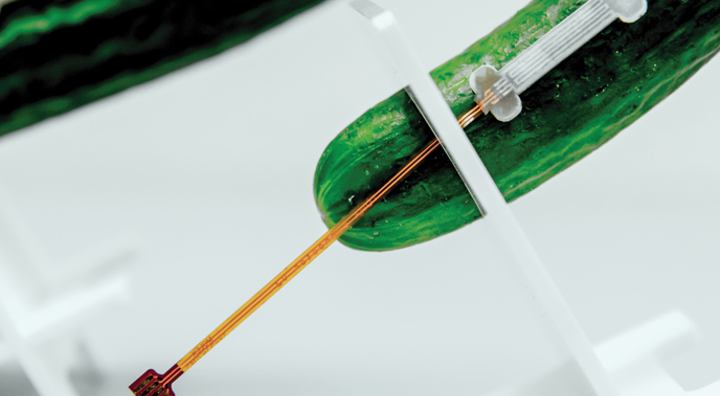
Contact: Janne Kaes