INT³ - Interdisciplinary International Internships
At Hasselt University, we see INT³ as an opportunity to learn with and from people, communities and partners across different contexts. Working in an international and multidisciplinary team invites you to encounter different perspectives, forms of knowledge and ways of working, and to reflect on your own assumptions and position.
An INT³ experience is not simply about gaining international experience or bringing your expertise elsewhere. It is about building relationships, exchanging knowledge and creating together, while learning to navigate different contexts, perspectives and ways of working.
View the content of this page
What is INT³
At Hasselt University, we see global learning as an opportunity to engage with different perspectives, forms of knowledge and ways of working. An international field experience can create space for mutual learning, critical reflection and collaboration across contexts. Rather than approaching a partner community as a place to learn from or to provide solutions to, you will work together with local students, academics and community members, recognising their knowledge, expertise and priorities as central to the project.
During semester 2, you will prepare for the field experience together with your multidisciplinary team and your local partners. You will become familiar with the project and its context, develop skills for collaborative project work, and reflect on questions of culture, power, positionality and responsible partnership. Preparation will take place in close exchange with students and professors at our partner institution, allowing different perspectives and expertise to shape the project from the outset.
During the summer, you will spend four weeks in the partner country, working alongside local students, academics and community members. Together, you will explore the questions and challenges identified through the project, exchange knowledge and perspectives, and develop or test approaches that respond to locally defined needs and priorities. The experience is therefore not simply about gaining international experience, but about learning and creating knowledge together through a reciprocal partnership.
Events
Please note our Open House in your calendar, where you can learn more about the projects and meet the people involved:
- Friday 9th October, drop by freely somewhere between 10 AM and 2 PM!
- Campus Diepenbeek, Building D, Think Space (D25)
(Please let us know you're coming, so we can plan for your visit. Not registered? No problem, you can still just drop by.)
Want to hear from the students who participated in projects during the past academic year?
Join us for INT³ Student stories & reflection on Volunteers in an International Context:
- Tuesday 13th October, 5 PM – 8.30 PM. Our Fair Trade reception starts at 4 PM!
- Campus Diepenbeek, Building D, Aula H2
Solar Cookers 4 All - Awoimuju (Uganda)
Solar Cookers 4 All - Awoimuju (Uganda)
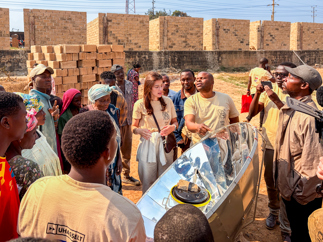
Within the VLIRUOS TEAM project Sc4All, the focus is therefore not only on the technology, but on the community: its knowledge, priorities, practices and ideas. Together, we will explore the “Akiiki way”: the local knowledge, relationships and approaches that can guide collaboration, and adapt the solar cookers and the process to the Awoimuju context.
This year we have two extra groups joining the Sc4All team. Since we are building a real field station in Awoimuju, we are in need for extra expertise:
- Engineering students who can focus on a specific task of getting water from the borehole to the manyattas. This is an exploratory phase and hopefully students can expand this research during their master thesis in a next phase.
- Architecture students who want to help build the field station with a focus on designing and building huts.
We are looking for students:
(1) Solar Cooker project
- Electronics engineering: for monitoring of environmental and cooking conditions
- Statistics: master thesis students (supervised by Prof. Steven Abrams & Prof. Luc Bijnens)
- Business economics: master thesis (promoted by Prof. Allard Van Riel)
- Physics students: Course Experimentele Technieken
- Social sciences:
- Learn from the community and explore what is needed for new technologies and infrastructure to be meaningful, accessible and locally supported.
- Map relationships, knowledge, existing initiatives and the wider ecosystem around Akiiki and Awoimuju.
- Explore the “Akiiki way”: how collaboration can grow from local knowledge, relationships and ways of organising.
- Communication sciences:
- Students from communication, arts or related fields
- Co-create ways to document and communicate the collaboration, for example through storytelling, theatre, visual documentation or a public presentation.
- Ensure that the voices and perspectives of community members are part of how the project is represented.
- Educational sciences: Develop and test creative ways to support learning about and adoption of solar cooking, for example through a short theatre piece or other educational formats.
Not every student needs to travel to Uganda. You can also contribute throughout the second semester and decide not to travel.
(2) Water & renewable energy
-
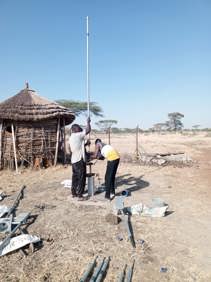
For a related project we are looking for engineering students (energy, automation, design and production),
-
Role: explore how solar energy can be used to pump water from the borehole and bring it to the manyattas.
-
Explore the technical infrastructure needed: solar power, pumping, storage, distribution and maintenance.
-
Work with the community to understand how the system can fit existing practices and needs.
(3) Architecture & community infrastructure
-
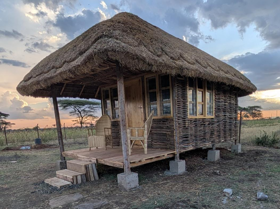
For building the whole Akiiki field station we are also looking for architecture and construction students.
-
Role: Develop the field station as infrastructure for future education, research, community activities and collaboration. This’ll focus on designing and building huts.
Waste2Resources – Dar es Salaam (Tanzania)
Waste2Resources – Dar es Salaam (Tanzania)
Dar es Salaam faces a severe waste management crisis, with rapid urban growth generating far more waste than the city can collect, leading to pollution, health risks, and lost economic opportunities. This project tackles that problem by empowering communities—especially women, youth, and low-income groups—with the knowledge, skills, and tools to transform waste from a burden into a valuable resource. How can waste become a resource? In its second year, the INT³ Waste-2-Resources project will explore this question through education, hands-on experimentation and local resource recovery. Building on the first year’s focus on waste awareness in schools, students will investigate how different waste streams can be reduced, reused, recycled or recovered (R4) and transformed into useful products or resources.
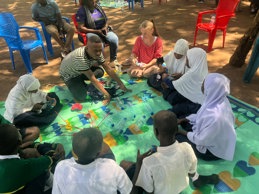
During the preparation phase, UHasselt and ARU students will map relevant waste streams and explore practical, locally feasible waste-to-resource solutions. The ARU visit to UHasselt will provide an opportunity to develop and test hands-on STEM experiments and educational materials together with local students and stakeholders.
In July 2027, students will bring these experiments to schools and the Kimbiji test site, working with children, teachers and local stakeholders to test and demonstrate different approaches to resource recovery. The project will culminate in an interactive exhibition and a plan on uptake, where children and parents can discover how waste can be transformed into useful resources.
We are looking for students.
This year, INT³ Waste-2-Resources is open to students from all disciplines. Waste is not only a technical challenge: it is connected to people, communities, behaviour, education, logistics, economics, infrastructure, policy and the environment.
We are looking for students with particular interest in students with an affinity for:
- economics and value chains;
- STEM and technology;
- waste and sustainability;
- education and working with children;
- community engagement;
- communication and educational materials.
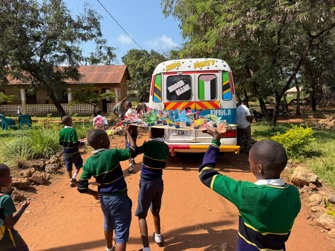 You will bring your own knowledge, experience and perspective to the project, while also being encouraged to explore beyond your field of expertise. You do not need to know exactly what your role will be from the start: you will find your place within the project together with the team, our partners and the community.
By bringing together students from different disciplines, we can look at the same waste challenge from different perspectives and develop solutions that are not only technically possible, but also locally relevant, socially meaningful and economically feasible.
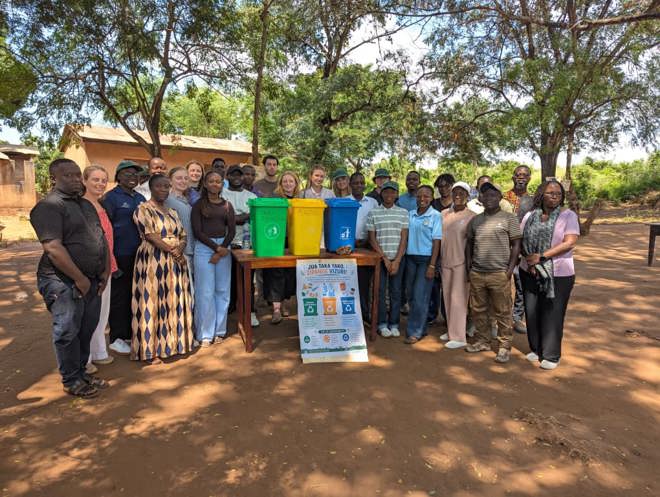
Co-designing dignified and sustainable housing with Melusi – Pretoria (South Africa)
Co-designing dignified and sustainable housing with Melusi – Pretoria (South Africa)
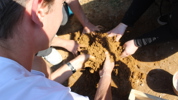
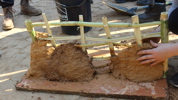
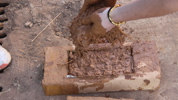
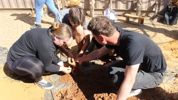
INT³ 2027 in South Africa will bring together students, researchers, community members and local partners in Melusi, South Africa, to explore how bio-based, locally available and building materials can contribute to more sustainable, affordable and dignified housing.
Building on the relationships and experiences developed through previous INT³ activities, the project will move beyond one-off material experiments towards a longer-term co-design and prototyping process. Timber, compressed earth/soil and brick will be explored not only from a technical perspective, but also through questions of affordability, cultural acceptance, dignity, skills, livelihoods, environmental impact and housing policy.
The project will be developed in close connection with the University of Pretoria Honours programme, allowing students to engage with Melusi throughout the academic year and to bring their research and co-design work into a two-week prototyping programme in July 2027. A key ambition of INT³ 2027 is to change the role of the community from recipient or testing ground to active partner and co-designer.
The project therefore starts from a simple question: What does a sustainable and dignified home mean to the people who live in it? We will explore this question on three themes:
- Materials — What can we build with?
- Dignity and agency — What does a home mean?
- Enabling environments — What makes sustainable housing possible?
Learning from community knowledge in Imbabura - Ecuador
Learning from community knowledge in Imbabura - Ecuador
Did you not find your study programme or are there no suitable courses, but still interested? Contact: sara.schaeken@uhasselt.be
What do we offer?
- Preparation for reciprocal international and intercultural collaboration
- Training and support in project work and teamwork
- Collaboration with students, researchers and community partners
- Space to learn from different forms of knowledge and expertise
- Guidance throughout the preparation and fieldwork
- Travel and accommodation during the fieldwork period
What are you investing?
- Your knowledge, curiosity and perspective
- Your time, commitment and willingness to collaborate
- Openness to learn from others and question your own assumptions
- Respect for local knowledge, priorities and ways of working
- Your own expenses on site, such as food, drinks, visa and passport costs
Why participating?
An INT³ experience gives you the opportunity to:
- work in an international, multidisciplinary and community-based team
- learn from local students, researchers and community partners
- bring your own knowledge while discovering perspectives beyond your discipline
- explore real-world sustainability challenges together
- develop your skills in collaboration, communication, problem-solving and intercultural cooperation
- reflect critically on your own assumptions and ways of working
- build meaningful relationships and connections across disciplines and borders
- contribute to a project while learning from the people and context in which you work
- grow personally and professionally through a shared learning experience
Official Candidacy
We kindly ask everyone who is interested in participating to complete the final registration for INT³ via this form. This registration includes confirming your commitment to the program and your willingness to travel with the group as part of the experience.
Deadline for final registration: 31 October 2026, 17h - for ECUADOR the deadline is 26 October 2026
We will organize the selection in two stages:
- Registration form
- Interview (organized on Friday 13/11 - afternoon)
Sara Schaeken



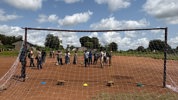
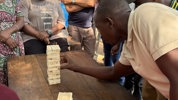
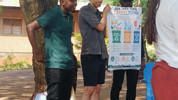
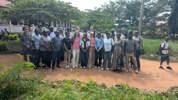
Projects 2025–2026
Solar Cookers for All – DR Congo (Lubumbashi)
Solar Cookers for All – DR Congo (Lubumbashi)
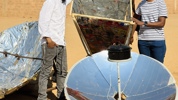
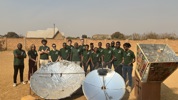
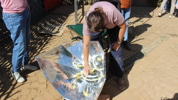
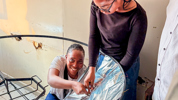
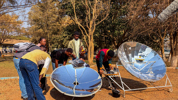
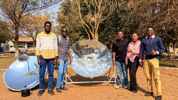
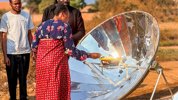
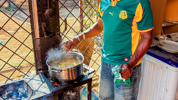
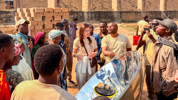
This project tackles the global challenge faced by 2.4 billion people who still cook with wood, animal waste, or charcoal, exposing themselves to harmful smoke while contributing to environmental degradation. Together with vulnerable communities in Lubumbashi (DR Congo), we co-create affordable solar cookers that use free solar energy, improve household health, protect tropical forests, and provide safe cooking and water-heating options. By designing low-cost prototypes made from locally available recycled materials—and developing a sustainable business model for small local companies—we aim to ensure that solar cookers can be produced, adapted, and distributed within the region. Through a multidisciplinary collaboration between University of Lubumbashi (UniLu) and UHasselt, supported by VLIR-UOS, engineers, physicists, statisticians, economists, and social scientists co-develop new designs, test innovations, and educate future changemakers committed to advancing the UN Sustainable Development Goals.
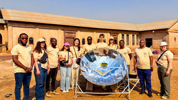
At UHasselt, 3 generations of interdisciplinary teams of students have been working on the project to design and optimize these solar cookers. Engineering and physics students will play a key role in the design and development of the cookers, while statisticians will assist with optimizing performance through data analysis and optimal design of experiments. The performance of the prototypes will be tested according to an international protocol, and a weather and testing station will be built by students in electronic engineering to support this work.
In addition to the technical aspects, the project will involve the creation of a business plan aimed at developing small-scale companies that can manufacture and distribute these cookers at affordable prices. Initial tests on prototype solar cookers and commercial devices have already been conducted, and this next phase will refine the design and prepare it for real-world use in communities around the world.
We are looking for students
We are looking for students in statistics and data science, physics, business economics and engineering.
Only students who can integrate this project into a course within their study program are eligible to participate (for example: Experimental Techniques (Physics), International Window of Mobility (Engineering), bachelor’s or master’s theses, …).
Waste2Resources – Tanzania (Dar es Salaam)
Waste2Resources – Tanzania (Dar es Salaam)
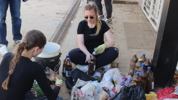
Dar es Salaam faces a severe waste management crisis, with rapid urban growth generating far more waste than the city can collect, leading to pollution, health risks, and lost economic opportunities. This project tackles that problem by empowering communities—especially women, youth, and low-income groups—with the knowledge, skills, and tools to transform waste from a burden into a valuable resource. Through hands-on training, awareness campaigns, and the development of small-scale waste-to-resource businesses, residents learn to sort waste, produce biogas and biofertilizer, and create affordable building materials, while universities and local partners work together to strengthen research, influence policy, and build a circular economy model that can be scaled across Tanzania and beyond.
Students will:
-
Map the local waste stream (sorting, handling, …)
-
Will investigate ways of transitioning waste to resources
-
Develop prototypes of waste-to-resource conversion
-
Develop a game to educate pupils about waste management and waste-to-resources
We are looking for students.
We are looking for students in social sciences, education studies, business economics, architecture, sciences (biology and chemistry) and engineering.
Co-creating Wellness – Zuid-Afrika (Pretoria)
Co-creating Wellness – Zuid-Afrika (Pretoria)
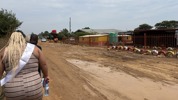
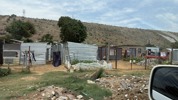
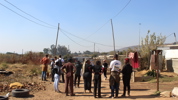
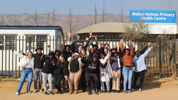
The Co-creating Wellness project aims to gain a deeper understanding of both the challenges and strengths of the Melusi (Gomora) informal settlement through participatory action research, addressing the growing inequalities reflected in South Africa’s expanding informal communities. There are many challenges that people face within an informal community, including a lack of waste management, inadequate health infrastructure, poor road infrastructure, energy problems, and others. By engaging directly with the community, the project aims to generate knowledge that supports more just, inclusive, and sustainable urban futures. Within this project, a group of students from the Department of Architecture at the University of Pretoria will collaborate with a multidisciplinary team at UHasselt to research and implement a project in close partnership with the community.
Watch the video of one of the previous projects in the community.
We are looking for students
We are looking for Master students in architecture, engineering (including knowledge of energy/solar systems), construction, as well as life sciences and law.