Powering the Electrified Everything: CEAD Spring School brings international students to Hasselt University
From 3 to 8 May 2026, Hasselt University welcomed an international group of students for the fifth edition of the CEAD Spring School. Under the theme “Rethinking Electrification: Powering the Electrified Everything”, participants explored how electrification can contribute to a more sustainable and circular future.
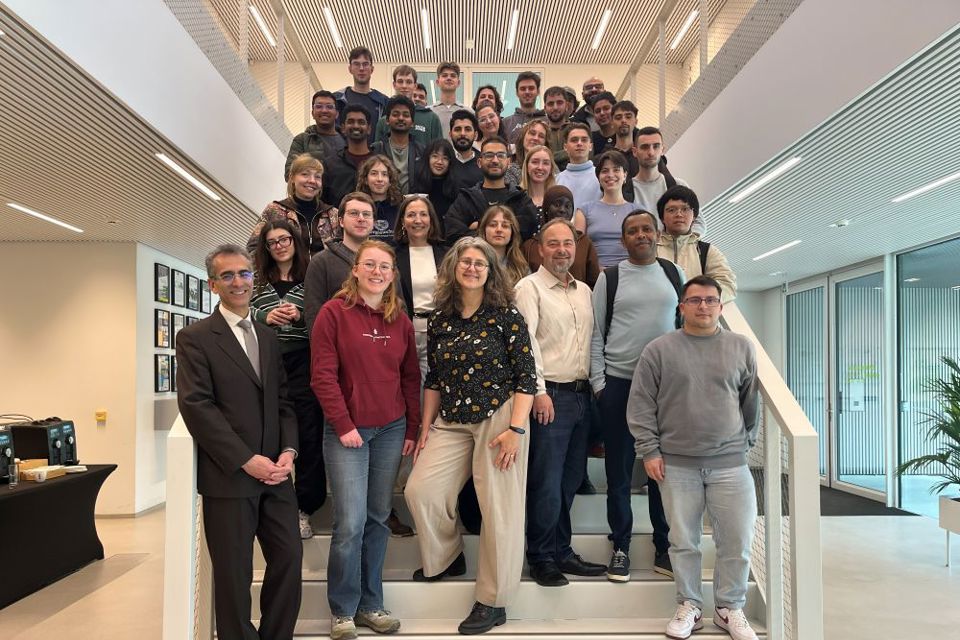
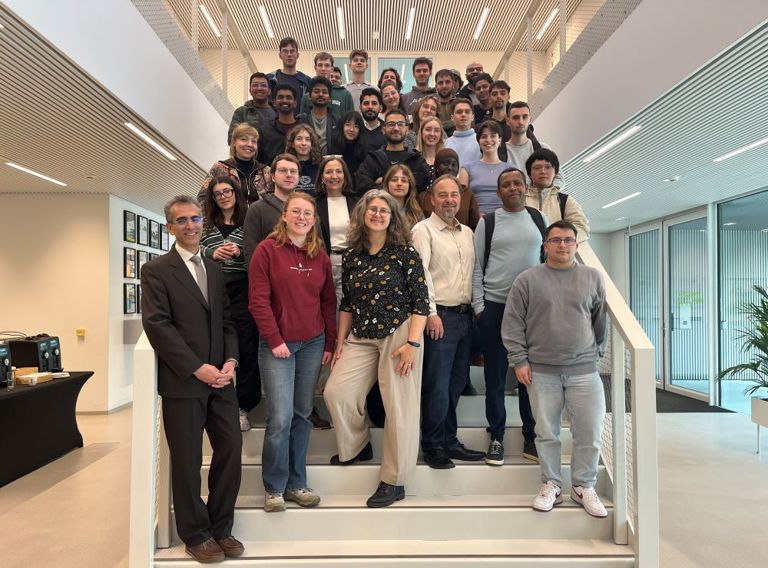
The on-site week in Hasselt formed the heart of Circular Engineering Across Disciplines, better known as CEAD. Through lectures, workshops, company and research visits, and interdisciplinary teamwork, students were challenged to view electrification not as a purely technical solution, but as a complex system involving energy, materials, digital technologies, industry, and society.
This year’s cohort reflected the programme's international and interdisciplinary spirit: 33 confirmed participants from 10 home institutions and 10 countries, representing 18 nationalities.
“With CEAD, we want to give students an international learning experience that reflects the complexity of today’s sustainability challenges. Electrification is a key part of the transition, but it requires knowledge, creativity and cooperation across borders and disciplines,” says Prof Bart Vermang, Hasselt University and part of the organising team.
From lectures to real-life applications
During the week, students followed sessions on topics such as AI and the electricity grid, offshore energy, solar resource forecasting, smart industry, power conversion systems, critical materials, metamaterials and recyclable solar module design.
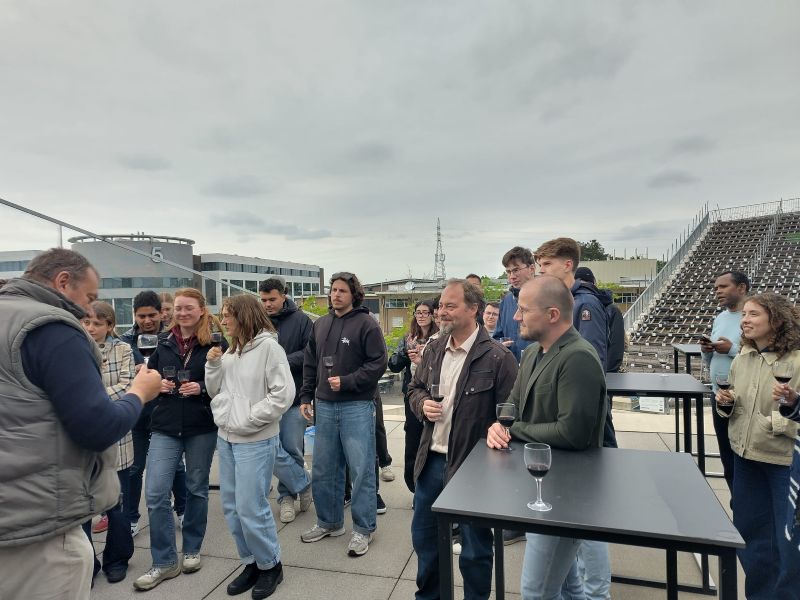
The programme also took learning beyond the classroom. Visits to EnergyVille and Ch@teau Corda gave students the opportunity to connect academic insights with real-life applications in research, innovation and entrepreneurship.
For many participants, this combination of theory, practice and international exchange was one of the most valuable aspects of the spring school.
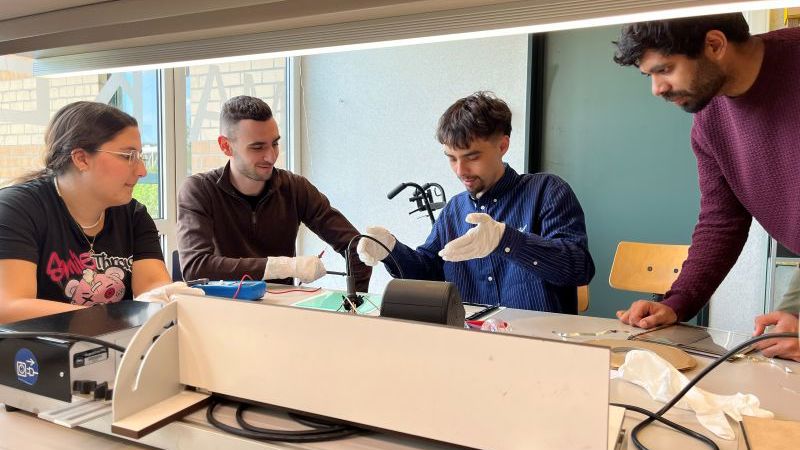
“During CEAD, we discussed solar energy, materials, AI, industry and recycling in one programme. That helped me see how connected the energy transition really is. An activity that stood out was during Module 8, where we designed photovoltaic (PV) modules ourselves. We were provided with solar cells and had to encapsulate and assemble them creatively as a team. It was exciting to see how different groups approached the challenge with unique ideas and solutions, making the session both educational and fun,” says Harsh-Kymar Singh, Technical University of Leoben and an exchange student at Hasselt University.
Learning across disciplines and borders
The group's diversity played an important role in the CEAD experience. Participants came from study fields including engineering, energy, materials, architecture, sustainability and technology. This mix encouraged students to approach the energy transition from different angles and to learn from one another’s academic and cultural perspectives.
In team assignments, students worked together on challenges linked to electrification and circular engineering. These collaborations helped them develop not only technical knowledge, but also intercultural communication, critical thinking and project skills.
“The sessions on critical materials and recyclable solar modules underlined that the energy transition is also a materials transition. Circular design has to be part of the solution from the beginning,” says Elena Morozova, another Technical University of Leoben student.
CEAD 2026 in numbers
The 2026 edition brought together a compact but diverse learning community:
- 33 participants
- 11 home institutions
- 10 home-university countries
- 18 different nationalities
- 18 master’s students
- 12 bachelor’s students
- 1 PhD student & 2 postgraduate students
- 25 students registered for a bike during their stay
- 23 students indicated eligibility for an Erasmus+ short-term blended mobility grant
These figures underline the strength of CEAD as an international learning format: small enough for intensive interaction, but diverse enough to bring together different disciplines, perspectives and experiences.
“The core principle of CEAD lies in bringing together students from different universities, countries and disciplines. During the on-site week, you could really see how their diverse backgrounds helped them approach electrification from new and complementary perspectives,” says Karine Evers, CEAD Administrative Coordinator at Hasselt University.
The participants also underlined the advantage of meeting students from various disciplines.
“One of the highlights of the CEAD was collaborating with students and researchers from diverse backgrounds, exchanging ideas, and presenting our work in an international academic environment,” says Saketh Kandravula, a student from the EURECA-PRO partner Technische Universität Bergakademie Freiberg.
“In short, international experiences like this help students grow both academically and personally,” Harsh-Kumar adds.
Continuing the collaboration online
After the on-site week in Hasselt, students continued their collaboration through an online component from 9 to 20 May 2026. During this period, they also finalised their written reports.
This Blended Intensive Programme (BIP) allowed participants to build strong connections during the physical week and to continue working together across borders afterwards.
“I love the fact that our discussions continued also throughout the online module. The strength of CEAD lies in the combination of academic content, teamwork and international exchange,” Harsh-Kumar continues.
A European learning environment for responsible futures
CEAD is organised by the Faculty of Engineering Technology of Hasselt University, in collaboration with KU Leuven and the EURECA-PRO network, with support from VLAIO and Erasmus+ funding.
Professors from other European universities, including those outside EURECA-PRO, also contributed.
“What made it special was the people: devoted and curious students, excellent facilities, a welcoming atmosphere, and a strong sense of team spirit throughout the spring school,” says Prof. Andreas Kazantzidis, University of Patra, Greece.
The programme contributes to the wider ambition of EURECA-PRO: connecting education, research and innovation around responsible consumption and production. The organisers now also experience concrete interest from partner universities in hosting the spring school.
“We enjoy the collaboration within the EURECA-PRO network. Actually, both the Technical University of Leoben and Université de Lorraine are looking into the possibility of hosting CEAD in Austria or France next year. This way, CEAD is developing as a truly international programme, rooted in the core principles of a European learning environment,” says Prof Bart Vermang.
By focusing on electrification, CEAD 2026 addressed a theme that is both urgent and complex. As students returned to their home universities, the central message of the week remained clear: powering the future is not only about producing more clean electricity. It is about designing smarter, more circular and more responsible systems together.


