Adaptive VR Training: a competence-aware method for personalised digital skill training
In industrial assembly and other procedural training contexts, trainees have very diverse backgrounds, prior experience and preferred learning paces. Yet most digital training solutions, including today's Virtual Reality (VR) training and interactive video instructions, still follow a "one-size-fits-all" approach, presenting the same instructions regardless of operator skill and learning approach.
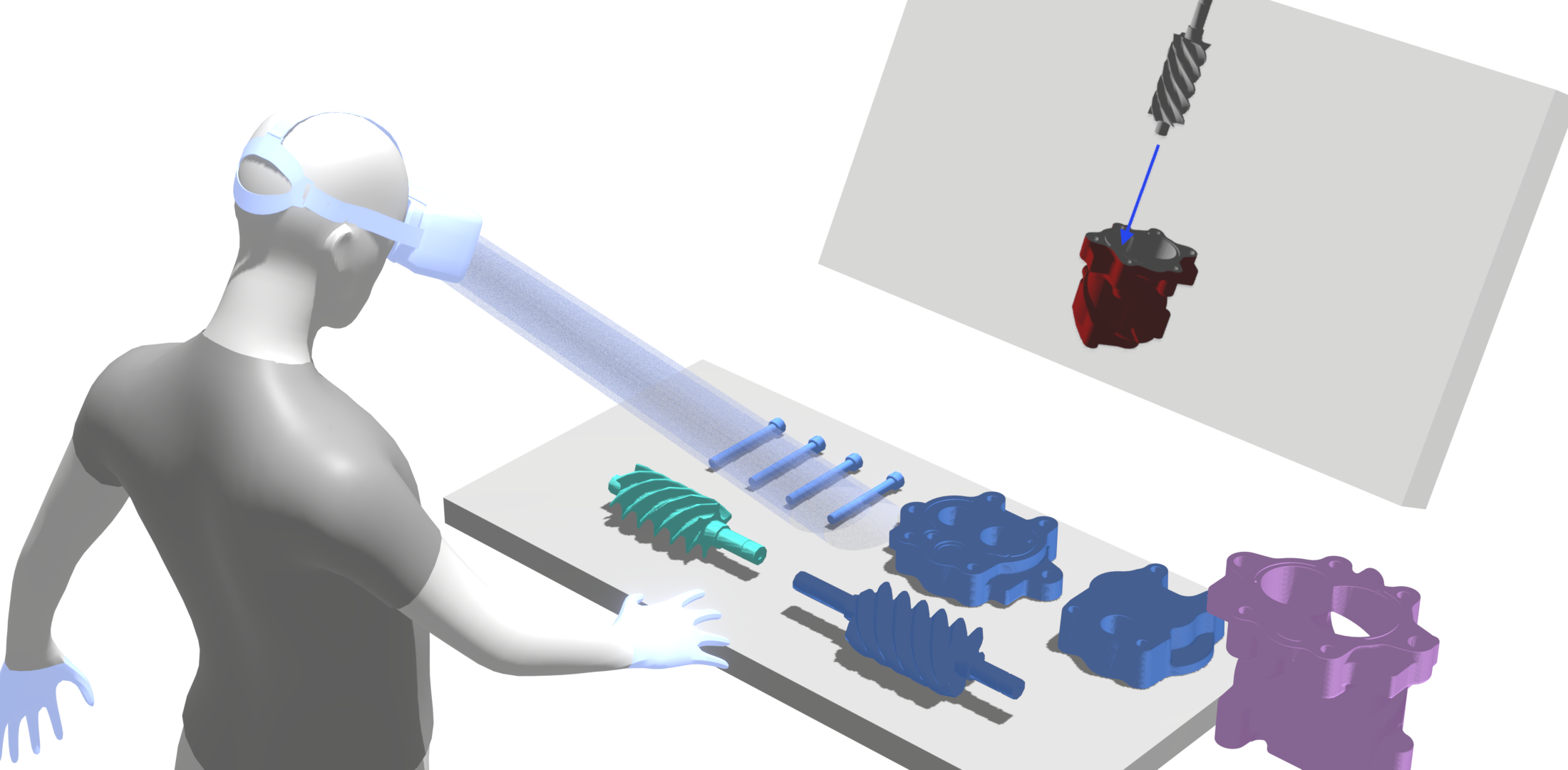
This mismatch leads to inefficient training: experienced operators are not being challenged enough by receiving instructions that are needlessly detailed, while less experienced ones may not receive enough targeted guidance where they actually struggle. Adaptive VR Training solves this by dynamically adjusting the instructional content to the trainee's real-time performance and prior history. The system continuously decides, automatically or on the trainee's request, which instructional elements to show, hide or replace, so that each trainee only sees the support they actually need at that moment.
Key features and advantages
Key features
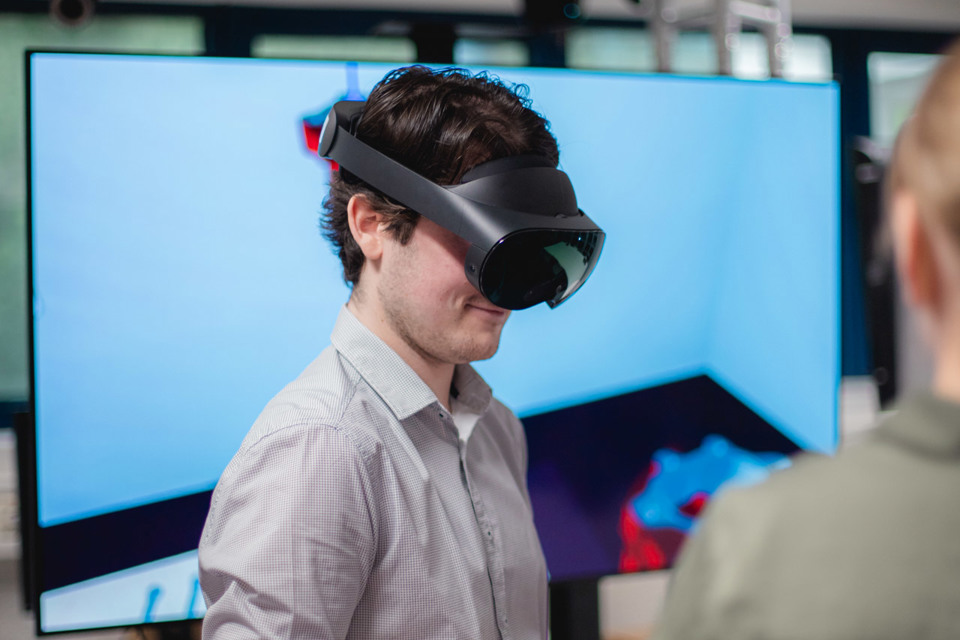
- Real-time performance tracking using built-in sensors of the training device (e.g. hand tracking and eye tracking in VR), combined with contextual data from the procedure and the trainee's history.
- Fine-grained adaptation at the level of individual instructional elements ("targets of adaptation") rather than predefined fixed support levels (e.g. “novice” versus “intermediate” versus “expert”).
- Two complementary control modes: a fully automated (push) mode that activates support when the trainee struggles, and a semi-automated (pull) mode in which the trainee requests additional support on demand.
Advantages demonstrated in lab validation
(N=36 VR user study)
- Significantly reduced perceived effort and frustration during physical assembly after training.
- Significantly higher user enjoyment and engagement compared to non-adaptive VR training.
- Positive trend towards fewer severe assembly errors after adaptive training.
- Significantly less instructional information shown on screen, without negatively affecting learning outcomes or perceived mental demand.
Possible applications & market potential
The method is relevant wherever procedural or assembly knowledge needs to be transferred to a workforce with heterogeneous experience levels, including:
- Manual assembly training in manufacturing (e.g. mechanical assemblies, electrical cabinets, compressors).
- Training for safety protocols, maintenance procedures and standardised work instructions.
- Onboarding and reskilling/upskilling of operators in Industry 4.0 / Industry 5.0 environments.
- Training in sheltered workplaces and other contexts with diverse learner profiles.
- More generally, any digital learning environment (VR, AR, interactive video, e-learning) where personalisation of instructions can reduce cognitive load and improve skill transfer.
Partners / Publications
Research group
Hasselt University – Digital Future Lab – Flanders Make
Research project
Adaptive VR Training is a result of the SBO project SkilledWorkforce, funded by Flanders Make.
Industrial context
Two real-life industrial assembly use cases using VR (compressor assembly and electrical cabinet assembly for a sheltered workplace) have been validated in collaboration with manufacturing partners.
Key publications
- Verstraete, A., Geurts, E., Wijnants, M. (2025). Does One-Size Training Fit All? Evaluating Adaptive Learning for VR Assembly Training. Proc. ACM Hum.-Comput. Interact. 9(4), Article EICS010. https://doi.org/10.1145/3734187
- Geurts, E., Verstraete, A., Wijnants, M. (2025). Empowering Adaptive Learning in VR Assembly Training Using Real-time Performance Tracking. IFAC PapersOnLine 59(10), 2676–2681. https://doi.org/10.1016/j.ifacol.2025.09.450