Towards a sustainable future with hybrid materials: Wouter Van Gompel wins prestigious junior PRISM prize
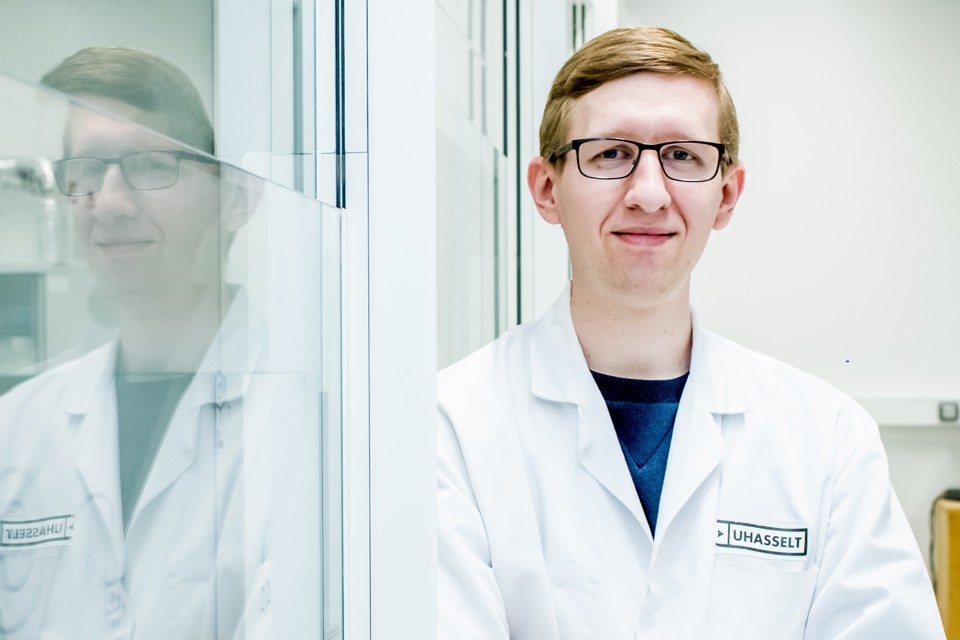
The junior PRISM Prize is no ordinary award. Each year, the Italian CNR–ISM recognizes a young researcher who has made notable contributions to materials science in the past five years. This year, the honor goes to Professor Dr. Wouter Van Gompel, affiliated with the institute for materials research imo-imomec. His work on hybrid materials has attracted international attention, and with this prize, his research not only gains recognition but also receives a boost for what lies ahead.
A personal and professional milestone
For Prof. Van Gompel, the award is an important acknowledgment. “It is a tremendous honor to be recognized by my peers,” he says. “Science is often a slow and uncertain process. An award like this provides energy to keep going.” Professionally, he sees the recognition as confirmation that his research direction is valued internationally and strategically relevant.
Hybrid materials: the best of both worlds
Prof. Van Gompel’s research focuses on hybrid materials in which organic (carbon-based) and inorganic (mineral-like) components work together optimally. Materials such as hybrid perovskites combine the flexibility and lightness of organic substances with the strong electronic performance of inorganic materials.
“We are essentially combining the best of both worlds,” he explains. Moreover, these materials are energy-efficient and inexpensive to produce, making them particularly attractive for applications in efficient solar cells, energy-saving LEDs, and highly sensitive sensors.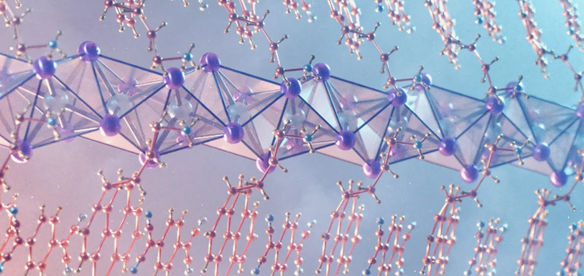
Picture: visual representation of a synergy between organic and inorganic elements
The challenge: making the organic component functional
The research took a major leap forward when Prof. Van Gompel and his team questioned a fundamental assumption about hybrid perovskites. Normally, the organic part mainly serves as a kind of building block, holding the material together. They ensured that this organic component actively contributes to absorbing light or conducting electricity.
“Finding the right combination of components and understanding their interactions required a lot of perseverance,” he says. Multidisciplinary collaboration was crucial. “At imo-imomec, chemists, physicists, and engineers work together, complemented by an international network of experts, allowing us to tackle complex problems from multiple angles.”
Looking ahead: applications and collaboration
The junior PRISM Prize now opens new doors. Prof. Van Gompel is exploring collaboration with researchers at the Institute of Structure of Matter in Italy. He is also working on translating his newly developed hybrid materials into concrete optoelectronic applications and exploring new fields such as neuromorphic computing.
Additionally, he wants to inspire young researchers to join the work. “We are looking for PhD students who want to help build this new generation of materials,” he says. On December 15, he will give a lecture at the official award ceremony in Rome, where he will further present the results and ambitions of his work.
Interested in contributing to this research? Check out the vacancy.