
Female scientists wait up to ten weeks longer for publication than men
Scientific articles authored by female researchers take up to ten weeks longer to be accepted by academic journals than publications by male researchers. This is shown by a large-scale analysis of about 6,000 scientific articles published between 1963 and 2024. “Science is a highly competitive environment. Publishing is essential to progress in an academic career, and a gender gap of ten extra weeks of waiting time is therefore a real problem,” says Prof. Dr. Stephan Bruns.


Gender gap
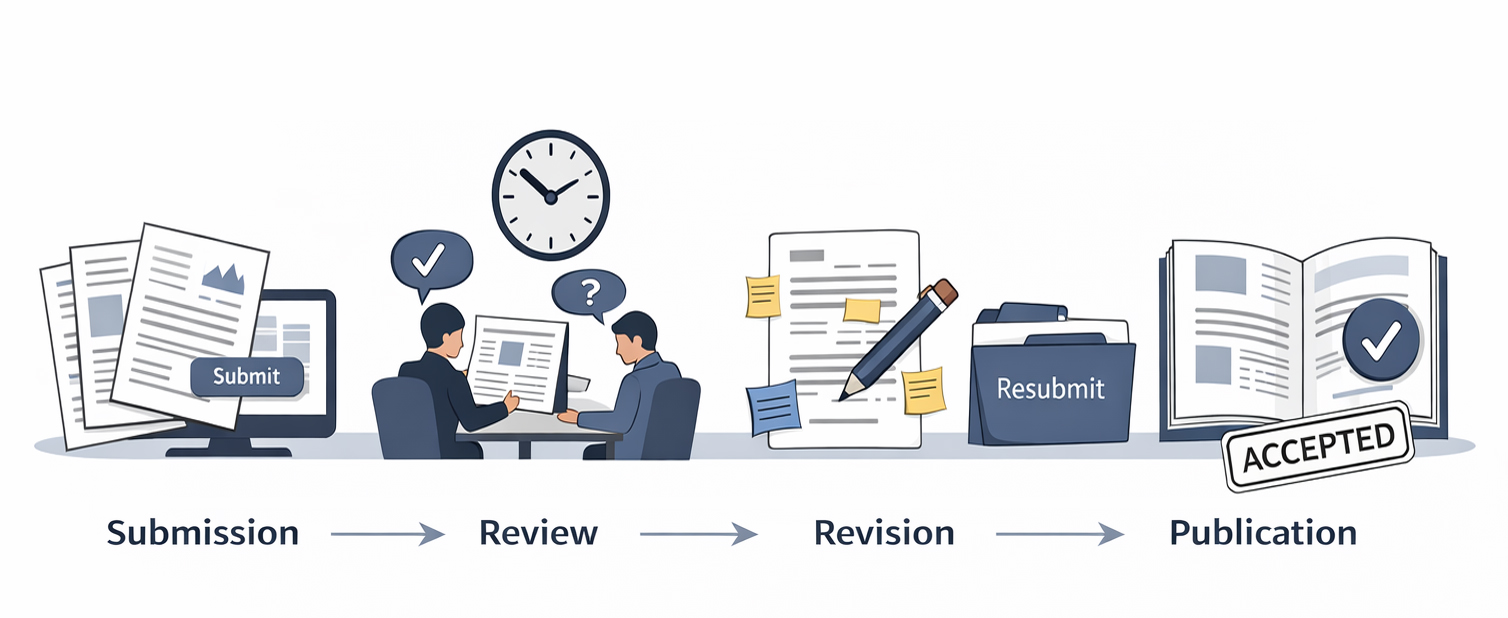
In the study, published in the journal European Economic Review, the authors compare the time between submission of a scientific article to a journal and its publication. They analyse more than 3,000 publications in the field of economics and an extended sample of 6,000 articles with also articles from the social and political sciences, all published between 1963 and 2024. To be published, an article must first be deemed relevant by a journal editor, after which it is sent out for peer review to researchers worldwide and may undergo several rounds of revision.

Up to ten weeks of additional waiting time
The analysis of this extensive dataset shows that publications by female scientists in mixed-gender teams take on average 9% longer to be accepted. Converted into time, this amounts to an additional five to six weeks of waiting. “And when female researchers publish on their own, or exclusively in teams with other women, the difference is even greater. Their articles take on average 20% longer to be published, which corresponds to roughly ten additional weeks of waiting time compared to male solo authors or teams composed entirely of male scientists,” says Prof. Dr. Stephan Bruns of the Centre for Environmental Sciences at UHasselt, who conducts research on how scientific knowledge is produced.
No clear cause
Identifying a single clear cause for this gender gap in publication time proves difficult, according to the researchers. “We observed differences across research fields, with some fields showing a larger gender gap than others. In general, we find that the gender gap tends to become smaller once more female researchers become active in a field. But it’s also field specific. For example, female researchers need to wait longer in the fields of finance and economic growth compared to macroeconomics. This might be due to different social norms across fields. Social norms are informal rules of expected behavior and these rules may include biases towards female researchers”, says Stephan Bruns
The researchers also conclude that it is less likely that the gender gap in time to get publications accepted is due to the behavior of female researchers, such as taking on more other responsibilities, including household tasks and child care. If that were the case, it would imply that female researchers behave this way in one field but not at all in another.
No quality difference
The researchers also examined whether the gap could be explained by differences in research quality. That hypothesis does not hold. Research conducted by women is cited more frequently than research by men, suggesting that it is, if anything, considered more valuable.
The role of the journal editor, who holds final responsibility for publication decisions, was also analysed but does not provide a conclusive explanation. While there are more male editors than female editors overall, differences in publication timelines persist even in journals with more female editors. A striking additional finding is that the overall publication process for both female and male authors, tends to proceed faster under female editors than under male editors.
Reducing the gender gap
“Our data analysis does not point to a single underlying cause. Further research using different approaches will be needed to fully understand the mechanisms at play. What is crucial, however, is raising awareness of this issue. In an academic world where publications are decisive for appointments, promotions and research funding, this gender gap in publication timelines is not without consequences. It places female scientists at a disadvantage in an already highly competitive environment. We hope these insights can help make the system fairer for female scientists,” concludes Stephan Bruns.