About Clean Hydrogen
CleanH2 will address one of the biggest concerns of our society: how can we meet a continuous growing energy demand and, how to do so while reducing our environmental carbon footprint, global warming and alarming climate changes?
Fundamental Research in Solar-driven Hydrogen Generation using Earth-abundant Catalysts and Durable Hybrid Perovskites as Light Absorbers
CLEANH2 is an inherently interdisciplinary project, being at the intersection of material science and chemistry, solid-state physics, electrochemistry, electrical and flow process engineering and techno-economics. The project will cover the complete value chain from (i) the design and synthesis of light harvesting and electrocatalytic materials, towards optimal composition and morphology, (ii) create novel synthesis routes, whilst evaluating their atom and energy efficiency, allowing to control the material’s properties including light absorption, crystal phase, size, morphology, porosity, surface, etc, (iii) deep spectroscopic and microscopic characterization through dedicated tools in order to gain new insights into key structure-morphology-function relationships, (iv) the evaluation of the basic material’s functional properties, either as solar absorber material and, as electrocatalyst in independent components, (v) the integration of the different components together with the membrane electrode assembly (MEA) towards a complete solar-driven water splitting system, and finally (vi) their evaluation in a real lab-size operational environment. We will evaluate the techno-economic aspects of each of the development steps in regard to the material selection, production and use. CLEANH2 thus encompasses synthetic chemistry, materials science, device physics, fundamental engineering and techno-economics. This interdisciplinarity and complementarity of expertises is the main strength of the current consortium, which is mutually reinforcing each other in order to achieve the ambitious goals set out in CLEANH2.
CLEANH2 is an ambitious project in which each promoter provides expertise that is essential for the realization of the project, in a highly concerted nature. CLEANH2 involves the most advanced scientific techniques and a powerful synergy among 1) chemists to design and synthesise novel stable and efficient solar harvesters and earth-abundant catalysts, 2) physicists to tackle experimental and theoretical problems in describing, characterising, understanding and tailoring electron-transfer and charge transport phenomena, 3) engineers to measure and benchmark parameters of interest of the different critical sub-components, and to evaluate their joint behaviour and, 4) economists for economic analysis and environmental impact studies. The project co-promoters have been chosen for their complementarities of expertise and the well-functioning infrastructure at their disposal, providing a mutual reinforcing capacity, indispensable to answer CLEANH2 research questions and to achieve the intended scientific breakthroughs. There are several earlier and existing collaborations between the co-promoters which benefit the project.
Principal Investigators
Prof. dr. Dirk Vanderzande, who is leading together with Dr. ir. Laurence Lutsen (imec-imomec), a newly (10/2015) established research group HyMaD at UHasselt. The activities focus on the design of true hybrid organic-inorganic perovskites, in which the organic component is designed to add opto-electronic functionality to the material. This activity aims at disclosing design rules for such materials, their structural characterization and optical properties. For the design of the organic building blocks the group relies on the vast experience of more than 25 years of the PI’s on the design of organic semiconductors for LED, transistor, and solar cell applications. A strong collaboration exists with prof. dr. Koen Vandewal concerning advanced optical characterisation and device physics of materials developed in the group. HyMaD’s contribution in CLEANH2 focusses on the design and synthesis of perovskite materials for tandem solar cell devices.
Prof. dr. An Hardy who is leading together with Prof. dr. M.K. Van Bael the group of DESINe. She specializes in synthesis of inorganic nanomaterials with controlled (nano)structure and composition: oxides, phosphates, polyanionics, metals, and most recently sulfides. Mastered wet chemical synthesis routes include aqueous and non-aqueous sol(ution)-gel, hydro/solvothermal, thermal decomposition, co-precipitation. The DESINe group synthesizes materials for use in electrochemical devices including lithium-ion batteries, sodium ion batteries and Li-S batteries. She is collaborating with prof. dr. M. Safari in running projects (VLAIO SBO project XL Lion, H2020 project Solidify). With CLEANH2, their joint activities will expand from galvanic to electrolytic cells.
Prof. dr. ir. Koen Vandewal who is leading a young (01/2018) research group with the aim to solve fundamental questions in organic, hybrid and molecular electronics with relevance in opto-electronic devices such as OLEDs, sensors and solar cells. He is well known for his seminal work on the characterization and description of charge-transfer states at organic interfaces. In CLEANH2, prof. dr. K. Vandewal will contribute with his expertise in the fabrication and characterization of thin film photovoltaic devices based on hybrid perovskite materials, as well as advanced device characterization and device physics.
Prof. dr. ir. Mohammadhosein Safari who is leading the group of Engineering Materials & Applications. His research centres around fundamental engineering of electrochemical systems such as batteries with a focus on porous electrode engineering, charge transfer kinetics at reactive interfaces, charge transport in ionic media, and electrochemical devices. Since he joined UHasselt in 2016, he is strongly involved in the development of next generation of advanced batteries and, jointly with prof. dr. A. Hardy, takes responsibility over UHasselt energy storage activities within the EnergyVille. Collaboration with prof. dr. R. Malina recently started with a jointly supervised PhD student for the techno-economic modelling of batteries in the smart grid.
Prof. dr. Robert Malina is director of the Centre for Environmental Sciences (CMK) and head of the Environmental Economics Research group within CMK at UHasselt. His focus-areas are techno-economic assessments of clean technologies, in particular renewable energy. Prof. Malina brings to the consortium his long-standing experience in extended techno-economic assessments that not only account for economic aspects within technology development but also broader societal considerations. Moreover, prof. Malina has extensive experience in project work that spans across the boundaries of specific scientific disciplines, in particular by working together with engineers, physicists and chemists in discipline-crossing consortia such as envisioned for CLEANH2. Prof. Malina has been cooperating with the DESINe group in the INTERREG Project EnOp, and with the Engineering Materials & Applications group through joint PhD supervision
PhD Students
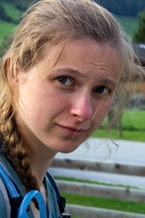 Naomi Billiet started with a bachelor’s degree in chemistry at UHasselt. The topic of her bachelor thesis was “Anatase and rutile TiO2 thin film on silica beads by hydrothermal method” from which she got experience in inorganic synthesis. She followed her master’s degree in chemistry at KULeuven where she was introduced to electrochemical research by her master’s thesis titled “Electrochemical synthesis of indium antimonide from DMSO-based electrolytes”. She then started her PhD studies in the DESINe group at UHasselt. Her role in the CLEANH2 project is to first select earth-abundant alternatives for the electrocatalysts used in PEM water splitting. Then she will synthesize these materials by solution-based chemical synthesis and optimize their morphology. Finally, she will test the electrochemical activity of the novel materials for water splitting. Her most promising electrocatalysts will then be combined with the electrolyzer set-up built in the project.
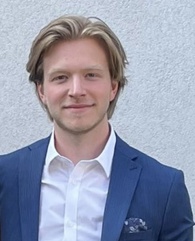 Ilan Devroey obtained his bachelor’s degree at KU Leuven in 2019 and went on to receive his master’s degree in chemistry at the same institution in 2021. In the course of his first master year, he did a research internship at Imec where he focused on the electro- and wet- chemical atomic layer etching of ruthenium. In the following year, he completed his master’s thesis under the supervision of Prof. Wim De Borggraeve. The project comprised the design and synthesis of small molecules for treatment of different neurological diseases. In September 2021, Ilan Devroey started his PhD studies under supervision of Prof. Dirk Vanderzande and Dr. Laurence Lutsen and was involved in the CLEANH2 project in which he attempts to synthesize highly stable low-bandgap hybrid organic-inorganic perovskites for the development of all-perovskite tandem solar cells.
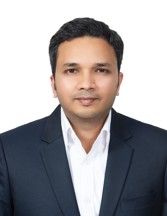 Subir Paul graduated with a bachelor's degree in Civil Engineering from Ahsanullah University of Science and Technology (Bangladesh) in 2012 and a master's degree in Environment and Energy Engineering from Kyungpook National University (South Korea) in 2021. During his master's, he also worked as a research assistant for three years at the Water Treatment Lab, affiliated to Kyungpook National University. He is particularly interested in fuel cells and water electrolyzers. As part of his master's thesis, he worked on the development of a Membrane Electrode Assembly (MEA) for fuel cells. In December 2021, he began his PhD studies in the group of electrochemical engineering at Hasselt University under the supervision of Prof. M. Safari in the CLEANH2 project. His PhD research focuses on developing, optimizing, and characterizing novel MEAs for PEM water electrolyzers. He is also designing and developing a novel polymer electrolyte membrane water electrolysis (PEMWE) setup with the flexibility to integrate a variety of in-situ electrochemical, mechanical, and thermal
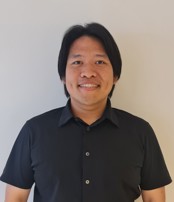 Nattapol Srettiwat is a PhD student at the Faculty of Business Economics, Hasselt University. He obtained his master in Energy and Environmental Systems and Technology from Chalmers University of Technology. His master’s study was subsidized by the Swedish Institute Scholarship. After that, he gained industrial experiences from working in the private sector by working as technical support specialist for thermal insulations at ROCKWOOL and for lubricants at ExxonMobil and Chevron in Thailand before becoming a member of the environmental economics department at Hasselt University. His main research of interests in the CLEANH2 project is on techno-economic and environmental assessment for green hydrogen production via solar-driven electrolysis. Currently, Nattapol Srettiwat is focusing on cost analysis and trade-off between producing green hydrogen in Belgium for local consumption and in other countries with high solar irradiance to be transported and consumed in Belgium. This includes preliminary system sizing and design to handle fluctuated green electricity generation from solar panels. With his model, Nattapol Srettiwat will be able to provide targeted improvement of solar panel and proton exchange membrane (PEM) electrolyzer performance, production cost, and lifetime to meet 2-3 €/kg of levelized cost of hydrogen (LCOH).
Project partners
- UHasselt - imo-imomec
- UHasselt - CMK
Contact
dr. Laurence Lutsen
Agoralaan Gebouw F, 3590 Diepenbeek, Belgium
dr. Lieve De Doncker