Teaching for change: how ENVIHEI helps students and educators learn for sustainability, and how EURECA-PRO makes the link
How do you teach sustainability in a way that actually changes what people do? That question is at the heart of ENVIHEI – and of UHasselt’s role in EURECA-PRO.
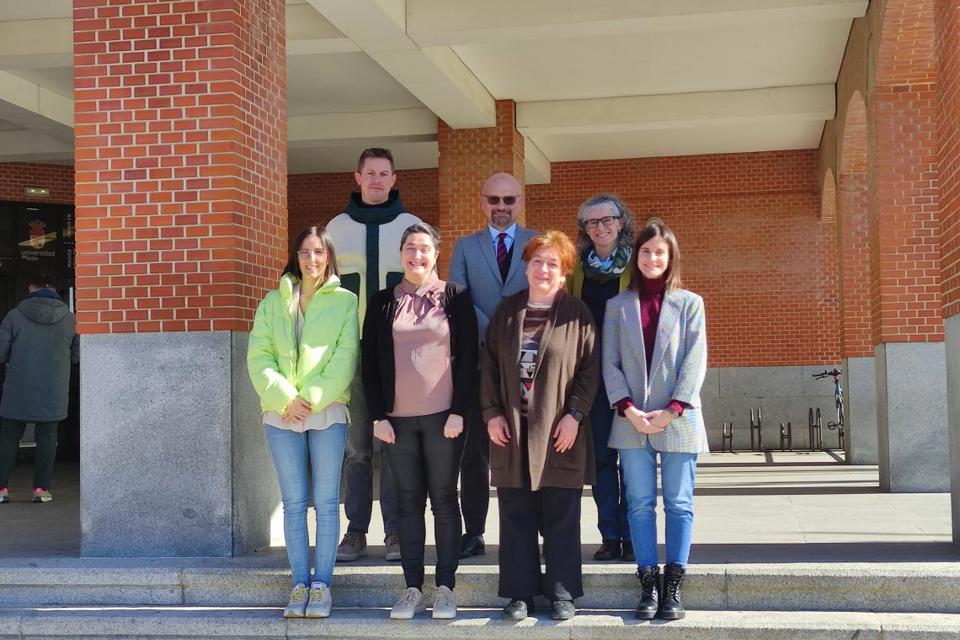
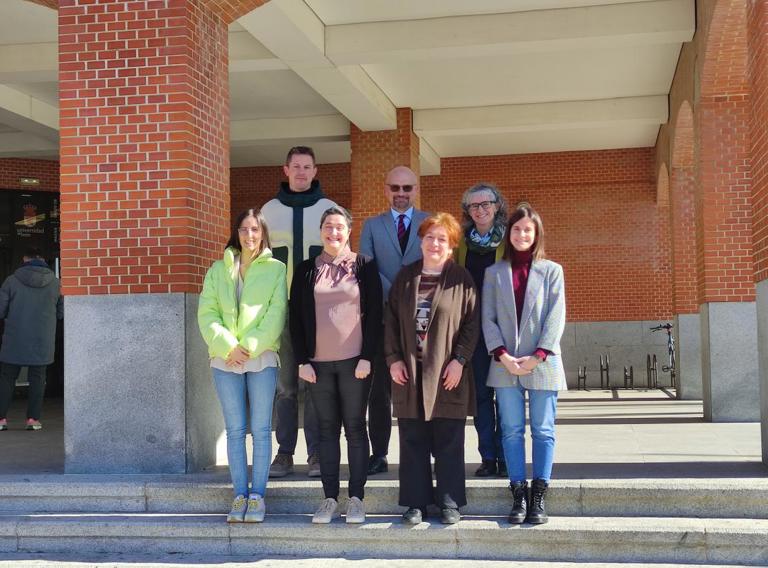
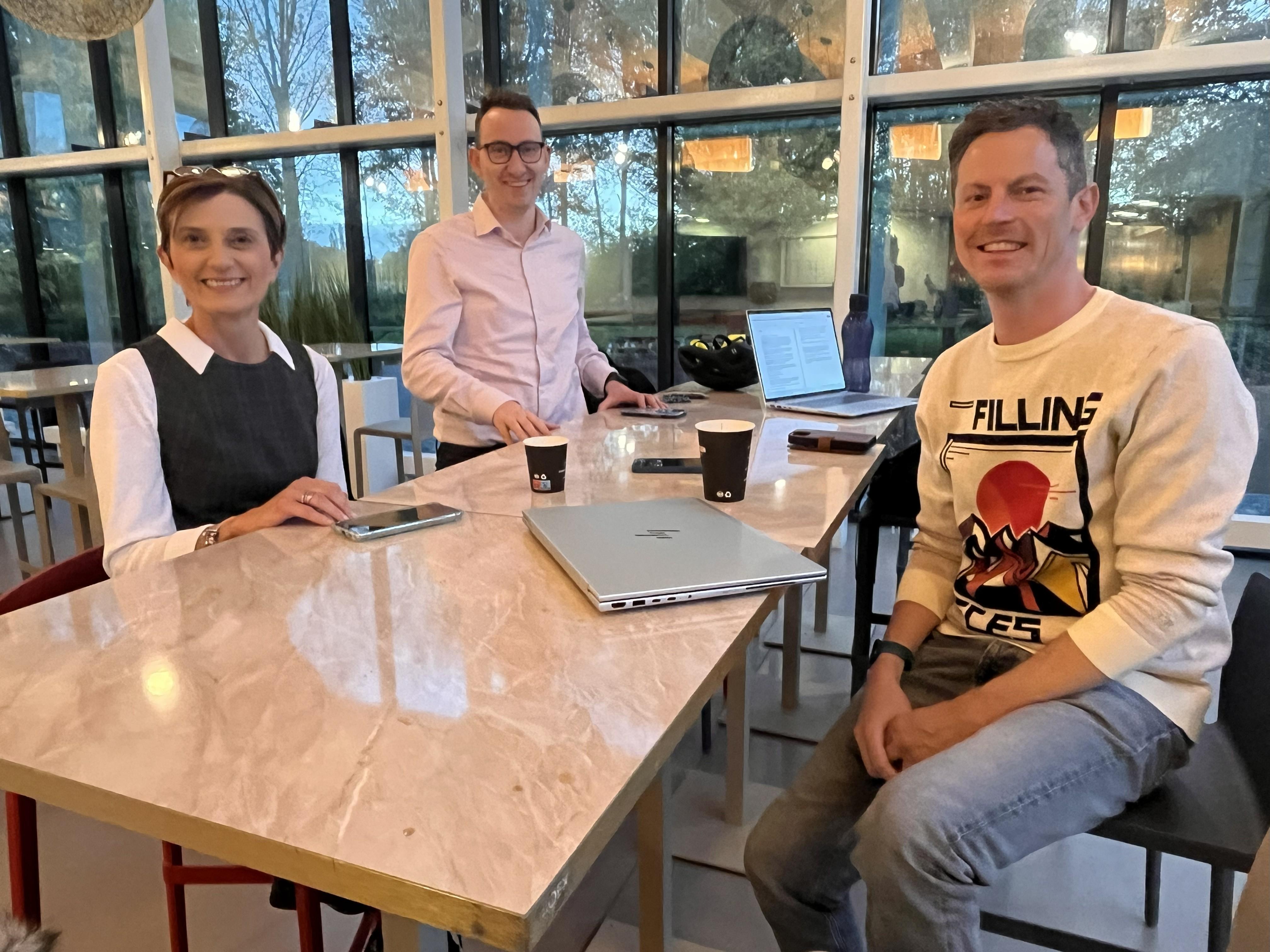
When we discuss sustainability in higher education, we often focus on content: incorporating more climate facts into the curriculum, including more circular economy case studies, and referencing the SDGs. For Prof. dr. Tom Kuppens, associate professor in economics teaching methodology at UHasselt and associate professor in environmental economics at UHasselt’s Centre for Environmental Sciences (CMK), that is no longer enough: “Universities love to transfer knowledge. But for sustainability, knowledge alone does not close the gap between what people know and what they actually do.”
Together with dr. Alex Mifsud, a specialist in education for sustainable development and transformative pedagogy, Kuppens helps shape UHasselt’s contribution to ENVIHEI, This Erasmus+ project connects Hasselt University with four European universities, three of which are also EURECA-PRO partners. It closely aligns with EURECA-PRO’s ambitions for sustainable, future-oriented education.
From knowledge transfer to transformative learning
ENVIHEI – student-centred learning for environmental sustainability in higher education institutions – begins with a simple yet uncomfortable observation: many students and academics already possess a considerable amount of knowledge about sustainability, but that knowledge does not always translate into action, motivation, or leadership.
That is why ENVIHEI draws heavily on the EU’s GreenComp framework and on transformative learning principles. Instead of only teaching about sustainability, the project supports academics in teaching for sustainability:
-
bringing multiple perspectives around a sustainability issue into the classroom;
-
working with real-world dilemmas and conflicts of interest;
-
designing learning activities that engage not only cognition, but also values and emotions;
-
helping students imagine alternative futures and see themselves as actors in those futures.
In many instances, for science and engineering professors, this is often a new and challenging experience. ENVIHEI is designed precisely to guide them through that shift.
Building green competences through a European professional development programme
At the core of ENVIHEI is a Professional Development Programme (PDP) for university lecturers across Europe. The programme offers:
-
online workshops on collaborative learning, problem formulation, problem-based and transformative learning, and curriculum design for sustainability;
-
a Community of Practice where educators exchange experiences and concrete teaching strategies;
-
a Winter School in Leoben (Austria), where lecturers and students apply Problem Based Learning (PBL) approaches to work together on a real world project that demands sustainability challenges.
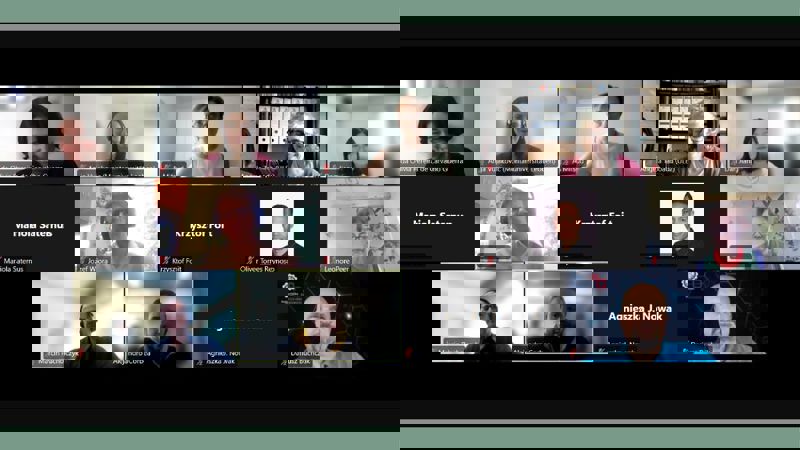
Between March and April 2025, ENVIHEI delivered a series of eight online workshops for academics. These were an integral component of the PDP and helped to prepare the academics as they made the necessary changes to their teaching before the start of the new academic year. Feedback from academics has been overwhelmingly positive, with participants reporting increased confidence and clearer direction in integrating sustainability into their courses.
Those who complete the programme progress through several levels, culminating in the “Groundbreaker” level, where they become facilitators and mentors in the international Winter School. There, they co-design PBL scenarios and guide student teams as they tackle authentic environmental problems. For Kuppens, this “train-the-trainer” approach is crucial: “We first needed academics to experience what transformative learning feels like themselves. Only then can they authentically offer that experience to their students.”
From workshops to Winter School: scaling impact
The impact of ENVIHEI goes beyond individual workshops. Lecturers who have completed the PDP are now in the pilot implementation phase, incorporating project-based sustainability assignments into their own curricula. Across partner institutions, more than 300 students – from engineering, AI, marketing and other disciplines – are currently working on environmentally relevant projects that connect academic learning with concrete societal challenges.
The ENVIHEI Winter School 2026 in Leoben is another milestone. Almost 300 students from across Europe applied to secure a place to attend the Winter School. With just 20 spaces offered through the ENVIHEI project, the selection process was fiercely competitive. During the Winter School, students are required to work in diverse, international teams supervised by ENVIHEI-trained lecturers, combining:
-
online preparation sessions;
-
an intensive one-week programme in Austria;
-
a follow-up phase in which they reflect on their learning and its contribution to their future professional practice.
UHasselt students and staff are part of this story. The interest from students was high, and in fact, a total of 5 students from Hasselt University successfully passed the highly competitive selection stage to attend the Winter School.
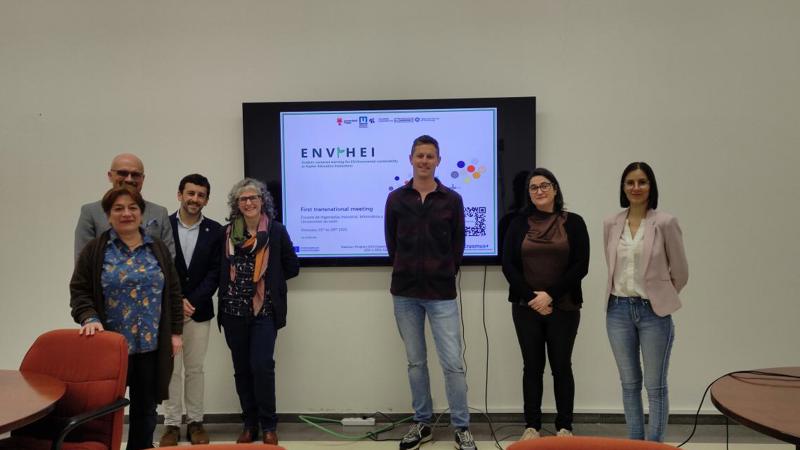
What ENVIHEI brings to UHasselt and EURECA-PRO
UHasselt’s contribution to ENVIHEI may be modest in terms of funding, but its strategic significance is substantial.
First, it raises awareness and builds bridges within the university. For the Faculty of Engineering Technology, ENVIHEI has been the first structured introduction to transformative sustainability education. For Kuppens and Mifsud, who are rooted in teacher education and sustainability didactics, it opens doors for new conversations and collaborations across faculties.
Second, ENVIHEI directly connects to UHasselt’s broader sustainability ambitions: the university aims for every student to graduate with sustainability competencies and has already introduced a course on sustainability education in its Educational Master's programmes. ENVIHEI offers extra tools, inspiration and a European network to support this goal.
Third, and very significantly, ENVIHEI strengthens UHasselt’s role within EURECA-PRO:
-
By collaborating closely with all other ENVIHEI partners — Universidad de León, Montanuniversität Leoben, Silesian University of Technology, and Aalborg University — the project has created new links and working relationships that naturally extend into the EURECA-PRO alliance. The joint development of teaching approaches, the exchange of practices, and the shared focus on sustainability education have contributed to UHasselt’s congruence within the network, opening up new avenues for future collaboration and joint project development.
-
ENVIHEI’s methods and results can also inform EURECA-PRO’s Lifelong Learning and Teaching Excellence initiatives, such as joint courses, micro-credentials, or future staff training.
“In the early days of EURECA-PRO, it was not obvious how a specialist in sustainability education could connect to technology-focused activities,” Kuppens reflects. “Thanks to ENVIHEI, partners now know that UHasselt brings strong expertise in sustainability didactics and that we are keen to collaborate.” Mifsud sees similar potential beyond engineering: “The core principles of teaching for sustainability are the same whether you teach engineering, business or medicine. ENVIHEI gives us a tested model we can adapt and share with other disciplines over time.”
Looking ahead: from pilot to long-term collaboration
ENVIHEI runs until late 2026. The coming period will focus intensely on:
-
evaluating the impact of the PDP, Winter School and pilot courses (pre- and post-surveys, qualitative feedback);
-
analysing the rich needs analysis data collected across partner universities;
-
publishing research results on sustainability competences and transformative teaching in higher education;
-
shaping a follow-up project that can involve all EURECA-PRO institutions and broaden the scope beyond engineering.
For UHasselt and EURECA-PRO, ENVIHEI is more than a single project. It is a living laboratory where new approaches to teaching for sustainability are tested, refined, and shared within an international community of practice. And for students, it is a clear signal: sustainability will not just be something they learn about in lectures. It is something they will be equipped – and challenged – to act on, as future professionals and citizens.
As higher education continues to evolve, sustainability is becoming a truly transdisciplinary concern, one that touches every field, from engineering to health, business, social sciences, and beyond. All graduates will increasingly need green competencies to navigate their professional lives and make meaningful contributions to societal challenges. In that sense, ENVIHEI’s focus on integrating sustainability into teaching practice is not only timely but essential: it strengthens the capacity of universities to prepare students for a future in which environmental responsibility is no longer optional but foundational.