Shifting Horizons together: Hasselt University hosts the EURECA-PRO Education & Research Days
From 3 to 5 February, Hasselt University welcomed more than 170 participants from 15 countries for the EURECA-PRO Education and Research Days 2026, themed Glocalising Universities: a Shifting Horizon. Rather than a traditional conference, the three days created space for colleagues to reflect together on how education and research evolve within an international university alliance.
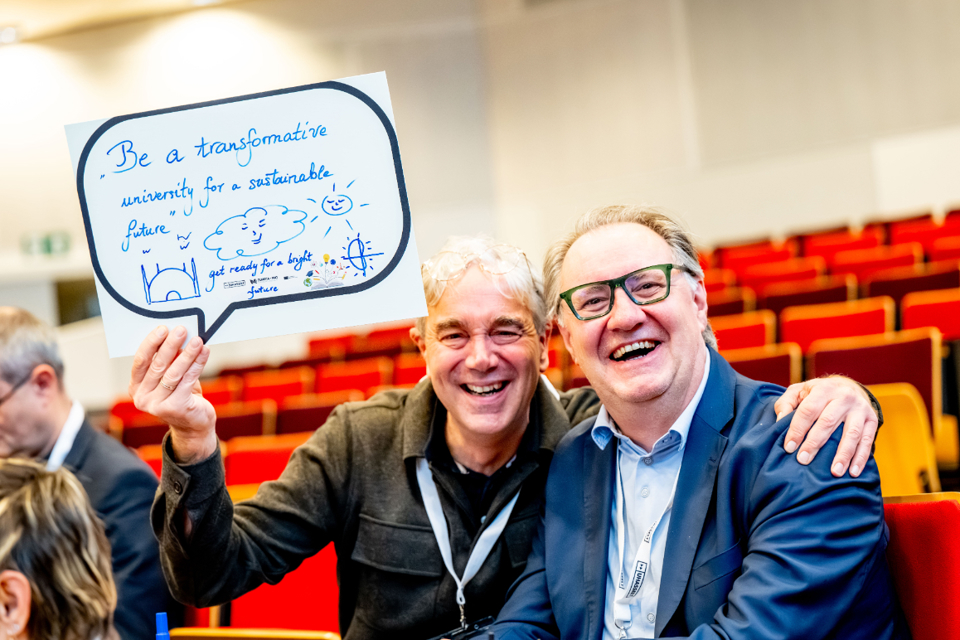
Behind the scenes, the event was a close collaboration between colleagues from OBKZ, OBI, TTO and the EURECA-PRO team. Months of preparation resulted in a programme that combined academic reflection with many opportunities for informal exchange between colleagues.
“This event was a collective effort,” says Natalie Lefevere, domain officer at OBKZ. “From logistics and hospitality to technical support and coordination with international partners, everyone pulled together. Seeing colleagues from fifteen different countries walking through our campus made all the preparation worthwhile.”
Day 1: Education as a societal project
The first day replaced the annual UHasselt Education Day and placed teaching firmly at the centre of the programme. In her welcome speech, Vice-Rector for Education, Professor Elke Hermans, emphasised that education is not simply one mission among many. “Education is the foundation upon which universities build their contribution to society,” she told participants. She linked the idea of ‘glocalisation’ to the everyday practice of teaching, encouraging colleagues to reflect on how learning environments prepare students to navigate complexity.
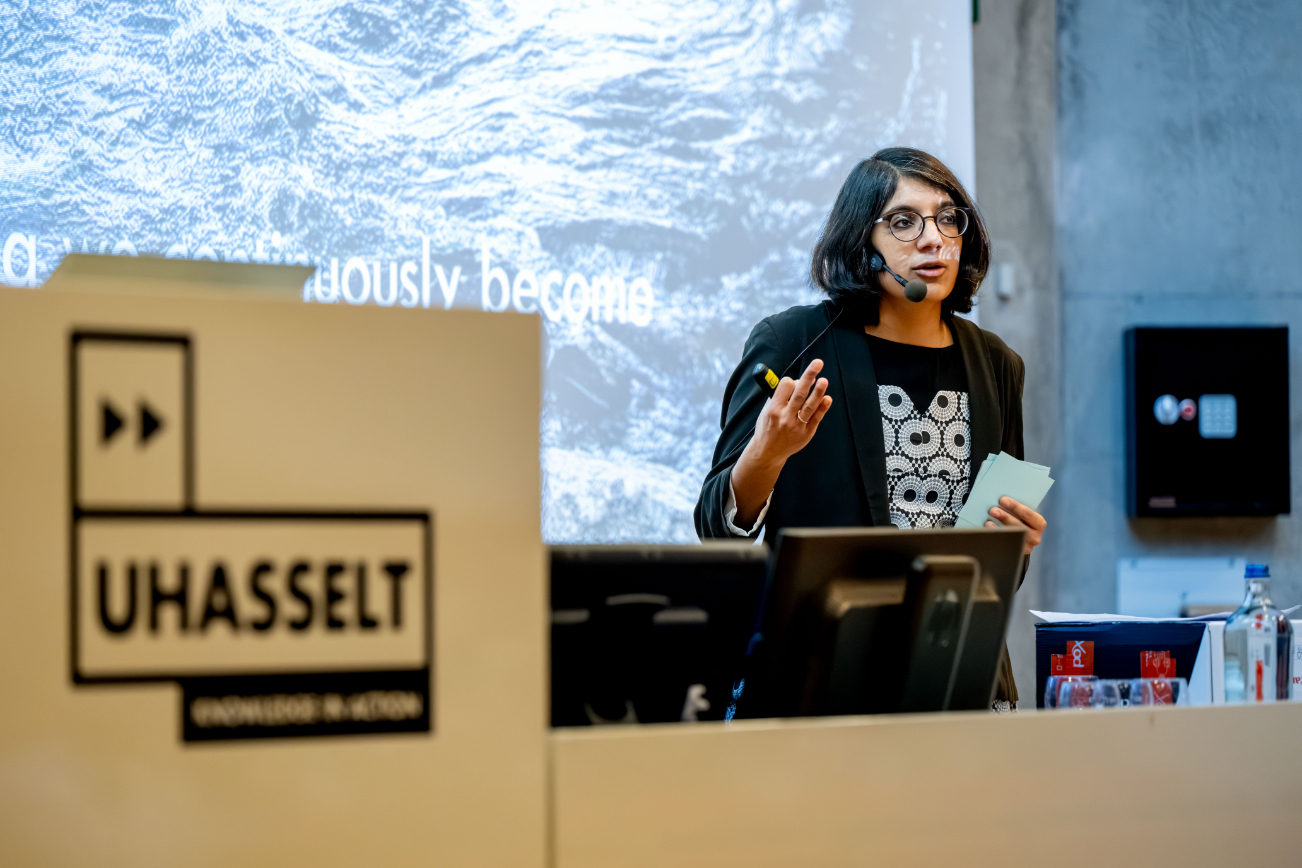
The keynote by dr. Indira van der Zande from the University of Groningen invited colleagues to reflect on transformative learning, ethics and global responsibility. “Indira challenged us to look beyond technical innovation and to consider the ethical and societal dimensions of education,” explains Chernelle Lambert, EURECA-PRO staff member at OBKZ. “Her keynote was a powerful reminder that glocal education is about critical reflection, inclusion and courage.”
Throughout the day, innovative formats such as speed storms and visual story pitches encouraged active participation. “We deliberately chose formats that go beyond traditional lectures,” says Annick Hayen, EURECA-PRO staff member at OBKZ. “If we talk about educational innovation, we have to embody it. The energy in the different breakout rooms showed that colleagues were ready to experiment and exchange ideas.”
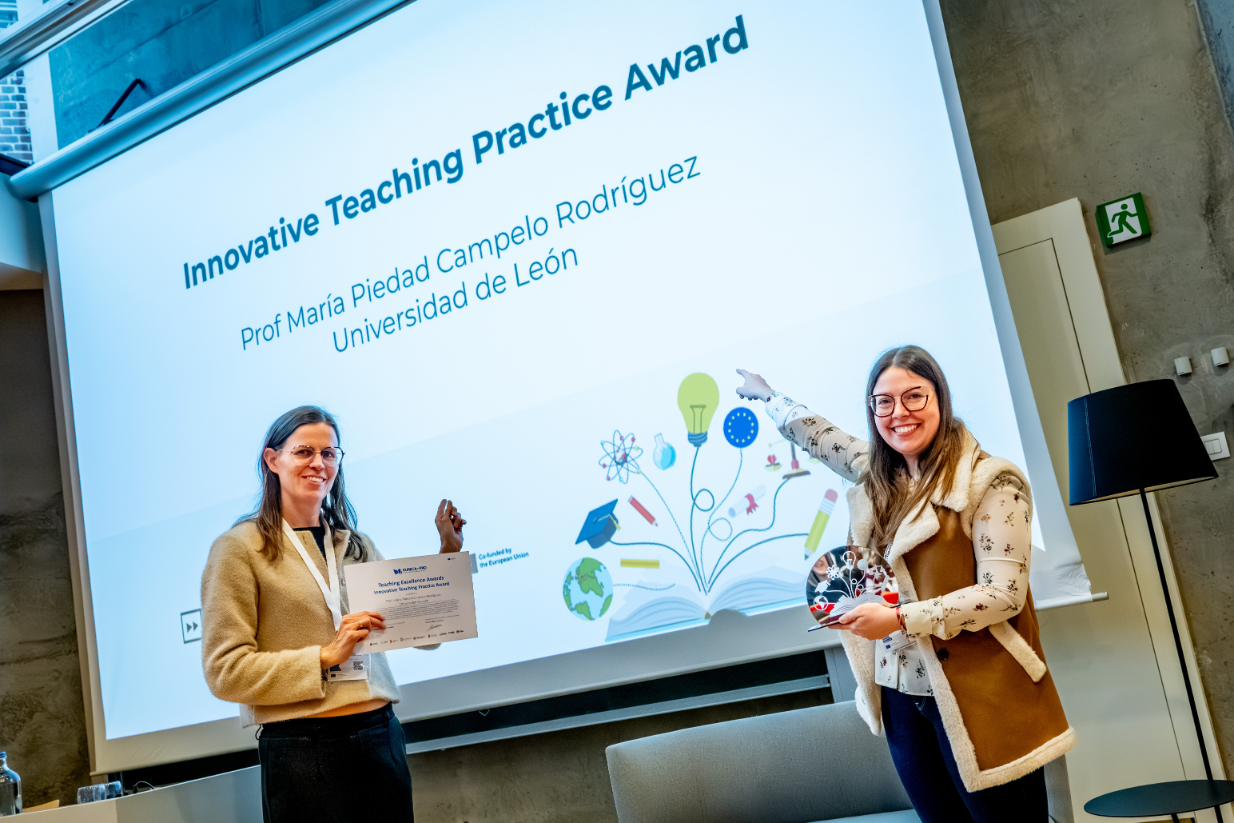
The day was brought to an insightful close with a recap by Lien Mampaey, Director of OBKZ, who highlighted the inspiring discussions and activities that had taken place. As part of this final session, the first EURECA-PRO Teaching Excellence Awards were presented, celebrating educators who embody innovation, global engagement and societal relevance in their teaching. Among the winners was Peggy Winkels from Hasselt University’s Faculty of Architecture and Arts, honoured with the Glocal Teaching Excellence Award for her long-standing commitment to globally connected architectural education. Her work brings students from different continents together to address shared urban challenges through locally grounded design.
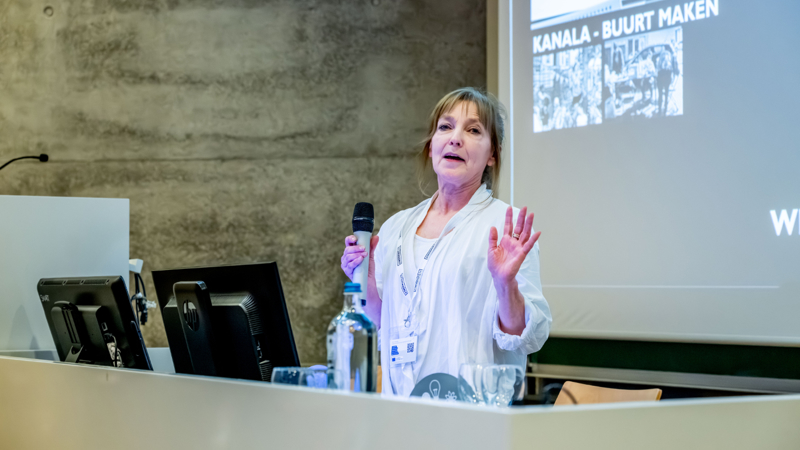
“These awards highlight the educators who make our alliance a place of real learning innovation,” says Chernelle Lambert. They show how teaching can shape students to think critically, act responsibly, and engage meaningfully with society.”
The EURECA-PRO Café
If the daytime programme stimulated minds, the EURECA-PRO Café brought people together in a more informal way. Hosted in a relaxed setting, the Café featured a carefully composed menu with small dishes inspired by all corners of the alliance.
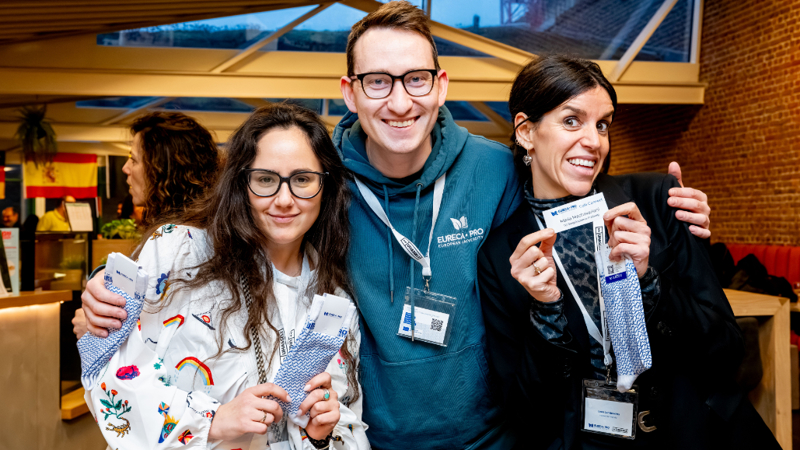
“It was wonderful to see colleagues from different countries tasting each other’s culinary traditions,” says Britte Vanlessen, Project Officer within the EURECA-PRO team. “We also introduced a small networking game called Café Connect. Colleagues from Hasselt University each drew the name of a guest from another partner institution, and vice versa. The challenge was simple: find your match somewhere in the room. Once both people had found and got to know each other, they were rewarded with a pair of EURECA-PRO socks. It was a playful way to encourage participants to move around, approach unfamiliar faces and break the ice. And it worked remarkably well! People were genuinely enthusiastic to participate and even a bit competitive when it came to winning a pair of EURECA-PRO socks.”
After an intense first day of exchanging ideas and perspectives, the Café offered a welcome opportunity to unwind. As the evening progressed, the atmosphere became more relaxed, offering colleagues time to talk beyond the formal programme and get to know one another better.


Day 2: Shifting horizons together through education and research
Building on the reflections of the first day, our rector, Professor Bernard Vanheusden, referred to the symbolic setting of the former prison that now forms part of our university’s city campus. “Once a closed space with barred windows, this building is now an open house where people and ideas flow freely,” he noted. “If there is a time to shift horizons, it is now.” He underlined the inseparable connection between education and research. “They are not competing priorities. They are deeply intertwined. Students learn most meaningfully where education and research meet.”
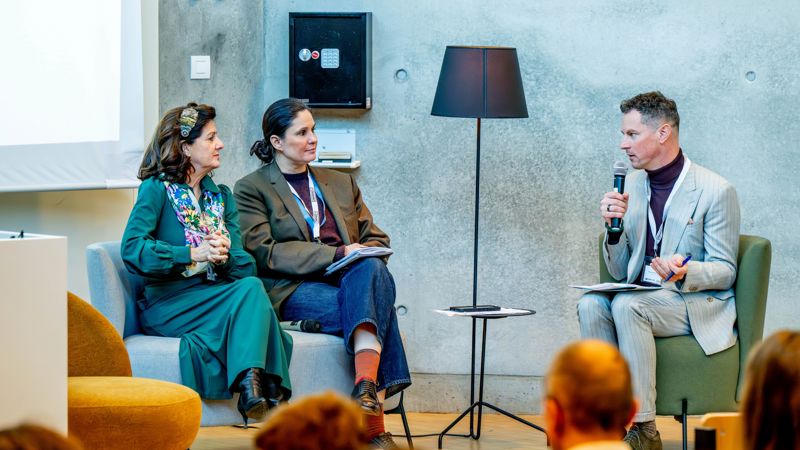
The programme continued with a keynote and panel discussion moderated by Professor Tom Kuppens (SES & BEW), featuring Professor Daniella Tilbury (University of Cambridge), an expert in sustainability leadership, and Ioana Dewandeler (European Commission), focusing on the societal and geopolitical dimensions of European cooperation. The conversation highlighted how universities can embed sustainability more structurally in governance, curricula and research practice.
“The discussions made it clear that European alliances such as EURECA-PRO are not mere administrative structures,” adds Elke Van Hellemont, Institutional Coordinator of the European University Alliance EURECA-PRO at UHasselt. “They are active spaces where universities can rethink how to collaborate across borders, experiment with new approaches, and drive real impact. This is a call to action: each institution must become a transformative actor, translating ambition into solid change for society.”
Following the keynote and panel, the energy in the room carried over into the Innovation Café. Participants split into smaller groups to brainstorm around different thematic tracks, such as “Driving Policy and Practice” and “Enhancing Community and Stakeholder Engagement”. Participants exchanged experiences on topics ranging from co-creating curricula with students to strengthening regional innovation ecosystems. “The enthusiasm was tangible,” reflects Anneke Kenens, staff member at Tech Transfer Office. “People were exchanging ideas and learning from each other. You could really feel a shared commitment to building stronger university communities within their regions.”


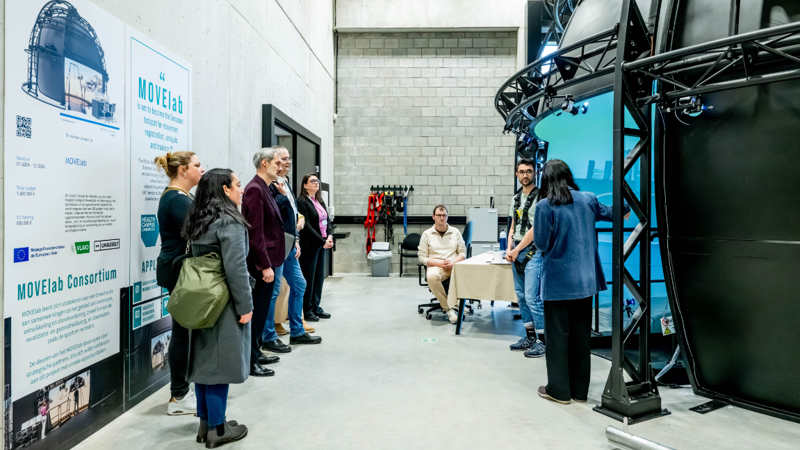
In the afternoon, participants visited Hasselt University’s research infrastructure and science parks, including MOVElab, the Application Centre for Concrete and Construction, and EnergyVille. The visits offered a glimpse into how research, industry and society interact within our regional ecosystem. “It was striking to see how quickly people engaged with our researchers,” notes Annick Hayen. “At some points, small groups were so immersed in conversation that they almost forgot to continue the tour. That is probably the best indicator of real interest.”
Day 3: Flagships in action
The final day focused on research, innovation and collaboration within the EURECA-PRO Flagship initiatives. Following enthusiastic introductions by Vice-Rector for Research, Professor Ken Haenen, and Director of OBI, Sadia Vancauwenbergh, participants explored themes ranging from “circular energy production and consumption” to “social sciences for transitions” and “sustainable materials for buildings”. “The Flagships are where strategy becomes concrete,” explains Hanne Surkyn, EURECA-PRO staff member at OBI. “They bring researchers together across institutions around shared strategic challenges.”
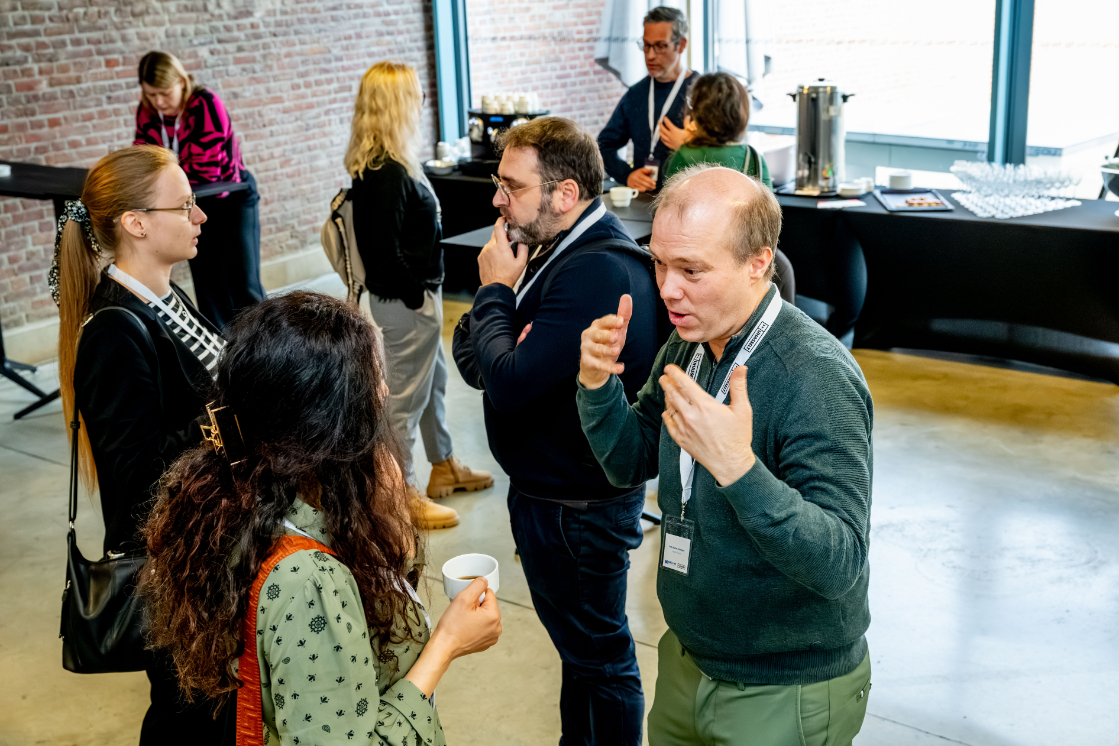
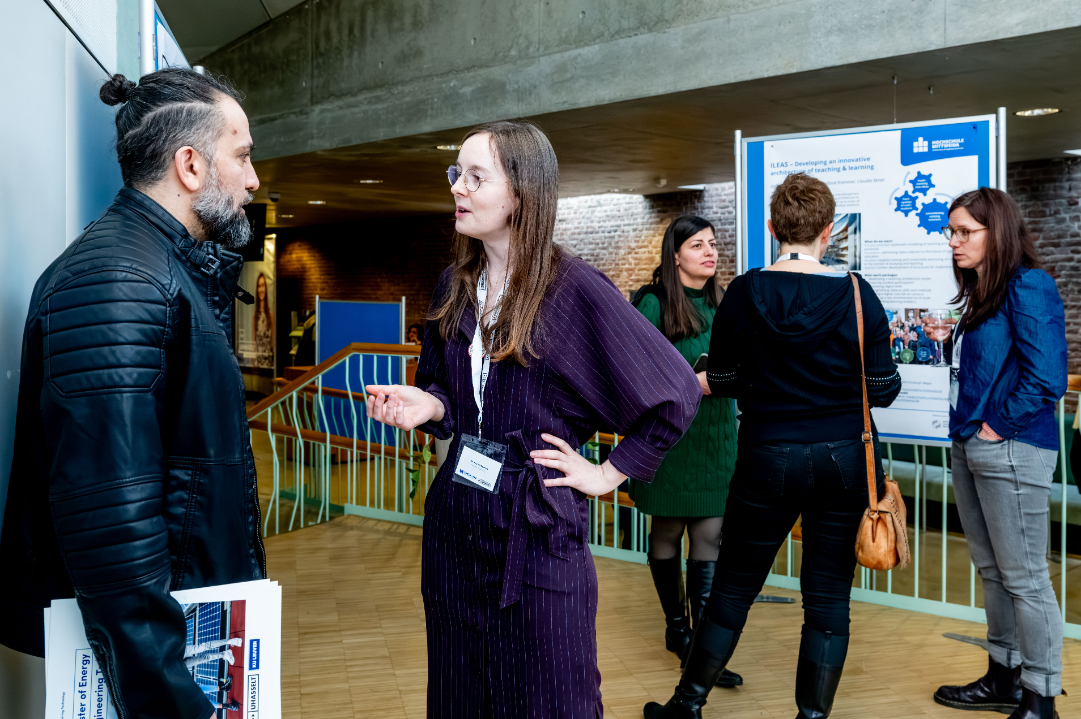
An interactive poster session offered participants a platform to showcase ongoing research, stimulate discussions across disciplines and exchange perspectives in a dynamic, open setting. Parallel sessions in the afternoon offered different entry points for collaboration. One session provided practical insights into European research funding through Horizon Europe, while five dedicated flagship sessions brought participants together around the specific thematic priorities. In these smaller groups, researchers exchanged ideas, identified shared interests and explored opportunities for new collaborations within the EURECA-PRO flagship domains.
Networking moments were intentionally spread throughout the programme, allowing conversations to continue informally between sessions. As Hanne observed, the energy of the day extended well beyond the formal programme: “It was inspiring to see people so engaged. Conversations didn’t stop at the session rooms; you could see ideas continuing to flow in the corridors and over coffee.”
The day closed on a note of enthusiasm and possibility, demonstrating the impact of collaboration across borders and disciplines. The EURECA-PRO Flagships are not just conceptual frameworks but active hubs where research, innovation, and societal engagement intersect, showing the alliance’s commitment to turning strategic ambitions into shared, actionable outcomes.
A shared achievement
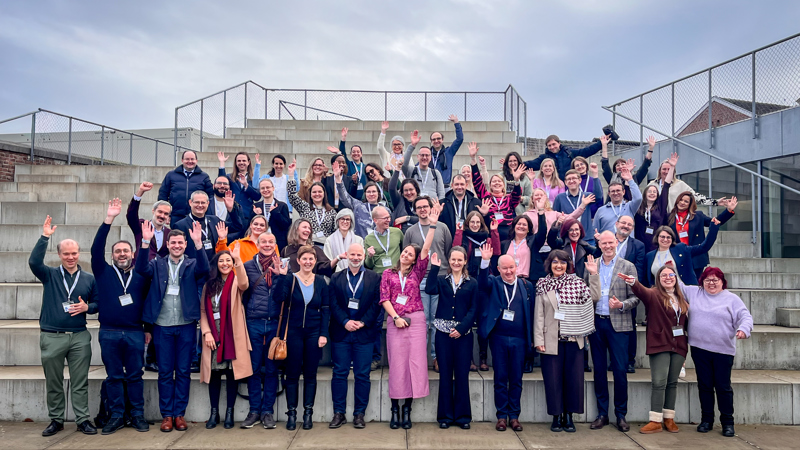
Organising an event of this scale is never simple. Bringing together more than 170 participants from 15 countries requires coordination, flexibility and trust. For many UHasselt colleagues, the event was also a moment to experience the strength of collaboration across teams and services. “It is inspiring to see how many colleagues contributed, each from their own role and expertise,” says Jolien Notermans, staff member at OBKZ. “This is what makes our university strong.”
As international partners returned home, the conversations and ideas continued within our community, a reminder that events like these are not an endpoint, but part of an ongoing collaboration across the EURECA-PRO alliance.