Cyriel Kortleven
"What energises you also shows you the way"
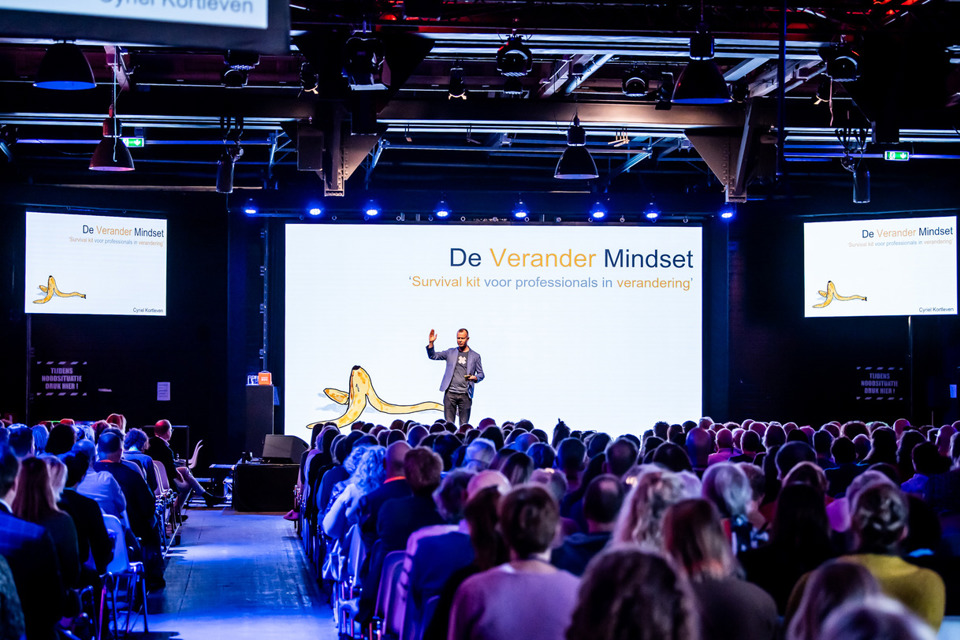
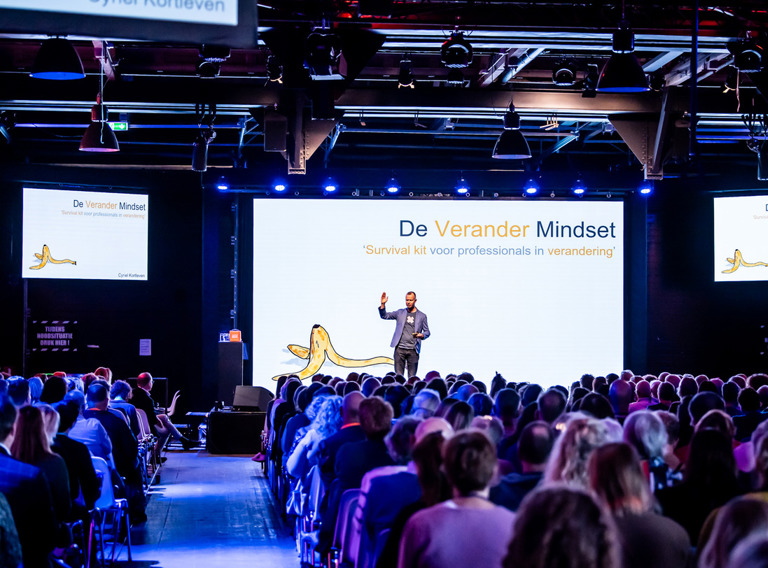
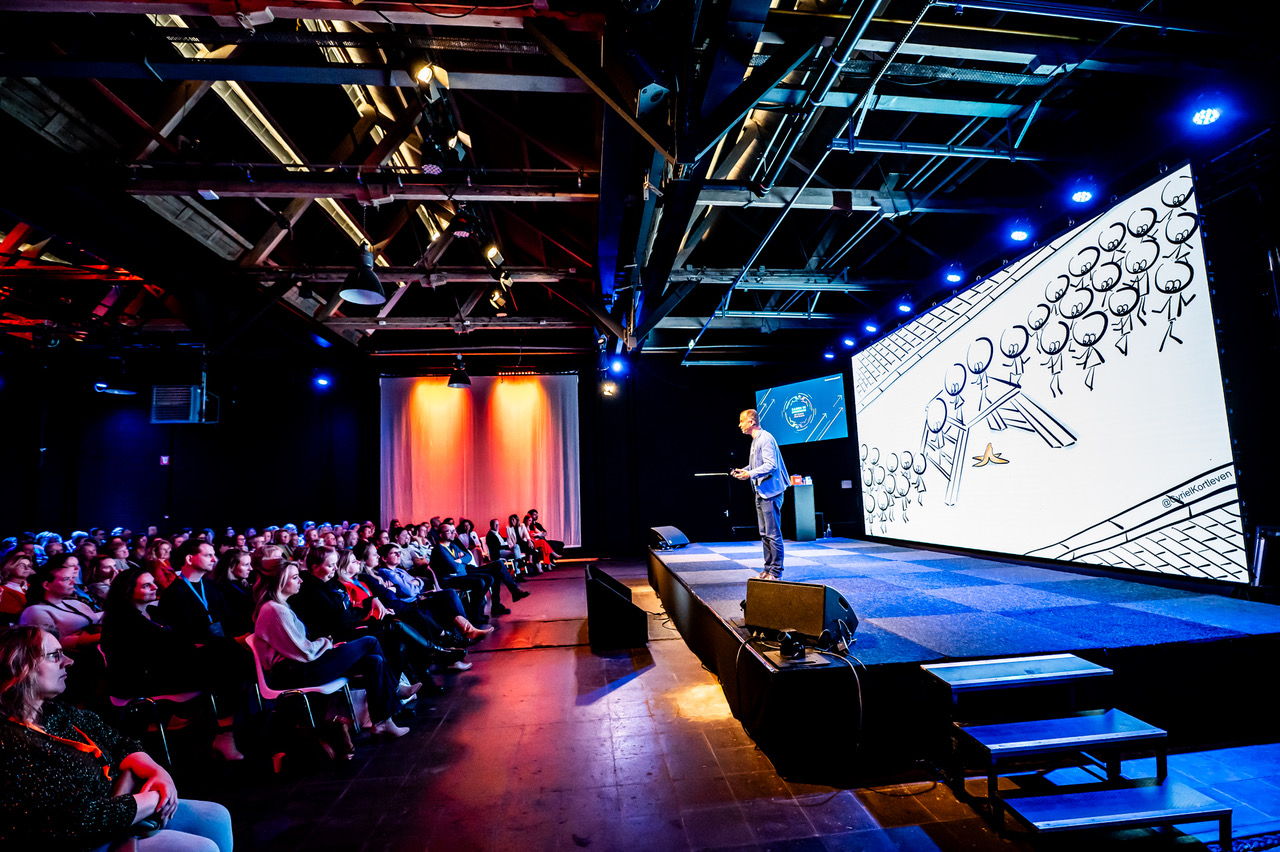
As a child, Cyriel Kortleven wanted to be a clown. To make people laugh and energise them, allowing them to break away from the daily grind for a bit. These days, that is exactly what he does, albeit not with a red nose, but with insights that resonate and incite people to take action. From NASA to IKEA and Unilever, the UHasselt alumnus helps organisations around the world to understand what needs to change, but also how they can do it. An international speaker on change mindset, Kortleven delivers more than 50 keynotes each year and has already gotten teams moving in more than 40 countries.
From a red nose to the stage
After studying business engineering at UHasselt, Kortleven did not have a set plan. “When I was 20, I knew one thing, namely that I knew nothing,” he says with a laugh. “It wasn’t until I started looking into personal development and creativity that all the pieces of the puzzle fell into place.”
Instead of immediately pursuing his “big dream”, Cyriel opted for a more gradual approach. “During the day, I had an office job. In the evenings, I organised creative sessions. I experimented, learned, and built my dream up step by step.” What started with facilitating brainstorms and creative processes slowly evolved towards public speaking. The stage became his happy place. “Turning a four-hour workshop into an inspiring, positive and energetic 40-minute story: it’s more difficult than you think. You need to get to the heart of the matter very quickly, so people are on board with what you’re saying. But that is exactly what I find so inspiring about it.”
Dare to experiment
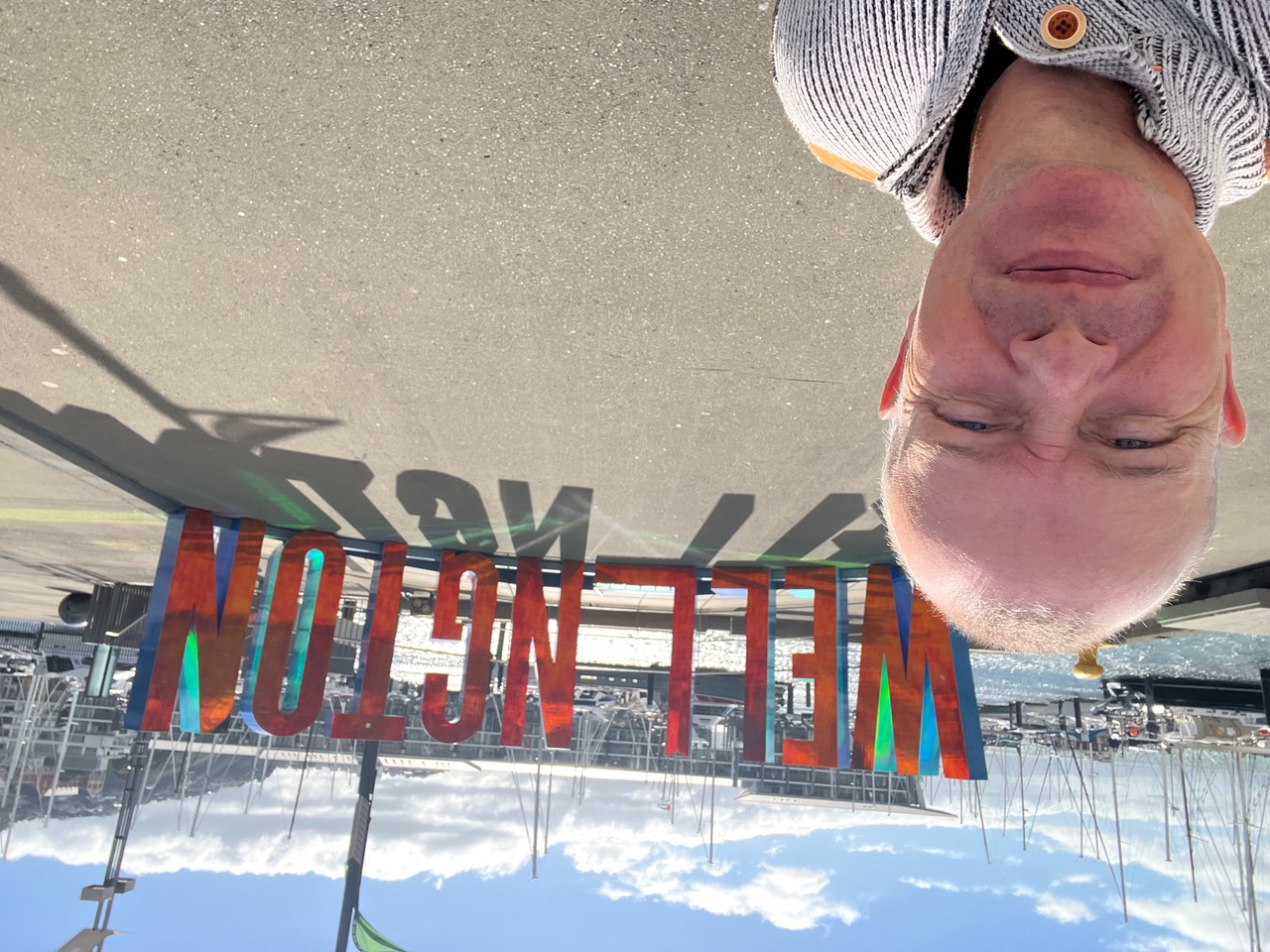
He wanted to go international from the outset. “New Zealand was the furthest I could go, so I set my sights on that,” he says. With no network to tap into, he decided it was time for an experiment. He sent 10 LinkedIn messages and got three responses. “Six months later, I was on stage in New Zealand. That first talk barely covered the cost of my plane ticket, but it got the ball rolling.”
Experimentation became his method. “We often think in terms of success or failure, but there is also something in the middle: something that you haven’t pulled off yet but was the push you needed to get the ball rolling. What worked in New Zealand did not work at all in other settings. But you can’t give up. Instead, you need to adapt things and give it another go.”
“Often, people don’t like change. New approaches are instinctively met with a “yes, but”: no time, no budget… My initial response is the same. But you can learn to redirect these responses: from idea killers to idea boosters. And that’s where I can help organisations.”
Want to give it a try yourself? Go to: www.ideakillers.net!
Short bio
STUDIES
-
1994-1999: Master of Business Engineering, UHasselt
-
1998-1999: master’s degree in SME, VIZO
-
2002-2003: process coaching, Matrix
-
2001-2011: expert in creative thinking, School of Creative Thinking
-
2016-2017: Certified Professional Speaker (CPS), Global Speakers Federation
WORK EXPERIENCE
-
1999-2002: management trainee, ORMIT
-
2002-2005: creative support office manager, Centre for Development of Creative Thinking - (COCD - present: School of Creative Thinking)
-
2004- present: global professional speaker, CyrielKortleven.com
10 questions for Cyriel
After secondary school, I went on to study business engineering because...
“I still had no clue what I wanted to do in life. I did well at school, was interested in many things, and my father had studied economics. It felt like the logical thing to do. In hindsight, psychology would have also been a good choice. But this programme gave me a broad base, and it also taught me the language of business. I find it really helpful in what I do now.”
What made studying in Diepenbeek so special...
“The small scale. The small groups in the classes made all the difference. The trimester system also meant we had a different study rhythm.”
My favourite spot on campus was...
“The agora, with those blocks and pits. It was like a crossroads. You’d see everyone there, and you’d automatically end up striking up a conversation, but you could just as easily find a quiet corner to read a bit.”
The teacher who inspired me the most was...
“Willy Desayere, who taught a course on creativity, really made me think differently for the first time. Felix Corthout also made an impression on me: he brought theory to life with captivating stories from the business world. I found it really inspiring. Later, Hilde Martens and I crossed paths again, when I gave some guest lectures around creative thinking.”
As a student, I was…
“rather average, perhaps even a bit invisible. I didn’t really know what I wanted yet, and I didn’t excel at anything. It was only after I graduated that I began to do research into personal development and creativity, and that things fell into place.”
If there’s one thing I learned at UHasselt, it’s..
“learning to collaborate with very different types of people. I soon realised that things went smoothly in some group work settings, and other times they just didn’t. But that’s when you learn to coordinate, set boundaries, and move forward together.”
How would you describe your job in no more than 5 sentences?
“I am an international speaker on change mindset. Organisations come to me when there are major changes in the pipeline: a merger, a new CEO, or the impact of AI. Through my presentations, I help people adopt a more open and flexible mindset, reducing resistance. My story is deliberately simple and practical. Over the past 10 years, I have dedicated myself to speaking in public: it’s become my specialisation.”
What do you find most enjoyable / challenging about your job?
“What I like about it is that I get an insight into many different trades. I have since delivered keynotes in a wide variety of sectors in 42 countries. Every time, I realise how similar the challenges are. It’s always about getting people on board with change. What I find most challenging about it? I only spend a small part of my time on a stage. The rest of it is spent on preparation, acquisition, and fine-tuning my story. You need to have a very keen sense of what is going on and what works best with your audience.”
In my opinion, the key to success lies in...
“personal development and self-insight. It was only after graduating that I really started to understand what energises me and makes me happy. Once you know that, you can take more targeted steps. Also, don’t be afraid of experimenting and testing things: you don’t need a major overhaul to chase your dreams. Many people are held back by fear or by what they think they stand to lose. But often growth is all about giving things a try. Don’t be too hard on yourself: not everything has to be a success from the outset.”
If you were able/want to do something or give back to your alma mater, what would it be?
“students can always contact me for a chat or if they are interested in personal development. I’d love to give another guest lecture or a talk at an alumni event. And I genuinely believe that training should also acknowledge that people have questions like “What makes me happy?” and “What are my values?”. I’d be more than happy to contribute, if UHasselt wants to focus on this.”


