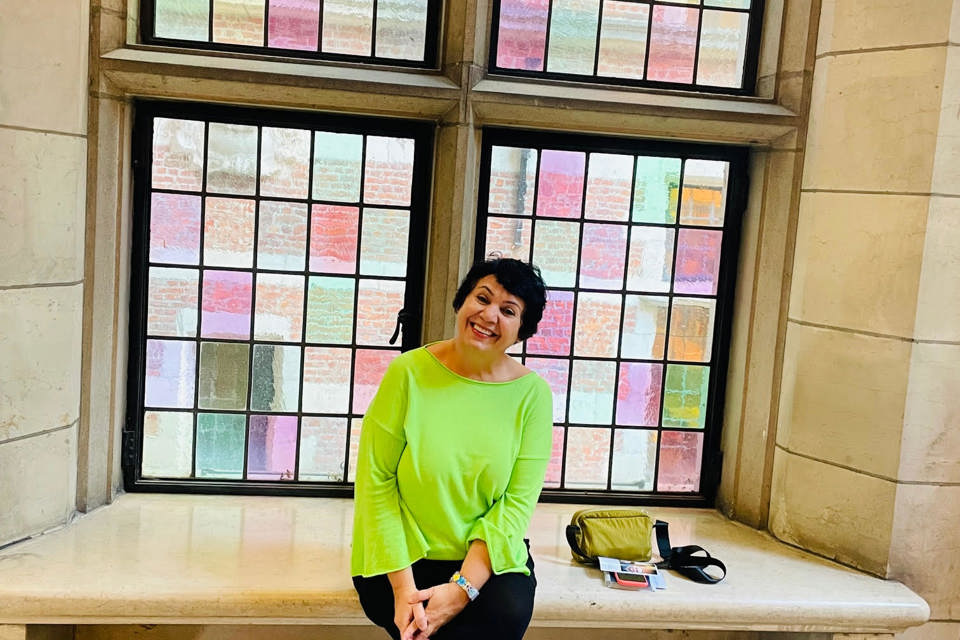
Sharareh Hosseinzadeh
‘I have an unquenchable thirst for new knowledge’
‘From molecules to the patient’: that is how Sharareh Hosseinzadeh likes to summarise her career to date. At age 18, she left Iran with a suitcase full of hope and an unquenchable thirst for knowledge. In Canada, she built a new life. Becoming a doctor was not an option. Instead, she found her calling in toxicology and pharmacology, namely to understand how science affects people.
Continue to feed and re-energise yourself
Travel, continue to learn, reinvent yourself: these are definitely common themes in Sharareh Hosseinzadeh’s life. ‘I have an unquenchable thirst for new ideas and knowledge, and the great fortune that my career has presented me with this time and again.’ Sharareh has lived in 11 countries and has held various roles in drug development and clinical research. ‘Each step brought new perspectives, new ideas, and new energy,’ she says. ‘And to be honest, even my education at UHasselt, which I combined with a full-time job, was a re-energising experience. A chance to feel curiosity and wonder again, and expand my outlook.’
From formulas to people
Sharareh has built an impressive international career at the intersection of science, patient-partnership, and leadership. She led large research teams at global players like Novartis, but over time, her focus shifted from new molecules to patients’ unmet healthcare needs. ‘Pharmaceutical research, clinical development, patient engagement: they are all related,’ she says. ‘You need to understand the chemical formulas and regulations. But if you don’t know what patients really need, you will never be able to set up a robust clinical trial. For many years, however, this was far from evident.” She broke the waves with her pioneering College Champion Network at Novartis, where eighty volunteers engaged directly with patients to translate their experiences into better research. ‘Fortunately, the patient’s voice is no longer a note in the margins these days; all clinical research revolves around it.’
New frontiers, new energy
After this impressive career path, Sharareh has deliberately opted for a sabbatical, giving herself a year to breathe, reflect and learn. ‘You need this if you want to keep giving it 100%,’ she says. ‘There are still so many challenges in healthcare, and I want to continue to be part of the solution. In policy, perhaps, or even in research. But to do this, you need to keep moving, keep feeding yourself and dare to grow.’
Short bio
STUDIES
- 1992: Bachelor’s degree in Pharmacology and Toxicology, University of Toronto (Canada)
- 1993: Master’s degree in Pharmacy Management and Jurisprudence, University of Toronto (Canada)
- 2010-2012: Master’s degree in Biomedical Science, Environmental Health (UHasselt)
WORK EXPERIENCE
- 1993-1995: Formulation chemist at Purdue Pharma and Apotex (Canada)
- 1995-2003: Clinical Research Scientist at AstraZeneca (Canada), RxKinetics (US) and Allergan (US)
- 2003-2013: Senior scientist at Novartis Vaccines (Italy) and Medtronic (Netherlands)
- 2013-2017: Director of Respiratory Clinical Development at Novartis (Switzerland)
- 2017-2022: Global Head, Scientific Patient Engagement in Global Drug Development at Novartis (Switzerland and Canada)
- 2024– present: Member of the advisory board of the Clinical Research Association (Canada), member of the Task Group and consultant MRCT Center (US), senior clinical consultant and director at the University of Toronto (Canada), visiting scholar at KU Leuven
10 questions for Sharareh
After studying pharmaceutical sciences, while working full-time, I went on to study biomedical sciences because...
‘I felt that science was evolving faster than I was, especially after the breakthrough in human genome research. While working on a vaccine for bird flu in Italy, I began actively seeking ways to deepen my knowledge. The Biomedical Sciences - Environmental Health programme at UHasselt immediately appealed to me as it combined my passion for health, environment and prevention.’
What made studying in Diepenbeek so special was…
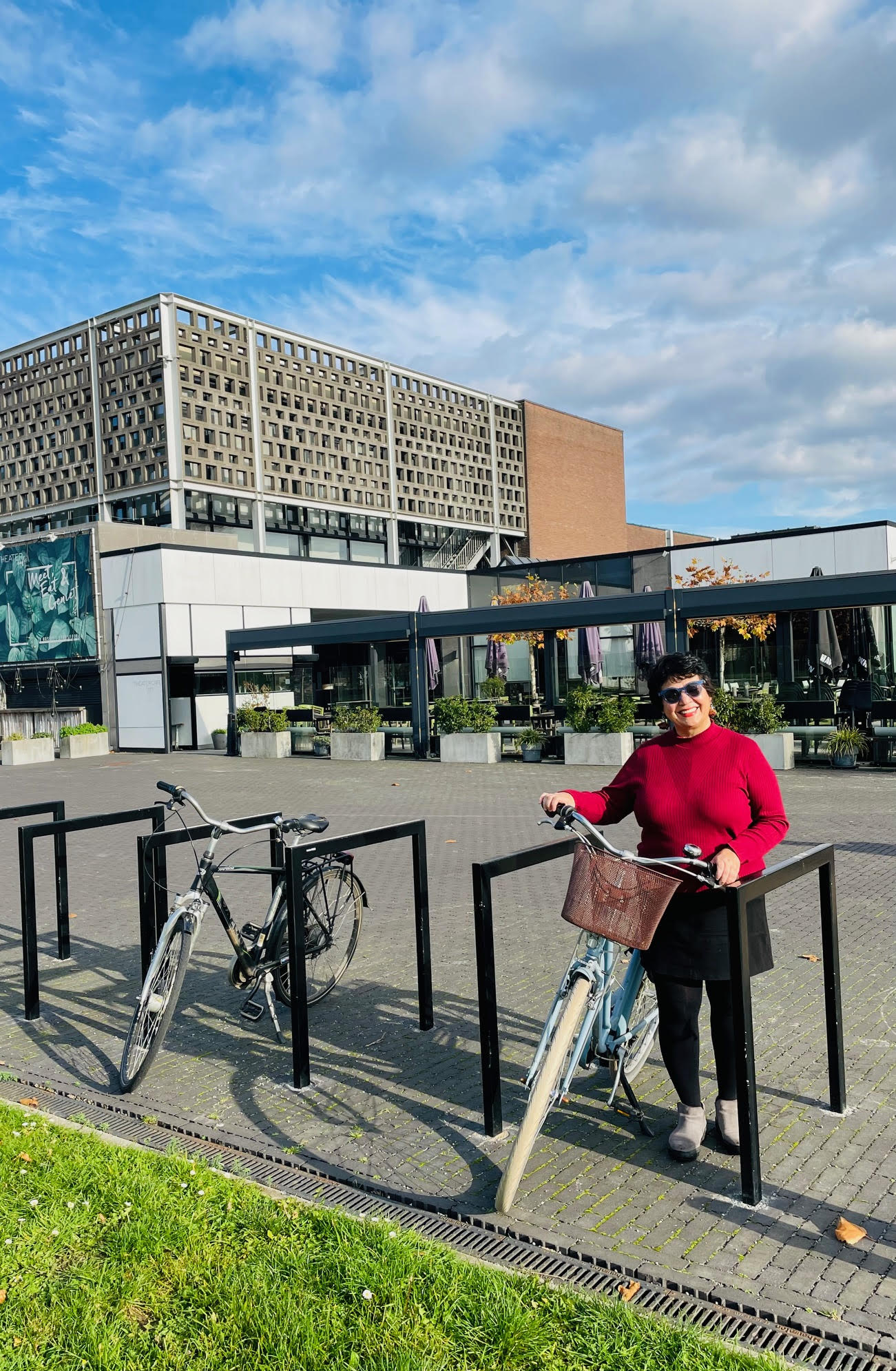
‘the combination of ambition and a small scale. After living in a big city like Toronto, the green campus, cycle paths, and the human approach felt like a breath of fresh air. Discussions in small class groups were deep and personal, while the collaboration with Maastricht provided an international horizon. Studying at a small university with a big heart and big ambitions: it felt right from the outset.’
My favourite spot on campus was...
‘The sports centre. For me, sport has always given me a way to clear my mind. While running, I processed all the knowledge of the day.’
The teacher who inspired me the most was...
‘Professor Jan Colpaert. He challenged us to think further and, even then — long before it was mainstream — talked about the health risks of climate change. Professor Tim Nawrot also made an extraordinary impression with his research on air pollution and preventive health. Their lessons taught me that real health starts with prevention. And I vividly remember Professor Geert Molenberghs’s course on biostatistics. He was a great lecturer. Some of the examples of benefit-risk analyses he shared with us proved particularly useful in my later clinical research.’
As a student, I was…
‘The oldest one in the group, but I felt that this was an asset. I was able to share my experience, coach and motivate other students. I had a busy schedule, combining my studies with a full-time job, but I was very motivated. On weekends, I often ventured out: exploring new cities, reading papers on the train, and getting to know Belgium. Learning, working and living – all this combined helped me keep my balance.’
If there’s one thing I learned at UHasselt (that I still use in my job today), it is…
‘The value of local, sustainable agriculture. The idea that health also starts with what we produce, consume and how we take care of our environment.’
How would you describe your job in no more than 5 sentences?
‘I built a career at the intersection of pharmaceutical research, clinical development and patient engagement. At Novartis, I was among the first to integrate patient insights into drug research – we built bridges between science and patient knowledge and experience. This year, I chose to take a sabbatical to learn and grow again. But my goal remains the same, namely to be part of the solution to tomorrow’s health challenges.”
What do you find most enjoyable / challenging about your job?
‘Inspiring people. I am energised by teams that work well together with passion and commitment. When I feel we are building something meaningful together, that’s when I know: this is why I am doing this. This shared motivation is contagious.’
In my opinion, the key to success lies in...
‘Taking good care of yourself. You can only achieve your goals if you stay healthy, focused and resilient. I always create a five-year roadmap and tactical plan for myself to stay my course. At the same time, I always deliberately add some time to recharge. During working hours, I give it my all, and then I let go. I have never done overtime. Success is not about putting in long hours, but about vision, clarity, energy and satisfaction.’
If you were able/want to do something or give back to your alma mater, what would it be?
‘My time. I would love to mentor students seeking their path in biomedical sciences. To help them think about their future, about how they can create impact. And I am happy to share my experience and publications. Mentoring is, I think, the best way to pay it forward.’