
Innovative Vitrectomy Technology
Vitrectomy is a widely performed surgical procedure in ophthalmology, used to treat a broad range of retinal and vitreoretinal disorders such as retinal detachment, diabetic retinopathy, macular holes and vitreomacular traction, by removing the vitreous gel from the eye to allow safe access to the retina. Our technology sets a new standard in vitrectomy by combining higher performance with improved safety.
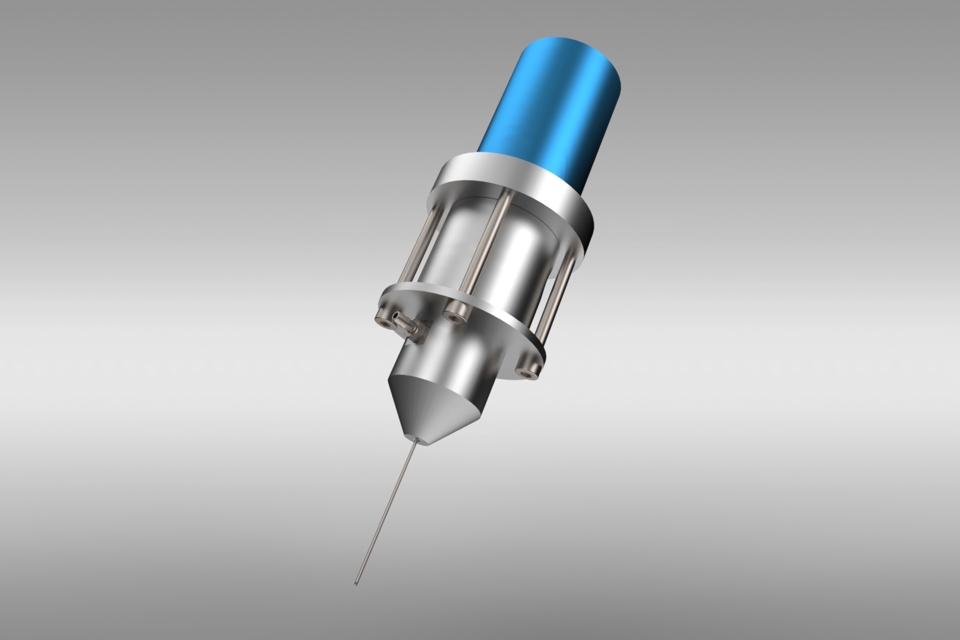
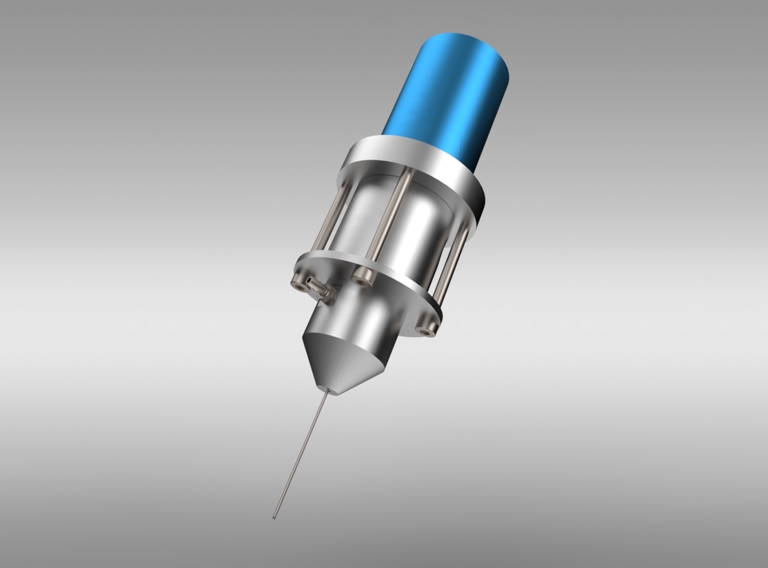
Globally, the number of vitrectomy procedures continues to rise due to ageing populations, increasing prevalence of diabetes-related eye disease, and expanding surgical indications. In Belgium alone, approximately 12,000 vitrectomies are performed annually, a number that is expected to further increase in the coming years. The global vitrectomy market is valued around 2 billion dollar annually and expected to grow significantly with a Compound Annual Growth Rate (CAGR) between 5 and 15%. Despite its routine use, current vitrectomy technology still faces limitations in cutting efficiency and safety, particularly when operating close to delicate retinal structures.
Furthermore, since the introduction of the guillotine cutter, cutting speed has grown slowly to a max of 20.000 cuts/min and gauge sizes have decreased from 20 to 27 gauge. There has not been any significant leap in this technology and cutting speed is limited by cutter design (and vibrations, heating and noise). This creates a strong clinical and market demand for next-generation vitrectomy solutions that improve performance without increasing procedural risk. We developed a novel vitrectomy technology that addresses these needs while remaining compatible with established surgical practice.
Technology
The technology is based on a novel mechanical vitrectome concept that fundamentally rethinks how cutting efficiency is achieved.
Rather than incremental modifications, the invention introduces a new cutting principle that allows:
- higher effective cutting speed;
- improved vitreous flow behaviour with less oscillations;
- improved fluidics.
The technical details and embodiments are fully described and protected in an international patent family, including:
- Europe (EPO) – EP4274528: Granted (UP + United Kingdom and Spain)
- United States – US20240065890: Published, pending
- Japan – JP2024506796: Published, pending
- China – CN116887793: Published, pending
Our research & development
The concept has been translated into a working prototype and experimentally validated within a laboratory environment as well as in an ex vivo eye model.
Key milestones:
- functional demonstrator developed and tested;
- validation in laboratory and ex vivo model;
- clear performance differentiation versus current standard vitrectomes;
- defined roadmap toward further validation and industrial development.
The technology is currently positioned at TRL 5, technology validated in relevant environment.
Our unique offer for you
- Disruptive mechanical vitrectome concept with strong differentiation;
- Clinically driven innovation, developed by an experienced vitreoretinal surgeon;
- Strong IP position, with granted and pending patents in major markets;
- Licensing-ready opportunity for established ophthalmic device companies;
- Clear pathway toward further development and market introduction.