
NCLX as regulator for Treg functionality
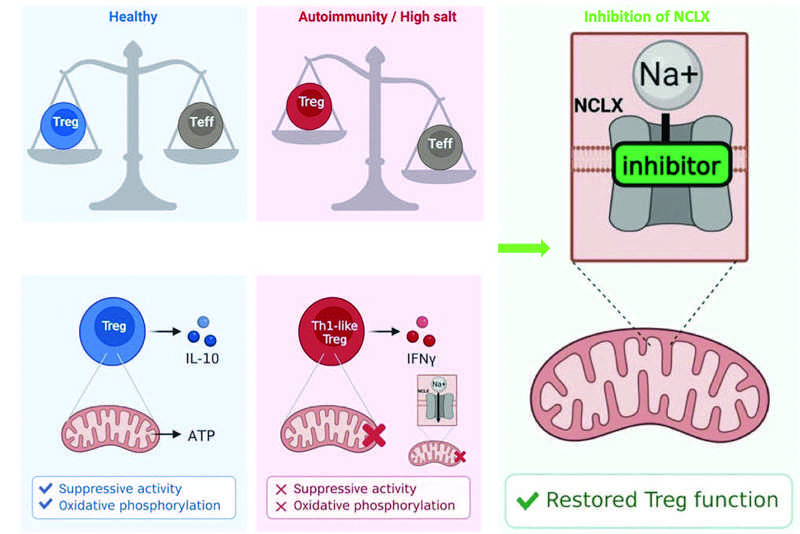
Regulatory T cells (Tregs) play a critical role in maintaining immune tolerance and preventing autoimmune responses. The functionality of Tregs can be compromised under certain pathological conditions, such as in autoimmune diseases and chronic inflammatory diseases. Recent research by Hasselt University and MDC Berlin-Buch has highlighted the mitochondrial Na+/Ca2+ exchanger (NCLX) as a key player in Treg dysfunction under high sodium conditions. This invention focuses on inhibiting NCLX to enhance the stability and function of Tregs, thereby improving their therapeutic potential.
COMPELLING RESULTS
- Enhanced Treg Functionality: Inhibition of NCLX in Tregs improves their metabolic fitness and long-term function under high-sodium conditions or in disturbed Na+ ionic microenvironments that can occur under inflammatory or hypoxic conditions.
- Therapeutic Potential: Tregs with inhibited NCLX exhibit increased efficacy in treating autoimmune and inflammatory diseases.
- Broad Application: NCLX-inhibited Tregs can be used in adoptive Treg cell transfer therapy, enhancing their use in various therapeutic contexts including transplantation and cardiovascular diseases.
KEY FEATURES AND ADVANTAGES
- Increased Stability: NCLX inhibition leads to more stable Tregs, which are less prone to dysfunction under high-salt conditions or in disturbed ionic microenvironments.
- Improved Metabolic Fitness: Tregs with inhibited NCLX show better metabolic profiles, crucial for their survival and function in inflamed tissues.
- Versatile Applications: These Tregs can be polyclonal, antigen-specific, or engineered with T cell receptors (TCRs) or chimeric antigen receptors (CARs), allowing for a wide range of therapeutic uses.
- Customizable Inhibition: NCLX can be inhibited using pharmacological compounds, gene editing techniques, or inhibitory oligonucleotides, providing flexibility in how the inhibition is achieved.
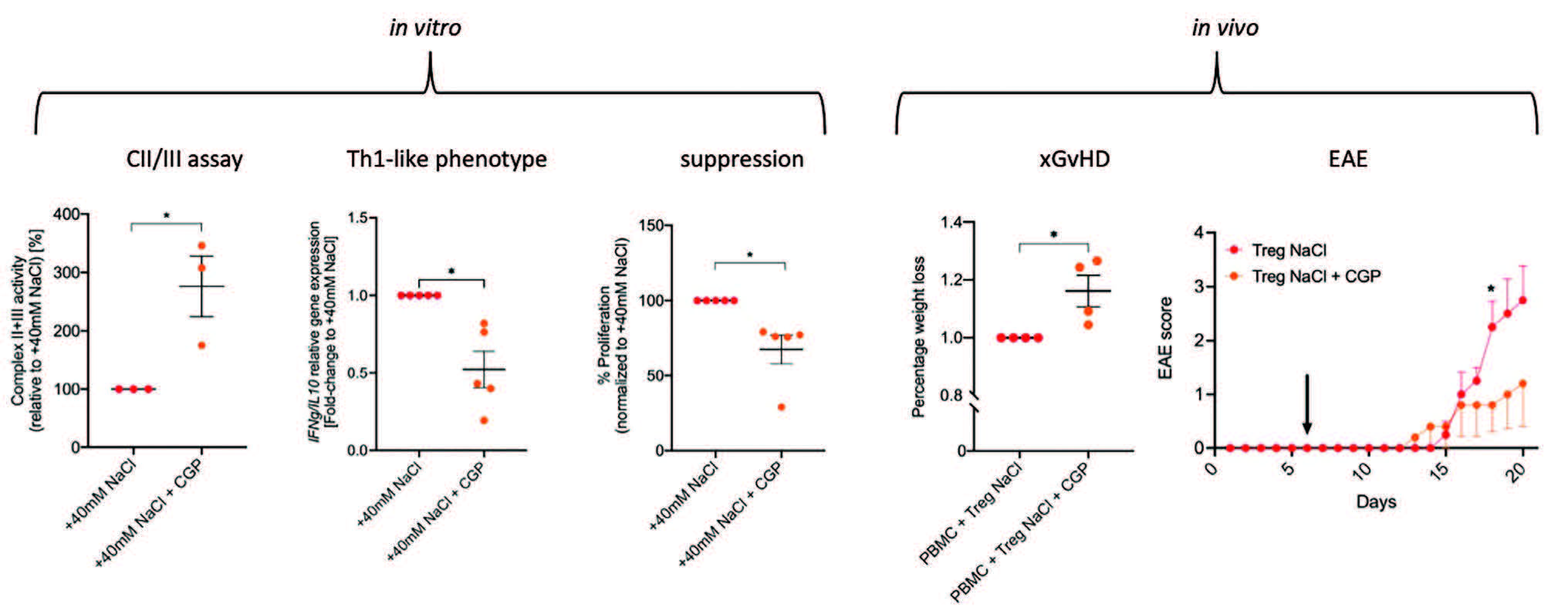
Reversal of Treg Na+-induced mitochondrial dysfunction. Disturbances in the ionic microenvironment and subcellular shifts of Na+ could occur under various conditions (e.g. high-sodium intake, inflammation, hypoxia) thereby affecting Treg mitochondrial function, fitness and stability. Inhibition of NCLX (+CGP) has been shown to partially reverse Na+ induced Treg dysfunction in vitro (left) and in adoptive Treg transfers in vivo (right).
MARKET POTENTIAL
The market potential for this invention is significant, spanning multiple areas of medical treatment:
- Autoimmune Diseases: There is a high demand for effective therapies for conditions such as rheumatoid arthritis, multiple sclerosis, and type 1 diabetes. Enhanced Tregs can address these needs more effectively than current treatments.
- Chronic Inflammatory Diseases: Conditions like Crohn’s disease and ulcerative colitis can benefit from therapies that provide better control of inflammation through improved Treg function.
- Transplantation: Preventing graft rejection remains a critical challenge in organ transplantation. Enhanced Tregs can significantly improve graft survival and patient outcomes.
- Cardiovascular Diseases: There is growing evidence linking immune responses to cardiovascular health. Enhanced Tregs can play a role in mitigating these effects, offering a novel therapeutic avenue for e.g. stroke.
Overall, the invention holds promise for improving patient outcomes across a variety of diseases, positioning it well within a market that values innovation in immunotherapy and precision medicine.
OUTSTANDING OPPORTUNITY
Patent application is available for licensing (WO2024156726).
Both universities are searching interested parties to complete development and commercialization.
REFERENCE
Côrte-Real et al., 2023, Cell Metabolism 35, 299–315.
https://doi.org/10.1016/j.cmet.2023.01.009
BUSINESS MANAGER

Would you like this information in a pdf? Click here. (pdf, 692 KB)