UHasselt, imec and Soltech open test field for free-standing structures with integrated solar cells
EnergyVille partners UHasselt and imec, together with Soltech, are joining forces to extensively test and monitor their latest solar cell and panel technologies on a 55-are site at Thor Park in Genk. In the test field, researchers will focus on a wide range of structures with integrated solar cells, ranging from canopies, vertical walls and noise barriers to constructions for agricultural applications. This test field allows researchers to test new technologies more quickly and in a monitored environment, while also enabling collaboration with innovative companies from the construction sector and infrastructure projects.
The test field is part of the EFRO investment project IN2PV. It will be a controlled environment where researchers can test new technologies without time-consuming permitting procedures. “Here we have all the techniques and sufficient space available to thoroughly test products, both materials we develop and scale up ourselves in our EnergyVille laboratories and materials from industrial partners,” says Prof. Dr. Michaël Daenen (UHasselt/imec/EnergyVille), coordinator of the IN2PV project.
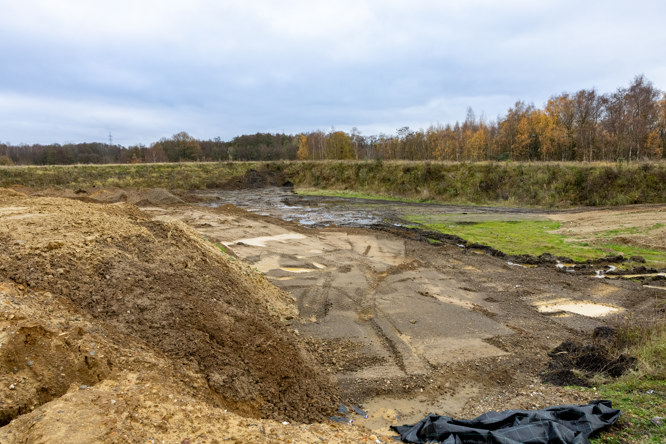
Photo: the 55-are test field is now being prepared.
Detailed measurements
The test field does not focus on conventional solar panels, but on new applications in which the solar panels themselves are an integral part of the structure, such as canopies for car parks, noise barriers or agri-PV solutions for agriculture. All these constructions are monitored using the very latest measurement technologies housed in two container units on site.
“In addition to cameras for electroluminescence (EL), photoluminescence (PL) and infrared thermography, we also have state-of-the-art meteorological equipment and PV installation monitoring. This includes imec-patented fiber-optic sensors that allow us to measure temperature and mechanical stress inside the modules and accurately track degradation processes over multiple years. In addition, meteorological data such as sunlight, wind, rain and passing cloud cover are meticulously recorded,” says Michaël Daenen.
Collaboration with industry
“We already have test modules for solar panels at numerous locations at home and abroad that we monitor. But applying for permits alone involves a great deal of work and time. With our own test field, we can work faster in the coming years, for example when an industrial partner, either local or European, contacts us to develop or test a product with integrated solar cells. Moreover, the test field ensures that all research is carried out in a controlled environment, so that measurements are always reliable,” says Michaël Daenen.
Bas van de Kreeke, CEO of Soltech, also sees many advantages in the new test field. “The ecosystem at Thor Park is unique. The proximity of knowledge, research and industry creates a strong dynamic from which Soltech benefits every day. Innovations that originate in the laboratories and products we build in our factory can now be tested and refined immediately in this field. European support for this type of initiative is indispensable. If we want to strengthen our position, Europe must pull out all the stops to fully support both PV research and the industry behind it.”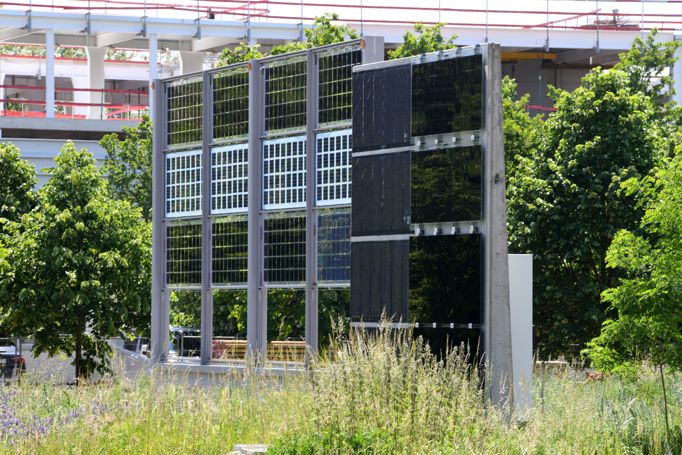
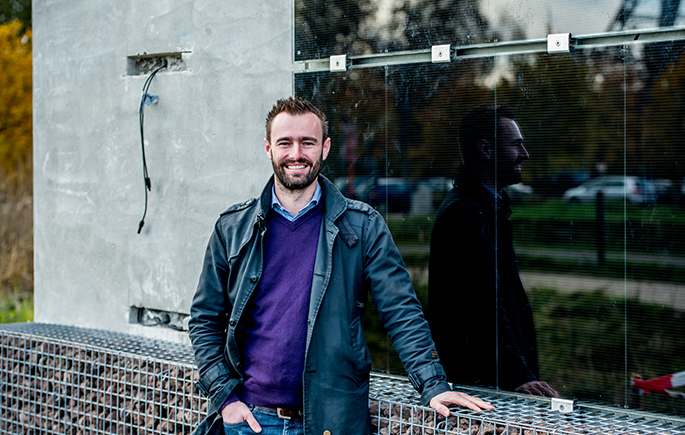
Photo: Noise barrier with solar cells at Thor Park. This type of freestanding structure will be tested on the new test field.
Breeding ground for innovation
“With the opening of this test field, we are taking an important step in the further development of Thor Park as a breeding ground for innovation. It offers researchers and local companies the opportunity to test technologies within the Open Thor Living Lab, an open environment for research and demonstration of energy, mobility and building solutions. In this way, we strengthen the local innovation landscape and bring researchers and companies closer together for joint projects and innovation. Thor Park thus remains a vibrant hub where science, entrepreneurship and sustainability come together,” says Wim Dries, Mayor of the City of Genk.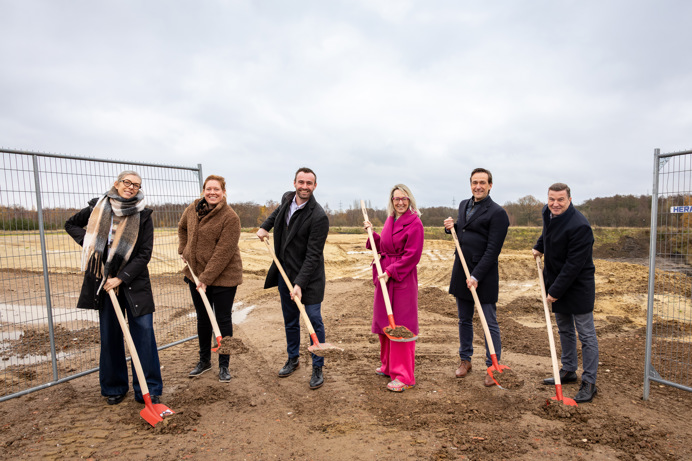
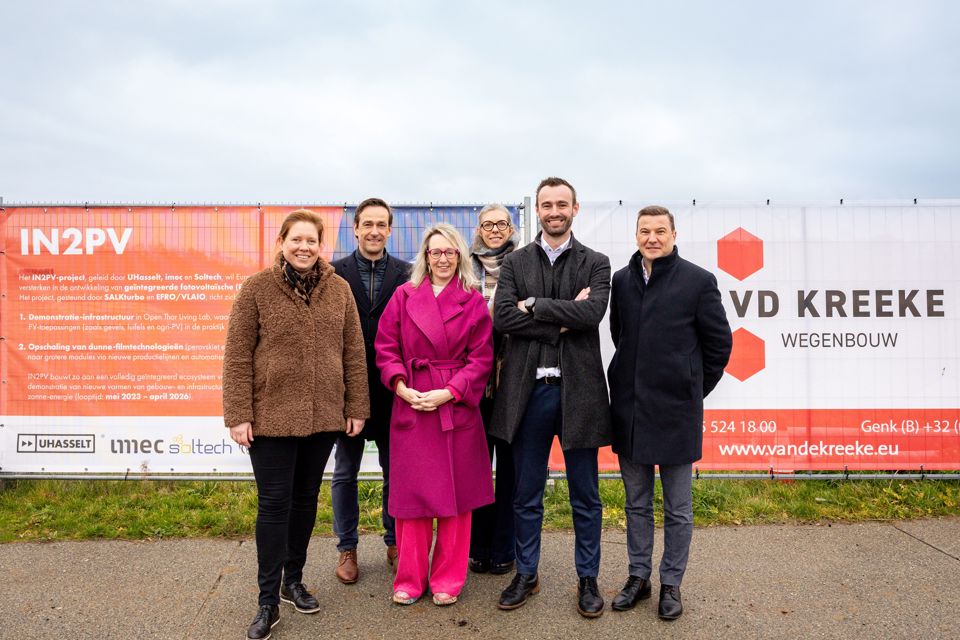
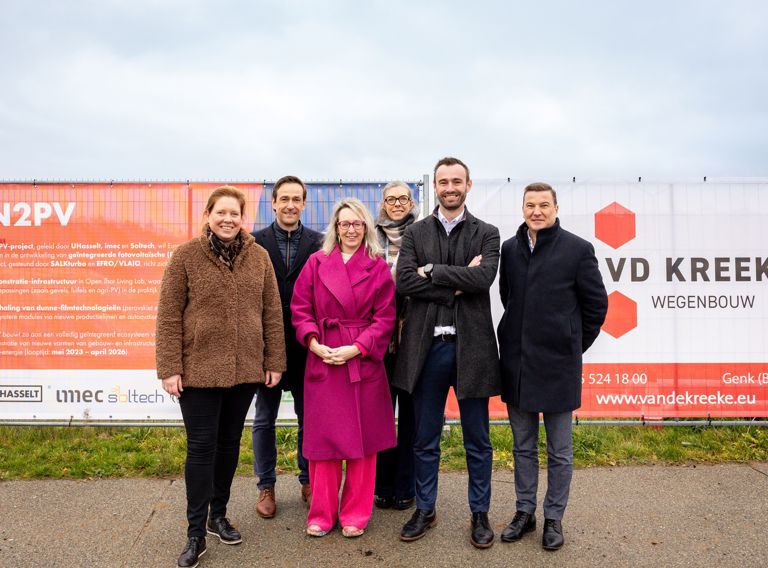
Photo: Annelies Gorissen (POM Limburg), Bas van de Kreeke (Soltech), Anniek Nagels (City of Genk), Marlies Van Bael (UHasselt/imec), Michaël Daenen (UHasselt/imec), Bernard Vanheusden (UHasselt) at the official opening of the IN2PV test field.
Investment project
This test field represents a new step within the EFRO investment project IN2PV. Within this project, Soltech previously already had the opportunity to install demonstrators on its building, and investments were made in new equipment in EnergyVille’s laboratories to scale up thin-film solar cell modules.
“With this test field, we are once again taking a strategic step forward to become a European key player in the next generation of solar cells. Limburg is building an open innovation environment here where research and industry meet at the scale needed to achieve real breakthroughs. IN2PV gives our companies direct access to new applications of integrated solar cells and accelerates their route to market-ready products. This is exactly the type of infrastructure that strengthens our economy while also providing direction for the energy solutions of tomorrow. The one million euros in SALK funding that we are providing should help create significant added value for Limburg,” concludes Tom Vandeput, Provincial Deputy for Economy.


Do you have a question? Get in touch!
Prof. Dr. ir. Michael Daenen