
BeamPipes4ET
The BeamPipes4ET project aims to produce vacuum pipes for the Einstein Telescope directly on site. Using an automated robot, the project can weld long sections underground, reducing transport and construction time. This innovative approach promises a faster, more efficient, and sustainable solution.
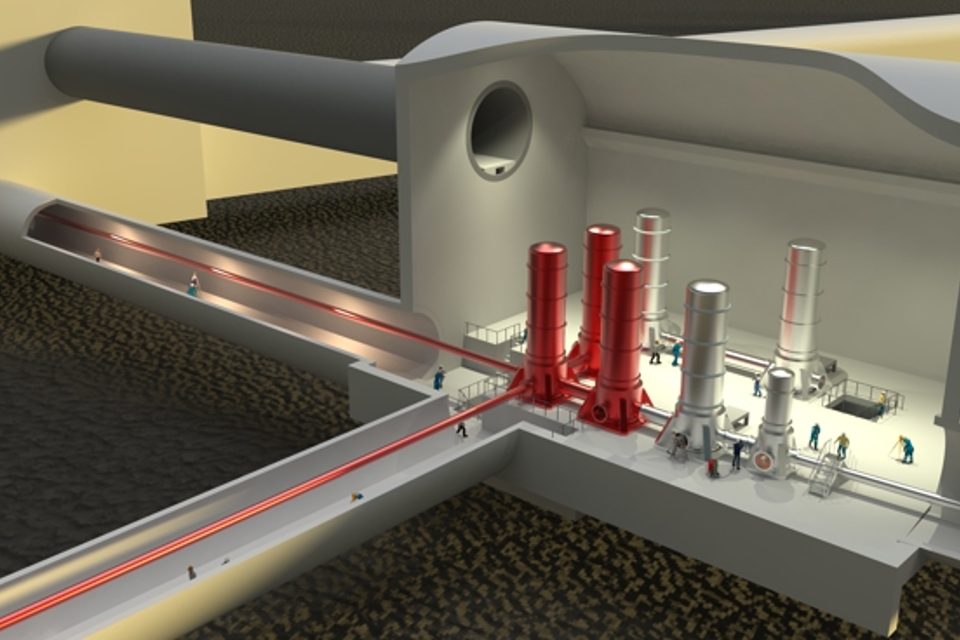
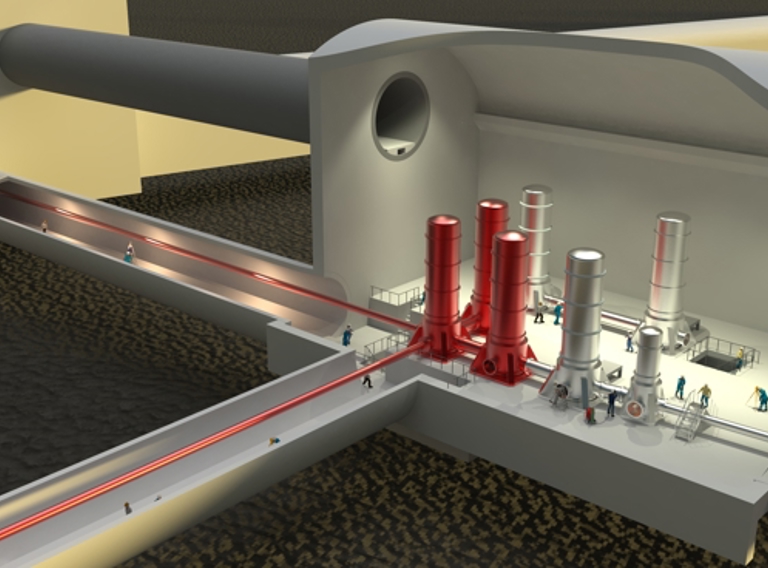



The Einstein Telescope requires approximately 130 kilometers of vacuum pipe. One option is to weld these pipes together underground in 20-meter sections, but that would be a difficult and time-consuming task. In addition, the pipes would need to be manufactured elsewhere and then transported to the Einstein Telescope site.
The BeamPipes4ET project is investigating whether it would be better to build a machine capable of welding a pipe inside the telescope’s underground caverns using large rolls of sheet steel. This would make it possible to weld hundreds of meters of pipe in a single operation. It would also significantly reduce transport by road or rail.
BeamPipes4ET therefore opts for an innovative approach by producing the vacuum pipes directly on site. The project is developing an automated robot that can move through the pipes during fabrication to ensure efficient, continuous production.
Within this project, IUMAT will focus on evaluating the quality of the welds. We assess the mechanical strength through bending and tensile tests. Additionally, we investigate the microstructure using SEM (scanning electron microscopy) and EBSD (electron backscatter diffraction).
BeamPipes4ET is an Interreg EMR project conducted by several universities and companies from Belgium and Germany, with a total budget of 2.8 million euros. More information and a full overview of the partners can be found on the project page.
This project is funded by Provincie Limburg, Interreg Meuse-Rhine and VLAIO Agentschap Innoveren en Ondernemen
Contact
Do you have a question? Please contact roos.peeters@uhasselt.be.