OSCAR (2015-2016)
OSCAR, the very first experiment, also referred to as OSCAR BEXUS, combined two carbon-material research lines: organic and perovskite solar cells and a prototype diamond-magnetometer using NV centres.
OSCAR 2015-2016
About the project
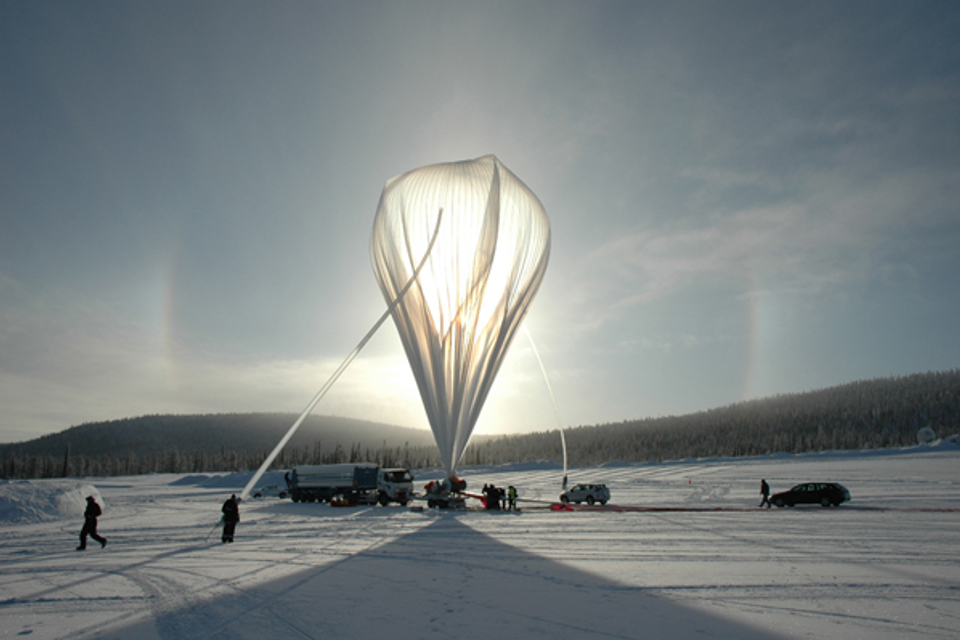
OSCAR, sometimes referred to as OSCAR-BEXUS, is the very first OSCAR experiment. It was selected in December 2015 and launched from Esrange Space Center in northern Sweden on 7 October 2016. The balloon reached 32,285 metres.

This experiment combined two carbon-material research lines: organic and perovskite solar cells and a prototype diamond-magnetometer using NV centres. The solar cell samples were used to determine their current-voltage performance while the diamond magnetometer was meant as the very first prototype of integrated NV-based magnetometry using commercially available equipment.
It was primarily a broad feasibility experiment, not yet a compact operational magnetometer. Its diamond sensor used a relatively complicated optical path, while half of the scientific payload was devoted to solar cells.
Goals
The main goal was to take an NV-diamond magnetometer outside the controlled laboratory environment for the very first time while giving the student team experience with requirements, reviews, qualification, integration, launch operations and post-flight analysis. The goal was to determine the stability of the carbon material (diamond) outside the lab, then to develop a (compact) sensor and analyse its performance for then look at long term deployment applications.
Results
The balloon mission was successful and the experiment was recovered. The solar-cell portion demonstrated the first use of organic solar cells and was combined with a stability test of the magnetic field sensing technology. That work led to a peer-reviewed publication. The diamond portion showed that the technology could be taken out of the laboratory, but the bulky optical architecture and slower acquisition rate made further miniaturisation necessary. Just as importantly, BEXUS established OSCAR’s multidisciplinary student-team model and full mission-lifecycle workflow.