
Meet the jury: lecture by Rachith S. N. Kumar
This event has already taken place.
Interfacial Control of Hot Carrier Cooling in Plasmonically Enhanced Halide Perovskites
In semiconductors, photoexcited carriers lose excess energy to the lattice within a few picoseconds, posing challenges for capturing hot carriers in photovoltaics and photocatalysis. Lead halide perovskites can retain energy at high carrier densities, where a hot-phonon bottleneck slows thermalisation. Plasmonic metal nanostructures can assist this process by transferring energy to carriers, but may also lead to energy loss.
This lecture will show that adding a nanometer-scale spacer between Ag-Au nanoparticles and a MAPbBr3 film modulates these interfacial processes and influences plasmon-derived energy. Using transient absorption spectroscopy to measure carrier temperature (Te), we find that direct metal contact leads to the fastest cooling due to energy back-transfer. Semiconducting TiO2 enhances hot-electron extraction and cooling (5-9 ps), while insulating Al2O3 slows down cooling (approximately 16 ps). The notable effects are observed only under 2.48 eV excitation, confirming their plasmonic nature. Our results suggest that interfacial energy-transfer pathways largely govern hot-carrier cooling in these structures

Practical information
- Monday August 24th, 3.30 - 4.30 PM
- Location: lecture hall H3, Building D, Campus Diepenbeek
- Online link: https://teams.microsoft.com/meet/351543712523178?p=cez4pcYhbFeDIsPv80
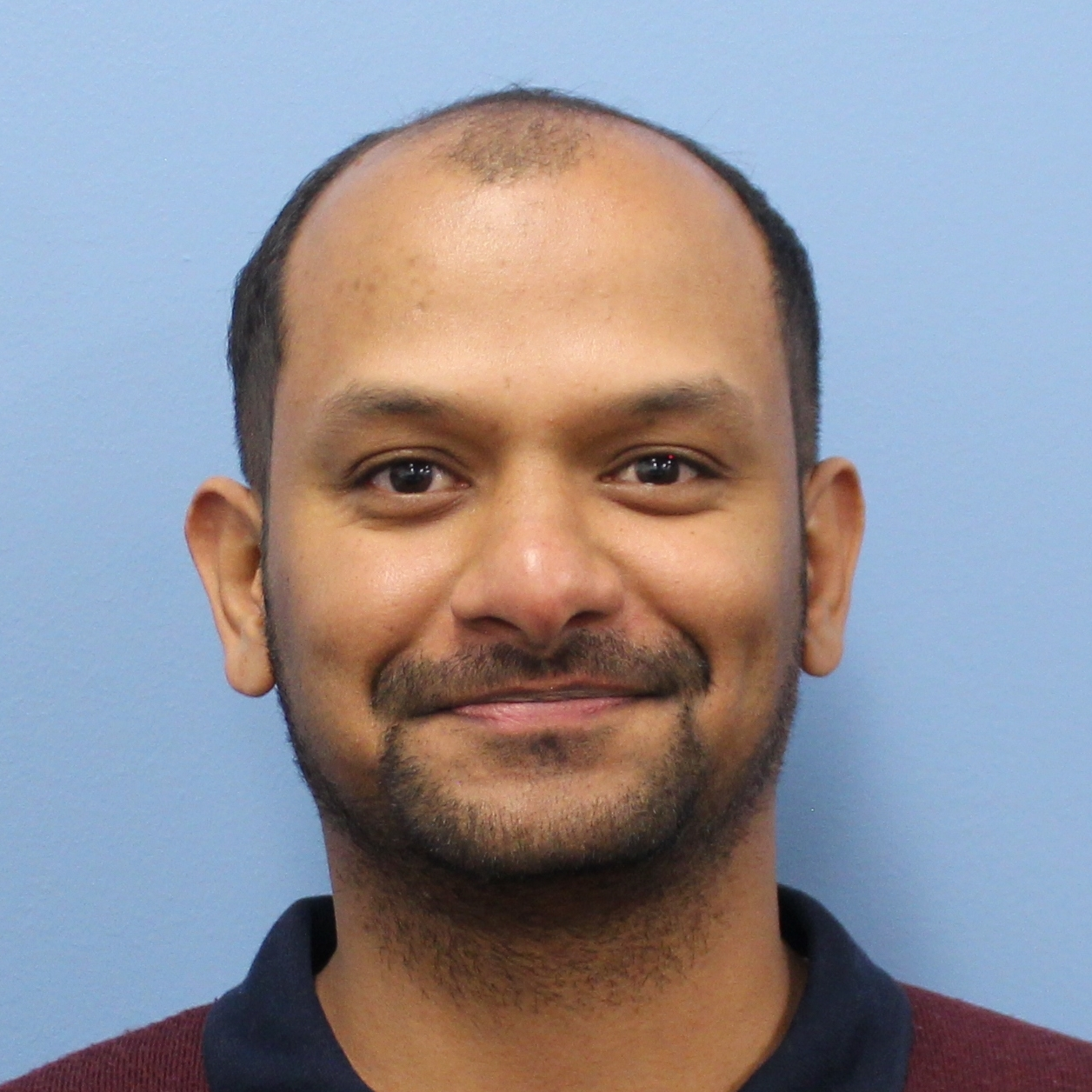
Biography
Rachith S. N. Kumar is a Director's Postdoctoral Fellow at the National Laboratories of the Rockies in Colorado, studying light-matter phenomena, exciton-photon coupling, and hot-carrier dynamics. He earned his PhD at Hasselt University (IUMAT, Belgium) in 2023 and is the inventor of two technologies for vacuum-free ultrathin films. His research includes plasmon-enhanced OLEDs and halide-perovskite photophysics, with 16 publications.