
Catalysts of change: FWO fellow Reja Trippaers
Last month, 7 IUMAT researchers were awarded prestigious FWO Strategic Basic (SB) Fellowships, a major milestone and a well-deserved recognition of the hard work, vision. To celebrate this major achievement, we are featuring each fellow individually, diving into their groundbreaking research, what this fellowship means to them and how our IUMAT community supports their journey. Starting with Reja Trippaers!
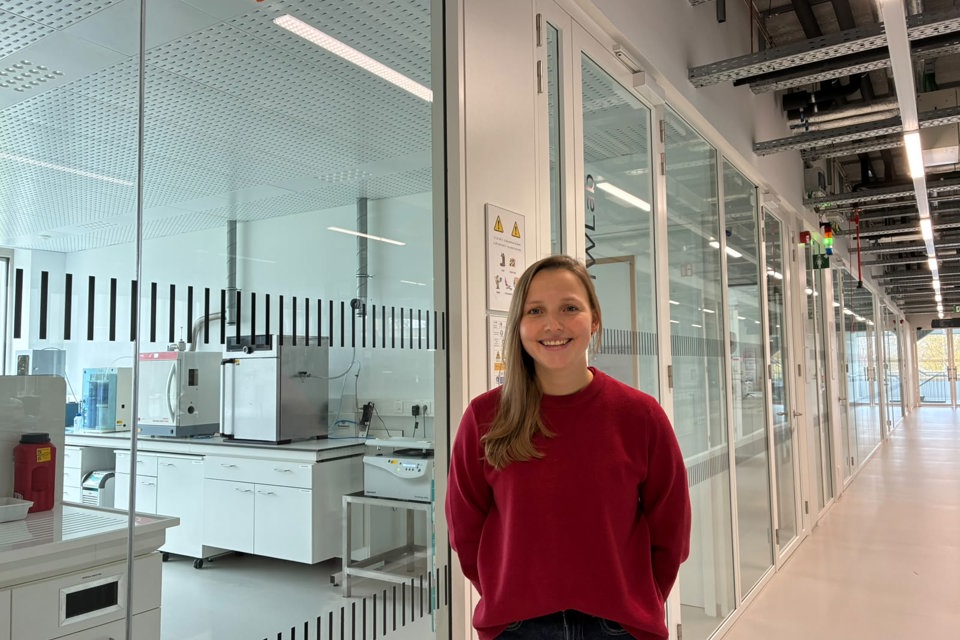

How do you explain your PhD research to an outsider?
"Lithium iron phosphate (LFP) batteries are rapidly gaining market share due to their high safety, long cycle life and low cost. However, that low cost creates a paradox: traditional recycling methods cost more than the value of the materials recovered. As a result, these batteries are currently not recycled efficiently, leading to the loss of critical raw materials like lithium, phosphorus, copper and graphite from the battery supply chain.
Direct recycling, in which battery components are recovered, regenerated and directly reused without breaking down their chemical structure, offers a cost-effective and environmentally sustainable solution. In my PhD project, I aim to systematically investigate direct recycling for LFP battery cathodes, alongside upcycling strategies to boost their performance and better align them with current performance standards."
What does winning this FWO SB fellowship mean to you, on a personal and professional level?
"On a professional level, winning this FWO SB fellowship is a strong validation of the potential and necessity of direct battery recycling. It gives me the opportunity to fully dedicate the next four years to solving a crucial bottleneck in the energy transition. On a personal level, it is an important milestone and a great source of motivation and confidence. It is very encouraging to know that the FWO believes in the potential of this project and in me as a researcher to carry it out."
How do the expertise and community at IUMAT help bring your research to life?
"The expertise and community at IUMAT, together with the fact that my PhD is conducted jointly with VITO, provide the ideal environment to bring my research to life. My research thrives at the intersection of fundamental science and applied technology. This dual embedding gives me direct access to state-of-the-art lab infrastructure and expert guidance from both sides. This combination provides the ideal framework for advancing fundamental research on LFP cathode regeneration, paving the way for future scalable direct recycling solutions."