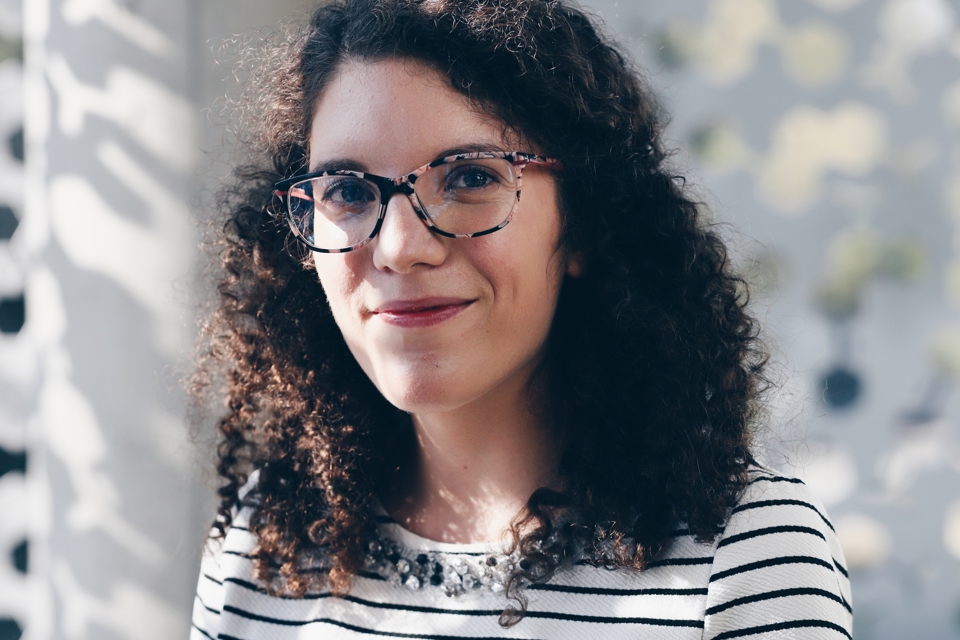
Faces of innovation: Paula Varas Perez
Behind every breakthrough is a dedicated researcher pushing the boundaries of knowledge. In our Faces of Innovation series, we put the spotlight on our PhD students as they reach the home stretch of their research. With her doctoral defense right around the corner, meet Paula Varas Perez!
How do you explain your PhD defense to an outsider?
“Food by-products are industrial side-streams that can be repurposed as feedstocks for other processes. Imagine things such as broccoli stems, potato peels, or pumpkin seeds. They have incredible potential to be transformed into high-value products across different industries: food, pharmaceuticals or sustainable packaging. However, to ensure we utilize them in the most optimal way, we need to understand their exact chemical composition at every stage of processing.
Using a technique called FTIR microspectroscopy, I look at these food by-products under a microscope to create spatial maps of their chemical composition. By tracking how this composition shifts under different processing conditions, we could gain crucial insights into how to fully valorize these materials and optimize industrial processing parameters.”
IUMAT takes a highly interdisciplinary approach. How has this changed your perspective on materials technology?
“Food by-products are remarkably complex materials. To work with them effectively, you must think simultaneously about how their biological, chemical and physical properties are interconnected. On top of that, managing and interpreting the massive amounts of spectral data we generate, means I also had to learn data analysis and coding skills. My research showed me that modern materials science can’t rely on a single area of expertise. You really need to work with others because it’s impossible to know everything!”
EUREKA moment: what was the absolute highlight of the past few years?
“I think the biggest moment of realization happened when I was teaching my protocol to a new colleague. For years, I had been so focused on troubleshooting tiny details that didn't work that I couldn’t see the bigger picture: I had successfully built a complete, working methodology that I could teach to others.”
Where do you hope your research will be in 7 years? What impact will this have on everyday life?
“In seven years, I hope to see optimized food by-products valorization transitioning from lab-scale operations to full industrial scale. My research aims to support this shift by providing the necessary analytical tools. My ultimate hope is for food waste to be systematically reused, drastically reducing what ends up in landfills. A future where converting side streams into valuable ingredients becomes the norm.”
On Tuesday, 1 September 2026, Paula her doctoral defense will take place. Eager to learn more about her research?
- Tuesday, 1 September 2026, 03.00 p.m
- Aula B4, Building D, Campus Diepenbeek