PV smart i4.0 aims to transform the solar energy landscape
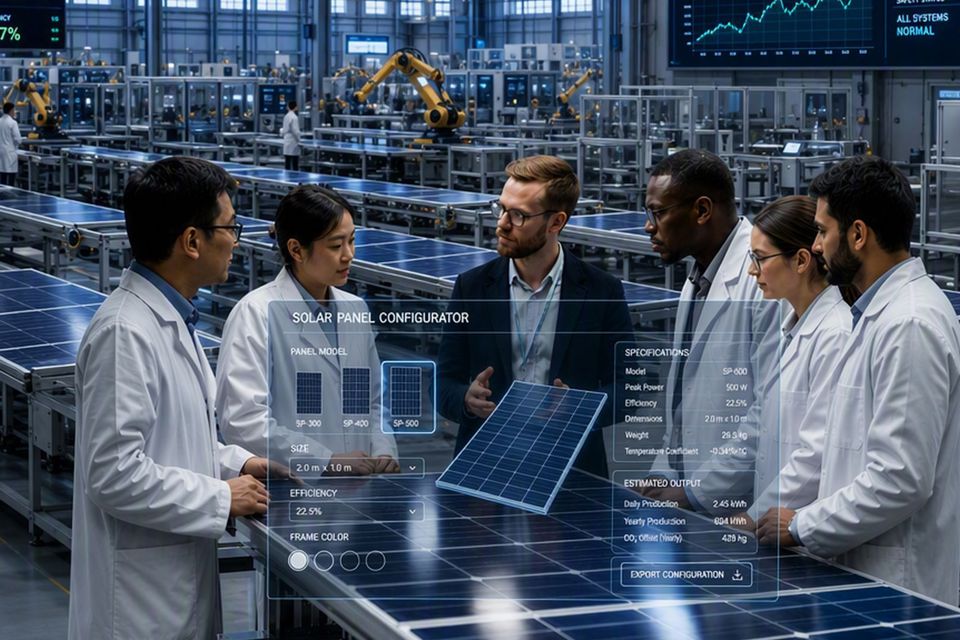
Currently, BIPV systems are often more expensive and time-consuming to produce than conventional PV due to heavy customization and manual adaptation. The PV smart i4.0 project aims to change this by moving BIPV towards an "IKEA model": enabling custom configurations that are produced efficiently at scale using data, AI and digital tools.
Within this smart manufacturing ecosystem, our colleagues are focusing on a crucial piece of the puzzle: improving PV module reliability during production. By embedding quality and durability directly into the manufacturing process, we're helping make scalable, custom BIPV both economically viable and built to last.
Moving from bespoke carpentry to the 'IKEA model'
A useful way to think about the ambition is the difference between a custom-built piece of furniture and an IKEA cabinet: today, most BIPV still resembles bespoke carpentry, where every solution is designed and assembled separately. PV SMART i4.0 aims to move towards a model where customers can configure a product to their building needs, but it is still produced efficiently at scale.
Connecting the value chain with Data and AI
Currently, the design, production, and installation of BIPV are often disconnected, making efficient manufacturing of customized products difficult. PV SMART i4.0 addresses this by linking these steps through data, bridging the gap between design and the factory floor:
- Design: Fontys is designing the overall structure of a digital configurator tool, while Bimefy is building it into a working prototype. This tool translates customer requirements directly into manufacturable designs. To ensure it works in real-life cases, TNO is leading testing trials alongside industry partners including ZigZag, Van de Kreeke Groep, Ebema and Solinso.
- Production: Onward defines how data should be used in manufacturing, while LeiKon equips production lines with the necessary sensors to collect it. This data is then organized and analyzed by RWTH Aachen and Boolean to develop smart AI models and algorithms. Finally, TNO uses these insights to optimize the overall manufacturing processes within the real production environments provided by Soltech and Solinso.
Monitoring reliability from the inside out
Within this smart manufacturing ecosystem, our collegeaus Nikoleta Kyranaki and Aranzazu Aguirre work alongside TNO to improve the reliability of PV modules during the manufacturing process.
Building skills for the future
Technology alone is not enough to transform an industry. To ensure a lasting impact, PV SMART i4.0 also focuses heavily on education, building on experience from the Horizon Europe project Mass Customization 2.0 (MC2.0).
Together with the project’s partners, we will help translate this cutting-edge research into practical learning. The consortium is developing workshops, online learning materials, and training activities tailored for the entire BIPV value chain: from manufacturers and designers to architects and installers. This ensures the industry is fully equipped to make the shift from manual craftsmanship to smart, scalable production.
Need more information?
Contact nikoleta.kyranaki@uhasselt.be.
PV SMART i4.0 is being carried out as part of the Interreg Meuse-Rhine (NL-BE-DE) programme and cofinanced by the European Union, the Dutch Ministry of Economic Affairs and Climate Policy, the German State of North Rhine-Westphalia, the Dutch Province of Limburg and the Province of North Brabant.