
SCOPE
SCOPE: Sustainable Computing Prototype for the Einstein Telescope
ABOUT THE PROJECT
SCOPE, Sustainable Computing Prototype for the Einstein Telescope, addresses the cross-border challenge of designing and operating the Einstein Telescope (ET) computing centre sustainably. ET is a flagship European research infrastructure spanning several countries, with a megawatt-scale computing facility representing a major part of its environmental footprint. Reducing energy consumption and enabling climate-neutral operation of such a facility requires coordinated technical and organisational solutions across borders.
OBJECTIVES
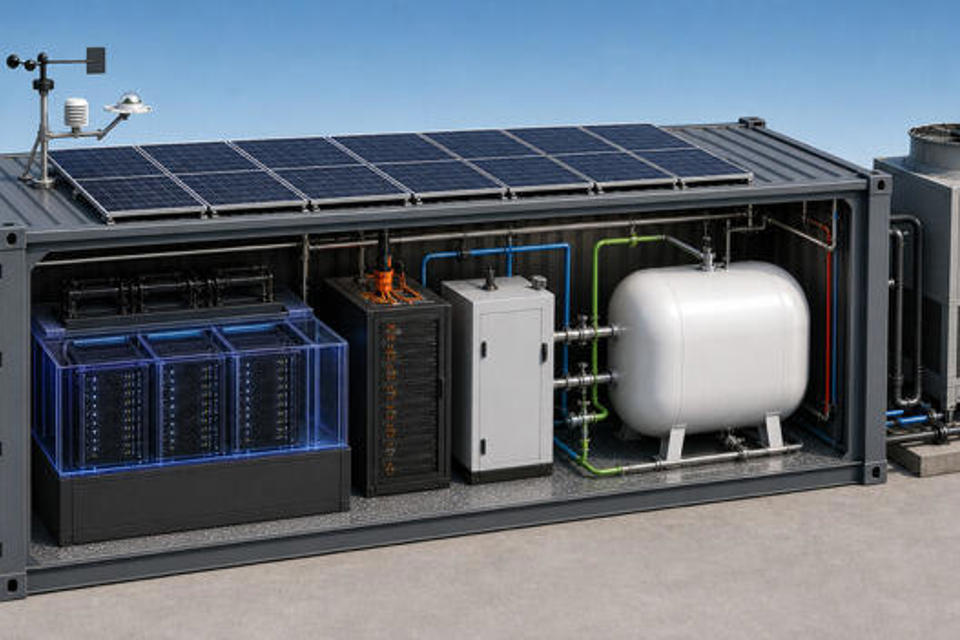
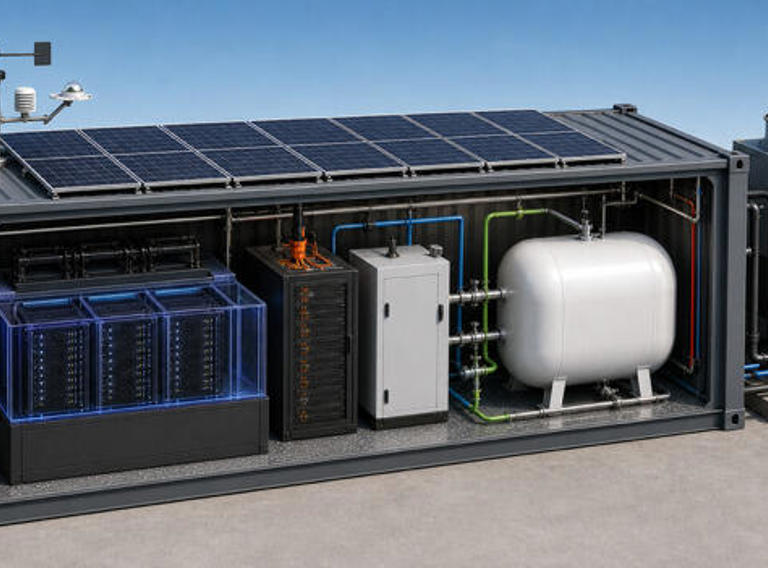
The overall objective is to develop and validate an innovative, scalable computing centre concept in which renewable energy availability, storage technologies, and computing workloads are dynamically co-optimised. By the end of the project, a container-sized prototype will combine a realistic high-performance computing stack with battery and hydrogen storage, demonstrating energy-adaptive operation. Hardware-in-the-loop co-simulation and predictive control strategies allow testing operating modes, scaling studies, and alternative storage technologies such as LOHC.
COLLABORATION
SCOPE aligns with the Interreg Meuse-Rhine cooperation programme by promoting cross-border collaboration, pooling complementary expertise in computing, renewable energy systems, hydrogen technologies, and sustainability assessment, and supporting regional value creation. It contributes to the grand societal challenges of the Green and Digital Transitions, under the specific objective of climate-neutral and sustainable research and industrial infrastructures.
Cross-border cooperation is essential: partners share complementary competences, ensure coherent system design, reduce technical and organizational risks and create a transferable model suitable for long-term international operation. The approach is novel in jointly controlling computing workloads and energy supply, moving beyond static grid-based operation to dynamic, carbon-aware “breathing computing”.
Expected impacts include a validated blueprint for sustainable, high-performance computing infrastructures, reduced environmental footprint of ET, strengthened expertise for universities and research organizations, enhanced capabilities and international visibility for SMEs, and public awareness of climate-conscious research. Without SCOPE, opportunities to test and validate energy-adaptive computing ahead of ET construction would be lost, increasing long-term costs, risk, and environmental impact.
The project includes six work packages: operation and long term impact, IT systems development, renewable energy and electrical infrastructure, hydrogen storage, system integration and heat management, and hardware-in-the-loop co-simulation. Key deliverables are the containerized prototype, validated control and simulation tools, techno-economic and life-cycle assessment, and demonstration of scalable energy-adaptive operation for ET and other high-performance computing infrastructures.
Within SCOPE, IUMAT is the work package leader for the prototype's electrical infrastructure. Among other things, IUMAT is responsible for the design and installation of local renewable energy production via solar panels. Additionally, it is developing simulations that predict the availability of renewable energy based on meteorological and other data. These production profiles will later serve as key input to align the data center's computing activities with the available green energy.
PARTNERS
TIMELINE
1/07/2026 - 30/06/2029
TEAM
Prof. Dr. Bart Vermang
Prof. Dr. ir. Patrizio Manganiello
Dr. Sara Bouguerra
Dr. ing. Robbe Breugelmans