
SURMOUNT
The SURMOUNT project develops smart wound dressings powered by sensor fusion technology to continuously monitor key healing parameters, eliminating costly, disruptive dressing changes and improving patient care.
ABOUT THE PROJECT
Complex wounds place a heavy financial burden on healthcare systems and severely diminish patient quality of life. Conventional wound dressings can not monitor the wound bed leading to costly, unnecessary dressing changes that disrupt the natural healing process.
The SURMOUNT project addresses these limitations by developing next-generation smart wound dressings through innovative sensor fusion technology. By monitoring essential chemical and physical parameters such as pH, temperature, moisture content and blood flow, SURMOUNT bridges critical knowledge gaps in the process of wound healing.
MORE INFORMATION
A wound is defined as body tissue damage resulting from various causes, typically involving a breach in the protective membrane of the skin that often extends into underlying tissues. These complex wounds provide significant challenges for patients and impose a heavy financial burden on healthcare systems. For instance, approximately 4% of the European healthcare budget is currently dedicated to complex wound management, a cost projected to rise due to an aging population and the growing prevalence of lifestyle conditions such as obesity and diabetes. Beyond the economic impact, complex wounds lead to higher hospitalization rates and severely impair patient quality of life.
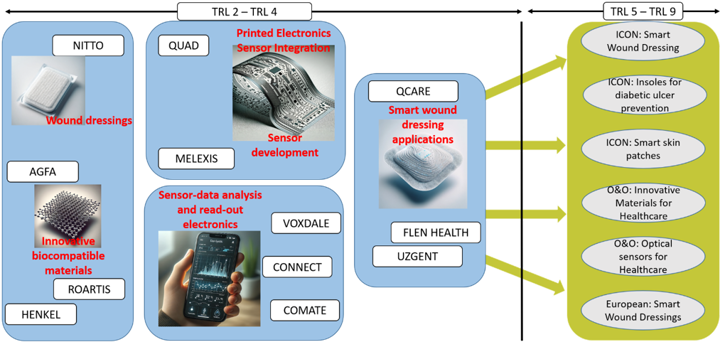
Figure 1: Value chain with the different domains of the value chain (wound dressings / innovative and biocompatible materials / sensor development / printed electronics and sensor integration / sensor-data analysis and read-out electronics / (smart) wound (dressing) applications – including companies from the IAB to show the eco-system which is present in Flanders
The wound healing process, particularly when compromised, is a multifaceted phenomenon influenced by numerous interrelated factors, including skin temperature, pH levels, moisture content, vascularization, oxygen partial pressure and biofluid composition such as uric acid. To date, conventional wound dressings lack the capacity to monitor the underlying wound environment or dynamically respond to fluctuations in these key parameters. Consequently, clinicians are often forced to perform unnecessary dressing changes which disrupt the natural healing process and involve additional healthcare costs.
Addressing these limitations lies at the core of SURMOUNT, which aims to develop a next generation of smart wound dressings capable of monitoring essential chemical and physical healing parameters. Currently, little is known about how variables like temperature, pH, moisture and blood flow evolve and interact throughout the healing process. Continuous monitoring will gain vital insights into these dynamics. Furthermore, integrating these sensors requires the design of biocompatible materials that interact safely with the wound bed without causing adverse reactions.
To overcome these barriers, this proposal leverages innovative sensor fusion technology and an artificial intelligence data analysis platform. Achieving these goals demands a multidisciplinary approach bridging materials science, biomedical engineering, sensor technology, data analytics, toxicology, and clinical wound care. Ultimately, this research aims not only to bridge fundamental knowledge gaps, but also to revolutionize wound care by enabling personalized, efficient and proactive treatment strategies.
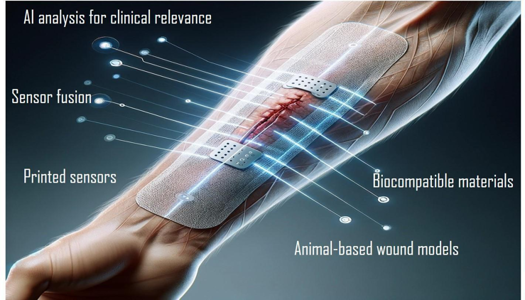
Figure 2: overview of the scientific challenges addressed in this proposal
TIMELINE
4 year project started on October 1st 2024
PARTNERS
Cluster SBO project via cluster BioVia – financed by VLAIO
TEAM
PI: Wim Deferme
PHD: Sander Vijgen & Laurence Jorissen
Business developer: Steven Van Hoof