WISE WOUNDS
Chronic wounds affect millions worldwide and place a growing strain on healthcare systems. Rising rates of obesity, diabetes, and an aging population are making this crisis more urgent.
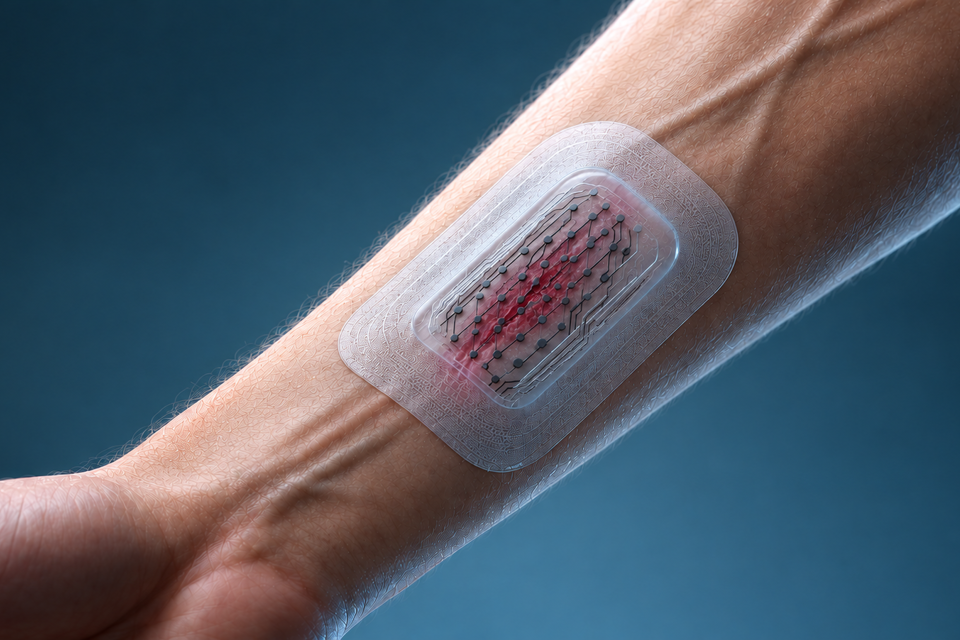
Traditional wound assessment is subjective, invasive, and slow. WISE WOUNDS addresses this by combining printable sensors, AI, and clinical expertise into an integrated smart wound dressing that monitors healing continuously and supports evidence-based clinical decisions.
View the content of this page
4 PhDs, 4 research pillars
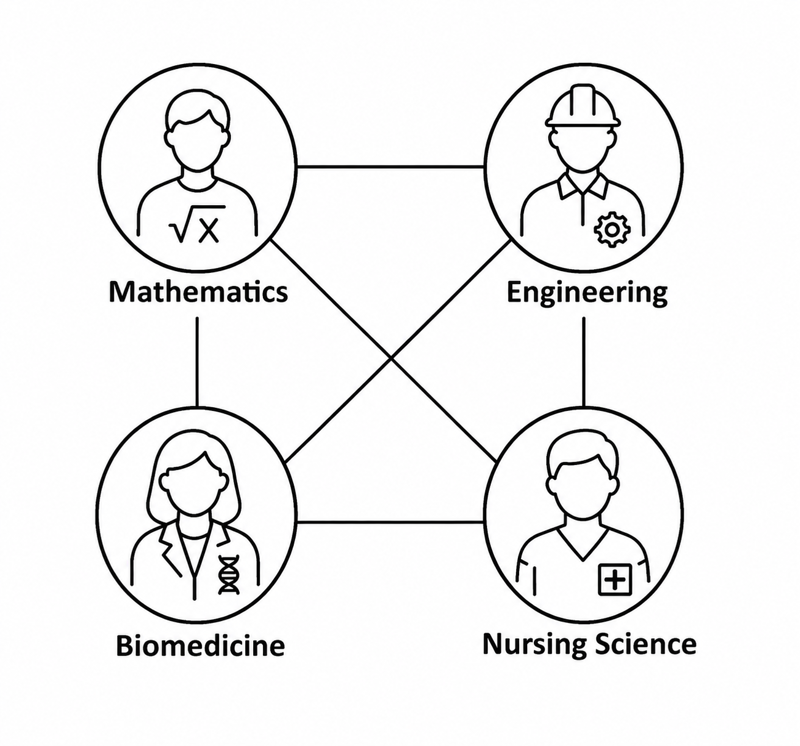
WISE WOUNDS is built on the conviction that no single discipline can solve the complexity of chronic wound care alone. Four PhD researchers, in engineering, biomedical sciences, mathematics, and nursing science, work as one team, each strand of research feeding directly into the others.
The project pursues two concrete objectives. The first aim is to develop and validate cost-effective smart wound dressings that continuously and non-invasively monitor wound parameters, providing clinicians with timely, actionable information about when intervention is needed. The second aim is to explore how these findings can be translated into clinical practice. Second, to use the data collected to build and validate an in vitro wound healing model, enabling the testing of new treatments and deepening our fundamental understanding of how complex wounds heal.
This integrated approach, spanning four UHasselt research institutes: IUMAT, BIOMED, DSI/CMAT, and THINK³, is what makes WISE WOUNDS more than the sum of its parts. Four research pillars, one shared goal: better outcomes for patients living with chronic wounds.
sensor engineering
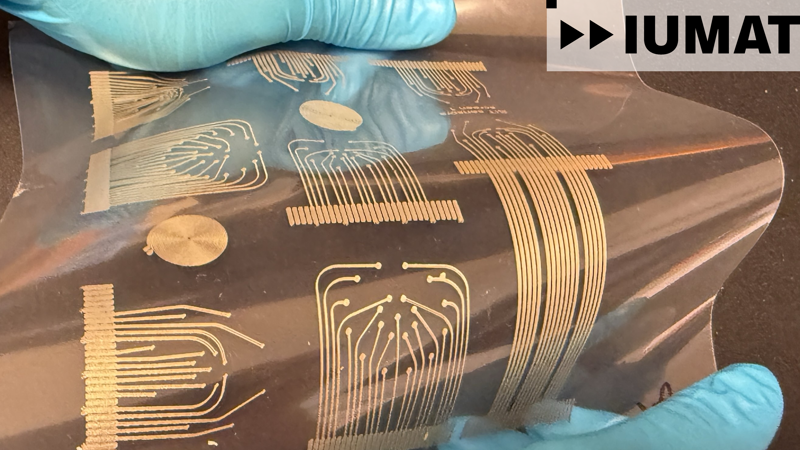
Wounds are dynamic. As they heal or deteriorate, they change in shape, depth, pH, temperature,... . The sensor developed in this project captures two of these dimensions simultaneously: a continuous temperature map across the wound surface and a three-dimensional image of its geometry. Together, they give clinicians an objective, evolving picture of the wound without physical contact or manual assessment.
The sensor must be flexible and stretchable, conforming to the contours of living skin and moving with the body, while remaining stable enough to deliver reliable data over time. Achieving this requires careful material selection and precision printing techniques, such as screen printing and spray coating, applied directly onto flexible substrates.
The result is a sensor that integrates seamlessly into the dressing: present and measuring, but never in the way of healing.
Sensor validation
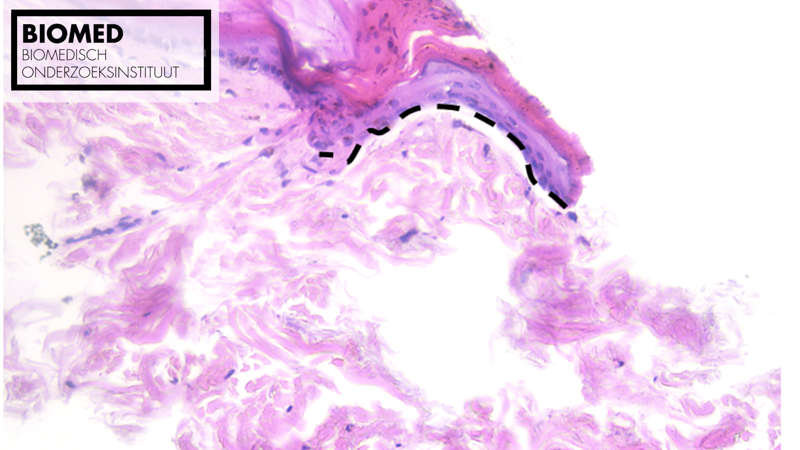
This PhD research evaluates the biocompatibility and functionality of the developed sensors, both in vitro and in vivo. The results will be shared with the engineers to further improve the sensor design and measurement performance. The measured parameters will also be analyzed to better understand the underlying causes of the observed changes. The clinical applicability of the sensors will be evaluated using human ex vivo models.
Furthermore, it will be assessed whether the combined sensor system can reliably measure wound-related parameters and monitor changes during the wound-healing process in a diabetic setting.
AI and twin model
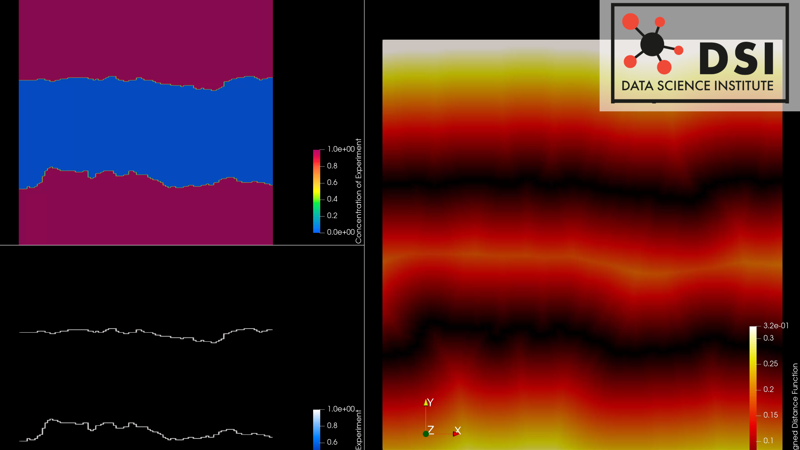
We are creating a computational model to predict how wounds heal by treating the healing process as a dynamic physical system. Using coupled partial differential equations (PDEs), the model tracks how tissue deformation, mechanical stress, fluid movement, and biological responses interact over time.
We solve these equations with finite element methods (FEM) to handle real wound shapes, changing boundary conditions, and varied material properties. To make these physics- and biology-based simulations practical for real-time use, we conduct uncertainty and sensitivity analyses to identify the key driving factors. We then train fast AI models on the simulation outputs to reduce computational demands.
Finally, these components feed into a patient-specific digital twin that continually updates as new medical data comes in.
Clinical implementation
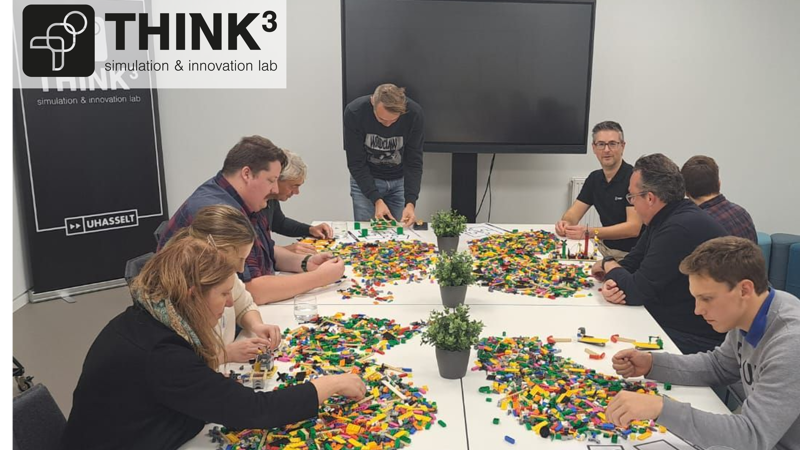
Wound care depends on clinical reasoning and decision-making. At every dressing change, nurses read the wound, weigh what they see against the patient in front of them, and decide what comes next. This PhD examines how nurses reason and make decisions in complex wound management, and how smart dressings and AI-based decision support can strengthen that process without replacing it.
First, a constructivist grounded theory study develops a theory of how nurses reason and make decisions in wound care practice. Second, a think-aloud study captures this reasoning in real time during simulated scenarios. Clinicians, engineers and data scientists then come together in design-thinking workshops to imagine a feasible future for data-informed wound care. The nurses' decision-making is also translated into standardised nursing language that AI systems can use.
Finally, the technologies are tested in simulated clinical practice to see whether they are feasible, acceptable and appropriate. The result is a set of tools that support nurses' clinical decisions: informed by data, but still guided by clinical expertise.
PhD studentens
ing. Louis Macours
PhD in Material Engineering
Monica Studennykova
PhD in Biomedical sciences
Yarne Thijs
PhD in Mathematics
Brecht Metten, MSc, RN
PhD in Nursing siences
Contact
Prof. dr. ir. Wim Deferme
Wetenschapspark 1, 3590 Diepenbeek, Belgium
Head of research group Functional Materials Engineering (FME) IUMAT
Prof. dr. Annelies Bronckaers
Agoralaan Building C, 3590 Diepenbeek, Belgium
Head of the Laboratory for research in ischemic stroke, stem cells & angiogenesis (LISSA)
BIOMED
Prof. dr. Fred Vermolen
Agoralaan 40, 3590 Diepenbeek, Belgium
Head of research group Computatianal Mathematics (CMAT) DSI
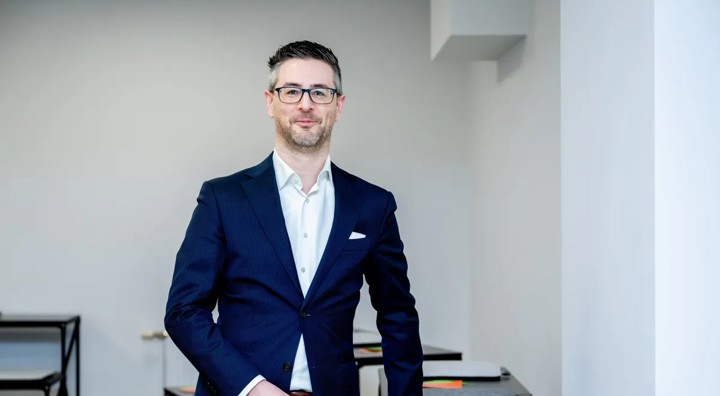
Prof. dr. Jochen Bergs
Agoralaan 40, 3590 Diepenbeek, Belgium
Head of Think³: simulation and innovation lab
Prof. dr. Dirk Valkenborg
Agoralaan 40, 3590 Diepenbeek, Belgium
Principal Investigator in AI research
Yves Depaifve
Jessa Ziekenhuis, Fistel-, incontinentie- en stomazorg, Campus Salvator - Gelijkvloers rode pijl (lokaal CO41)
Master of Science in Nursing, Clinical Nurse Specialist
Partners