SPRING SCHOOL CEAD
Circular Engineering Across Disciplines
2026 Edition - Rethinking Electrification: Powering the Electrified Everything
On-site 3 May-8 May 2026
Virtual 9 May-20 May 2026
The application deadline (15 February 2026) has expired. You can try again next year.
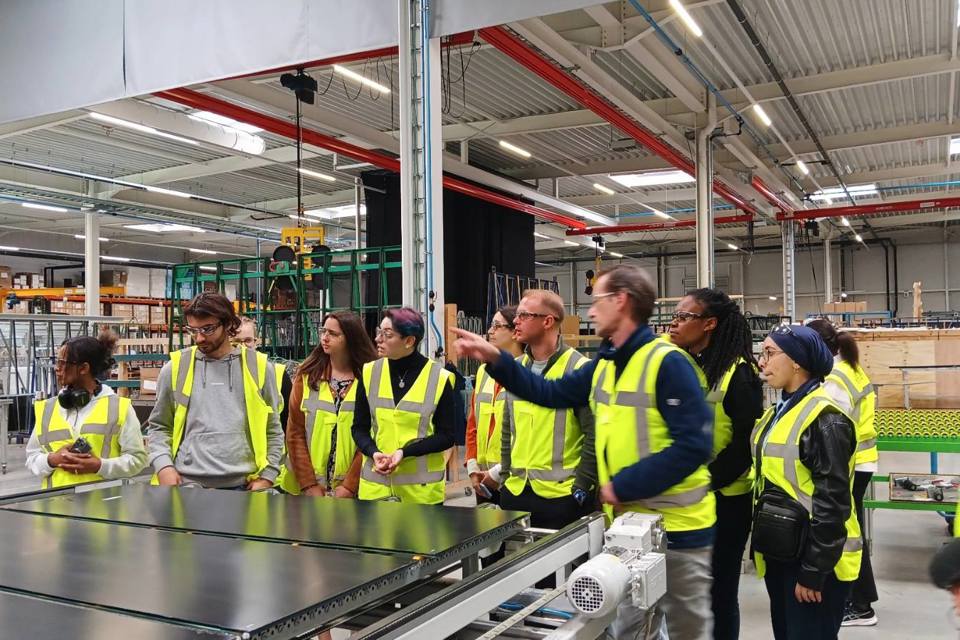
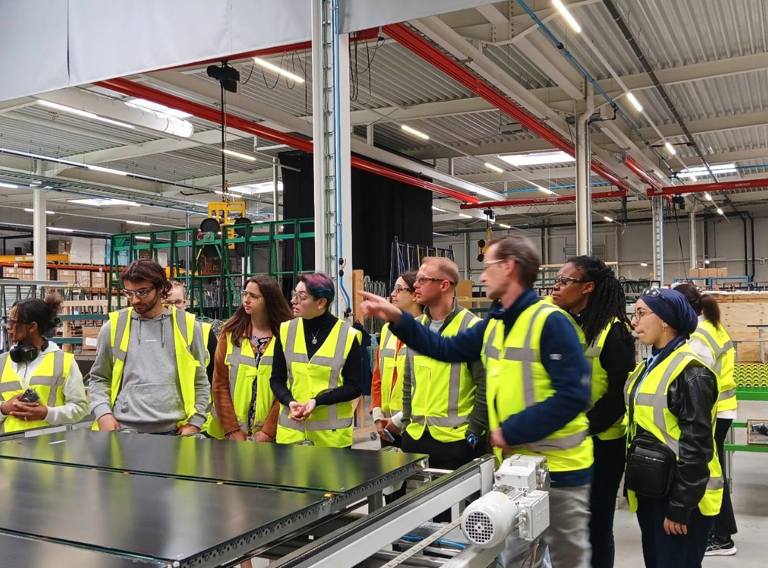
Let the recap movies from previous editions convince you
Circular Engineering Across Disciplines
Spring school CEAD
2026 Edition - Rethinking Electrification: Powering the Electrified Everything
The fifth edition of CEAD will turn its spotlight on a theme that sits at the very heart of the energy transition: electrification. The reason is simple: we finally have renewable energy that is both affordable and scalable. Solar and wind can be rolled out quickly, and when we use electricity, we use energy more efficiently—just think of electric cars or heat pumps. What is even more exciting is that electrification is now reaching into places where it once seemed impossible, from heavy transport to industry.
That is why CEAD 2026 will place electrification at the centre stage. Together, we will explore its many dimensions: electricity production and distribution, energy storage, smart grids, and the role of AI and digital tools in keeping these systems reliable and flexible. In doing so, CEAD also comes full circle. The first four editions explored materials, waste management, industry, and heavy industry. Now, we return to materials and production, but with a fresh perspective—how electrification can transform them and, in turn, our energy future.
Participants will collaborate on international, interdisciplinary group projects and participate in panel discussions, thereby building their communication skills and increasing their awareness of the global importance of decarbonization. The program is designed to equip students with the knowledge and tools necessary to contribute effectively to the transition to a zero-carbon economy.
The Spring School will be held at Hasselt University (Belgium) from Sunday, 3 May (evening), to Friday, 8 May 2026. A virtual component will follow, to be completed by 20 May 2026. The program will be conducted in English. The program is open to students pursuing bachelor's and master's degrees in engineering and science fields. Selection will be based on a motivation letter and academic background. Upon successful completion of the programme, students will be awarded with 3 ECTS.
The application deadline was 15 February 2026. All selected participants have been notified of acceptance.
This Spring School is an Erasmus+ Blended Intensive Programme organised by the Faculty of Engineering Technology of Hasselt University in collaboration with KU Leuven and the EURECA-PRO network with support from VLAIO. Eligible students may apply for an Erasmus+ short-term mobility grant through their home universities.




Programme
Participation in the complete programme (on campus and virtual) is mandatory.
ON CAMPUS PART
From Sunday May 3 (evening 8 p.m.) to Friday May 8 (4 p.m.) 2026, each participant will take part in all the modules.
Keynote: AI and the Energy Transition: How AI is reshaping the electricity grid by Mrs. Brido Mbuwir, VITO, Belgium
Silent power, for a noisy universe by Dr. Robbe Breugelmans, Faculty of Engineering Technology, Hasselt University, Belgium
Building the energy transition at sea, by Mr. Basile Dewaegenaere, Mr. Maarten Lozie, Mr. Mathiez Stulens for Jan De Nul, Belgium
Electrifying Intelligence: Co-designing AI Tools for Solar PV with Generative AI by Dr. David Moser and Mr. Mousa Sondoqah, Becquerel Institute, Italy
New challenges and modern tools on solar resource and forecasting by Prof. dr. Andreas Kazantzidis, University of Patras, Physics Department, Greece
Material challenges in the energy transition: from mining to recycling by Prof. dr. Jan Ivens and Mrs. Yixue Zhang, Faculty of Engineering Technology @KU Leuven, research group composite materials, Belgium
Flexible Electrification: Smart industry in an electrified energy system, by Dr. David Banasiak, Technical University of Leoben, Austria
Powering the Electrified World: Designing Reliable and Intelligent Power Conversion Systems by Prof. dr. Ehsan Jamshidpour, Faculté des Sciences et Technologie (ENSEM) @Université de Lorraine, research group GREEN (Groupe de Recherche en Energie Electrique de Nancy), France
Thanks Copper, Hello Silicon: Re-Engineering Power Systems for a Fully Electrified World by Prof. dr. Wilmar Martinez, Faculty of Engineering Technology @KU Leuven, research group Electrical Energy Systems and Applications, EnergyVille ESAT, Belgium
Metamaterials: reconciling lightweight ecological design with good noise and vibration by Prof. dr. Elke Deckers, and Mr. Kristof Steijvers, Mrs. Alara Karaman, Mr. Lucas Van Belle, Faculty of Engineering Technology @KULeuven, research group Mecha(tro)nic System Dynamics (LMSD), Belgium
Solar Design for a Circular Economy: Making PV Modules Easy to Recycle by Prof. dr. Patrizio Manganiello, and Mr. Mihir Mahadjan, Mr. Arvid Van der Heide, Faculty of Engineering Technology @UHasselt, research centre imo-imomec & EnergyVille, Belgium
+company visits to Energyville, and Ch@teau Corda
VIRTUAL PART
9 May-20 May 2026
- Online student team meetings to prepare the written report
- Written report on the teamwork
- Quality survey
General learning outcomes and evaluation
Upon completion of CEAD 2026, participants walk away with:
1 | new insights into the position (and limitations) of efficiency and renewables on the road to carbon reduction.
2 | new concepts and approaches that can be used in the development of solutions for carbon reduction.
3 | new knowledge on how AI can contribute sustainably.
4 | new insights in the green optimisation of materials, production and processes in different fields of industry.
5 | fresh perspectives on how effective policymaking can accelerate the energy transition.
And participants have boosted:
5 | their intercultural communication skills and critical thinking through international teamwork.
6 | their awareness of the global necessity and civic interest of the reduction of the carbon footprint.
A jury will evaluate the learning outcomes through a group presentation and a written report.
The 2026 edition of the CEAD Spring School (Circular Engineering Across Disciplines: Rethinking Electrification) contributes to multiple Sustainable Development Goals by training participants to tackle real-world sustainability challenges in the energy transition. The programme equips participants with knowledge on electrification, renewable energy integration, and smart energy systems, supporting SDG 7 (Affordable and Clean Energy) and SDG 13 (Climate Action).
Through modules on circular design, sustainable materials, and innovative industrial systems, participants address resource efficiency and innovation, contributing to SDG 12 (Responsible Consumption and Production) and SDG 9 (Industry, Innovation and Infrastructure). Participants develop practical skills in system thinking and problem-solving through interdisciplinary workshops and real-world case studies.
The international, multidisciplinary learning environment, which combines academia, industry, and policy perspectives, promotes collaboration and knowledge exchange aligned with SDG 4 (Quality Education) and SDG 17 (Partnerships for the Goals). Teamwork and project-based assignments strengthen key professional skills, including intercultural collaboration and communication.
Overall, CEAD equips future engineers and professionals with the technical, interdisciplinary, and critical-thinking skills needed to design sustainable solutions and accelerate the transition to a climate-neutral, resource-efficient society.
Week schedule
ON-CAMPUS PART FROM 3 MAY (evening 8 p.m.) to 8 MAY (4 p.m.) 2026
Detailed weekly schedule (pdf, 1.0 MB)
Modules
Keynote: AI and the energy transition: How AI is reshaping the electricity grid
Keynote: AI and the energy transition: How AI is reshaping the electricity grid
The ongoing energy transition has led to a power system that is increasingly reliant on weather dependent renewable energy sources, and the electrification of heating, cooling and transport, which significantly alters the energy demand curve. This alteration of the demand curve and uncertainty around energy generation introduces a greater risk of mismatch between electricity supply and demand. Thus, expert knowledge combined with powerful and innovative tools are needed for the rethink and redesign of grid operation and planning to ensure reliability, affordability and quality of service.
The digitalization of the grid (e.g. via smart meters, sensors and digital twins) generates massive amounts of data, positioning artificial intelligence (AI) to support the energy transition. Recent technological innovations in AI as well as improvements in computer hardware are making it possible to tackle complex planning, forecasting and control problems that were previously intractable. Thus, today, the energy sector is at the heart of its most significant technological revolution.
Yet, despite the growing deployment of AI-driven solutions, critical questions remain regarding their broader implications for system operation, regulation, and societal trust. Will AI really orchestrate every aspect of the grid to obtain a fully autonomous system?
This talk explores the evolving synergy between the energy sector and AI, discussing the current landscape, shedding light on the expectations and the genuine/realized advancements in leveraging AI for energy-related applications.
At the end of this keynote you will:
- Understand how AI is currently applied across various applications in the energy sector.
- Recognize both the potential and roadblocks in the use of AI in the energy sector.
Silent power, for a noisy universe
Silent power, for a noisy universe
The Universe keeps a record of its own history, but not only in light. Long before photography, before telescopes, and even before humanity, cosmic events left traces in gravitational waves: tiny ripples in spacetime that travel across the cosmos. The Einstein Telescope (ET), Europe’s next-generation gravitational-wave observatory, will “listen” to these signals and open a new way to study the early Universe, black holes, and neutron stars.
To detect such faint vibrations, ET must operate in an exceptionally quiet environment. That is why it is planned ~250 meters underground, with a triangular layout of 10 km sides, hosting ultra-stable interferometers supported by demanding infrastructure: cleanroom-grade environments, ventilation, vacuum systems, cryogenics, high-power lasers, and precision control systems.
This makes ET a compelling real-world case study for electrification: a mission-critical facility that depends on reliable electricity and must remain stable and low-disturbance. At the same time, ET is designed to operate for more than 50 years, so its energy supply must be sustainable from the start.
This talk focuses on sustainable energy for the Einstein Telescope. We will outline why powering such a uniquely sensitive, long-lifetime underground research facility is central to its design, and how the broader push for electrification and sustainability shapes how we think about supplying that energy: reliably, efficiently, and without compromising the telescope’s extreme requirements for a quiet environment.
In short: how do you power the quietest listener on Earth with clean, scalable electricity?
At the end of this presentation you will:
- Understand why electrification is central to the energy transition: it enables efficient end-use and makes large-scale integration of renewables possible across transport, buildings, and industry.
- Recognize what “good electrification” requires beyond just switching to electricity: reliability, flexibility, and system integration (demand profiles, grid interaction, and operational constraints).
- Appreciate how context changes electrification design choices: a facility like the Einstein Telescope highlights that electrification strategies must be tailored to specific requirements, such as long lifetime, critical operation, and strict limits on disturbance (“quiet” operation).
Building the energy transition at sea
Building the energy transition at sea
Jan De Nul invites UHasselt students to discover how large-scale maritime engineering projects shape the world of tomorrow. During this guest lecture, three speakers will take you from the fundamentals of an international marine contractor to the cutting edge of offshore energy and smart maritime construction.
The session starts with a company introduction by Jan De Nul’s HR team, offering insight into the company’s global activities, multidisciplinary projects, and the wide range of career paths for engineers and technical profiles. This overview sets the scene for how complex projects are organized and executed worldwide, from design to offshore installation.
Next, Maarten Lozie, Electrical Manager Offshore, dives into Jan De Nul’s offshore energy activities. He will explain how offshore wind farms are built, including the installation of wind turbines and subsea power cables, and highlight the crucial role of a high-tech and specialized fleet. Real-life project examples will illustrate the technical, logistical, and electrical challenges involved in delivering offshore renewable energy safely and efficiently.
Finally, UHasselt alumnus Mathiez Stulens, Hydrographic Surveyor, shares his personal journey from university to working on projects across the globe. He will provide insight into hydrographic surveying in maritime construction and explore the rapidly increasing use of robotics, autonomous systems, and advanced data acquisition techniques offshore.
Together, the speakers offer a unique look at how engineering expertise, innovation, and international collaboration drive the energy transition at sea, and how today’s students can become part of it.
Module 1: Electrifying Intelligence: Co-designing AI Tools for Solar PV with Generative AI
Module 1: Electrifying Intelligence: Co-designing AI Tools for Solar PV with Generative AI
This half-day workshop explores how generative AI is reshaping the solar photovoltaic sector, moving beyond theory to hands-on co-design with AI tools. As electrification accelerates globally, the PV industry faces complex challenges—from optimizing system design and predicting degradation to scaling operations and managing grid integration. Generative AI offers powerful solutions, but realizing their potential requires engineers and scientists who can think creatively about how to partner with these tools.
In this interactive session, participants will engage in "vibe coding"—collaboratively designing applications and tools for the PV sector by prompting and iterating with generative AI. Rather than writing code from scratch, you'll work with AI as a co-designer, exploring how to transform natural language descriptions into functional prototypes for real PV challenges. You might develop a fault detection assistant, a design optimization tool, or a grid-forecasting application—all while learning how to guide AI effectively.
We'll also explore "vibe learning," using generative AI to generate customized learning materials that deepen your understanding of complex PV topics, from semiconductor physics to market dynamics.
By the end of this workshop, you'll understand not just what generative AI can do in the PV sector, but how to think creatively about human-AI collaboration in solving electrification challenges. You'll leave with working prototypes, practical prompting strategies, and a fresh perspective on your role as engineers and scientists in the AI-driven energy transition.
Module 2: New challenges and modern tools on solar resource and forecasting
Module 2: New challenges and modern tools on solar resource and forecasting
Reliable information about when and where the sun will shine is now as critical as solar panels themselves. This workshop introduces participants to the science, data, and models behind solar resource assessment and short-term to day-ahead forecasting, with a focus on practical applications in power and energy systems.
We will first review the physical basis of solar radiation and the main data sources used in practice: ground measurements, satellite products, and reanalysis datasets. Participants will learn key concepts such as irradiance components, clear-sky models, and typical sources of uncertainty in both measurements and models.
Building on this, we will explore state-of-the-art forecasting approaches, ranging from simple statistical benchmarks and time-series models to numerical weather prediction and modern machine-learning methods. Emphasis will be placed on how forecast horizons, spatial scales, and cloud regimes influence model choice and performance, as well as on strategies for combining different forecast sources.
Throughout the workshop, hands-on demonstrations (depending on participants’ background) will show how to access solar resource datasets, construct basic forecast models, and evaluate their skill with standard verification metrics.
By the end of the session, participants will understand the main building blocks of solar resource assessment and forecasting workflows, recognize common pitfalls, and be equipped with a roadmap for deeper study and research in this rapidly evolving field.
Module 3: Material challenges in the energy transition: from mining to recycling
Module 3: Material challenges in the energy transition: from mining to recycling
The energy transition towards renewable energy resources and the electrification of our entire power supply poses significant challenges to the materials that are needed for this huge shift. This workshop addresses two material related aspects that are key in the electrification of our energy supply.
The energy transition requires an almost exponential increase in use of materials like lithium, nickel and rare earth metals. Even though these materials are not that scarce, the mining and refining of these materials has to develop worldwide. Currently, the mining and refining of several critical materials needed for the energy transition is almost exclusively in the hands of China. This poses a threat for the worldwide economic stability and threatens the economy in Europe in particular. During the first part of this workshop, this aspect is addressed: What is the current situation? What can Europe do? Is it too late?
The most important energy resource of the future is wind energy. The EU foresees that by 2050 50% of its energy will be wind based, requiring the installation of a very large amount of wind turbines onshore and offshore. A significant challenge is posed at the end of life for the wind turbine blades, made of fiber reinforced plastics. How can we tackle this problem? What are the current solutions at the end of life of the turbine blade? What can be done to minimize or avoid this problem in the future?
These questions will be addressed in the second part of the workshop.
Upon completion of this workshop, you will:
- Understand the current material-related issues of the energy transition, related to mining and refining of critical materials, and the end-of-life challenges of wind turbine blades
- have the ability to critically assess current and future strategies towards reducing and/or solving the material related issues
Module 4: Flexible Electrification: Smart Industry in an Electrified Energy System
Module 4: Flexible Electrification: Smart Industry in an Electrified Energy System
Electrification is rapidly transforming industry, but simply replacing fossil fuels with electricity is not enough to achieve a resilient and efficient energy transition. As renewable energy sources such as wind and solar become dominant, demand must become more flexible to match fluctuating supply. This workshop explores the intersection of industrial electrification and demand-side management (DSM), focusing on how flexible industrial energy systems can actively support power system stability while maintaining competitiveness.
The session begins with a concise keynote-style introduction that introduces key concepts: electrification pathways in energy-intensive industries, demand side flexibility and the role of digital decision-support tools.
Building on this foundation, participants will engage in interactive activities based on real-world industrial case scenarios.
Through guided group exercises participants will take the role of energy managers and production planners, making decisions on electrified industrial processes under uncertain conditions.
The workshop will also introduce simplified modelling logic used in flexibility assessment tools and discuss how AI and digitalisation enable smarter electrified production systems.
By combining conceptual input with hands-on interaction, the workshop provides an accessible yet scientifically grounded understanding of how flexible electrified industry can become a cornerstone of a renewable, reliable, and intelligent energy system.
Upon completion of this workshop you'll:
- Understand the role of industrial electrification in the energy transition and its system-level implications
- Identify and evaluate flexibility potentials in electrified industrial energy systems.
- Apply interactive decision-making approaches to balance production planning with renewable energy variability and electricity prices.
Module 5: Powering the Electrified World: Designing Reliable and Intelligent Power Conversion Systems
Module 5: Powering the Electrified World: Designing Reliable and Intelligent Power Conversion Systems
As electrification expands into every aspect of modern life, such as EVs, drones, renewable energy, smart grids, and industrial automation, reliable and efficient power conversion becomes the backbone of a sustainable future. This half-day workshop will introduce participants to the fundamentals and cutting-edge strategies in power electronics, electrical motor drives, battery charging, fault-tolerant converters, and photovoltaic systems, through an interdisciplinary lens.
Participants will explore how intelligent power systems can adapt to faults, optimize efficiency, and seamlessly integrate renewable energy. Through interactive demonstrations, real-world case studies, and hands-on problem-solving, the session will empower participants from diverse domains to understand and engage with electrified systems.
Upon completion of the workshop, you will:
1. Understand the core principles of power conversion and electrical motor drives relevant to electrified systems.
2. Recognize the importance of reliability and fault-tolerance in power electronics for critical applications such as aerospace, EVs, and industrial systems.
3. Explore the integration of renewable energy and battery storage into modern electrified systems.
4. Apply fault-tolerant strategies to ensure efficient and continuous operation of power systems through interactive case studies and simulations.
5. Appreciate the interdisciplinary nature of electrification challenges, connecting electronics, control, energy, and sustainability.
Module 6: Thanks Copper, Hello Silicon: Re-Engineering Power Systems for a Fully Electrified World
Module 6: Thanks Copper, Hello Silicon: Re-Engineering Power Systems for a Fully Electrified World
Global electrification is accelerating rapidly as transport, industry, heating, and digital infrastructure shift toward electricity. At the same time, the foundations of existing power systems are approaching their physical and material limits. Copper, the backbone of conventional electrical networks, faces increasing scarcity, rising costs, and supply constraints, raising serious concerns about the scalability of copper-intensive grid architectures. In parallel, nearly one billion people worldwide still lack access to electricity, underscoring the need for energy systems that are both resource-efficient and globally deployable.
This presentation argues that the next phase of electrification requires a fundamental re-engineering of power systems, moving from copper-dominated, passive infrastructures toward silicon-driven, actively controlled energy systems. Power electronics are becoming the central enabler of this transition, providing precise control of power flow, voltage, and frequency across all grid levels. Converter-dominated architectures, widespread use of underground cables, and multi-terminal HVDC networks enable higher power transfer with reduced material usage, improved flexibility, and enhanced resilience.
Beyond transmission, power-electronic interfaces support modularity, bidirectional energy exchange, and seamless integration of renewable generation, storage, and electrified loads. By reducing dependence on copper and increasing reliance on intelligent power conversion, future power systems can address resource limitations while enabling scalable and inclusive electrification worldwide.
Upon completion of this workshop you will:
- Develop a systems-level understanding of advanced electrification technologies, including power-electronic converters, multi-terminal HVDC, and smart grid architectures, and their roles in enabling efficient, resilient, and sustainable energy systems.
- Apply interdisciplinary problem-solving skills to understand innovative solutions for real-world energy transition challenges, integrating technical, environmental, and socio-economic perspectives.
- Enhance teamwork and communication skills through international discussions, fostering critical thinking and awareness of global electrification needs within the renewable energy landscape.
Module 7: Metamaterials: reconciling lightweight ecological design with good noise and vibration
Module 7: Metamaterials: reconciling lightweight ecological design with good noise and vibration
Tightening ecological requirements have pushed industry (aviation - vehicle - machine construction) to lightweight design. Lightweight structures typically combine a low mass with a high stiffness, having excellent mechanical properties. This, however, comes at a cost: noise and vibration characteristics are impaired. This conflicts with rising customer expectations and increasingly stringent regulations related to noise exposure.
The importance of noise exposure has been underlined by the World Health Organisation: it is the second most deathly pollutant in Western Europe. In the search for novel solutions that can reconcile these conflicting requirements, so called vibro-acoustic metamaterials come to the fore. These are engineered structures with properties that are not simply found in nature.
This type of metamaterials possesses stopbands, being frequency ranges in which waves cannot propagate. Such structures will thus not vibrate, and not transmit any vibrations in, dedicated and targeted frequency bands, and consequently also not to transmit sound.
Within this course, the working principle of such metamaterials is first explained, demonstrations are given and some industrial applications will be detailed. Finally, in a hands-on experiment, the students will design and test their own metamaterial structure.
Upon completion of this workshop you will:
- have a good understanding of the balance between lightweight design and noise insulation properties,
- be able to design a basic metamaterial structure,
- have gained experience with vibration experiments
Module 8: Solar Design for a Circular Economy: Making PV Modules Easy to Recycle
Module 8: Solar Design for a Circular Economy: Making PV Modules Easy to Recycle
- The rapid growth of photovoltaic (PV) installations worldwide raises an urgent need for sustainable end-of-life management. Current recycling practices for PV modules are limited, often involving energy-intensive processes that recover only a fraction of valuable materials. With projections indicating millions of tons of PV waste by 2050, designing modules for easy recycling is critical to achieving a circular solar economy.
Several approaches have emerged to address this challenge. Conventional methods rely on mechanical shredding and chemical treatments to separate glass, silicon, and metals, but these processes are costly and environmentally taxing. Advanced strategies include thermal delamination and solvent-based separation, which improve material recovery but still face scalability issues. A promising alternative is design-for-disassembly, where modules are engineered for simple separation of components without harsh treatments.
By integrating such principles early in the design phase, manufacturers can minimize waste, lower lifecycle emissions, and reduce dependence on scarce resources like silver.
This workshop explores innovative materials and design strategies - such as no or liquid encapsulants - that complement easy disassembly concepts.
Participants will get hands-on training on building mini-PV modules and disassembling them following Biosphere Solar's easy disassembly approach.
Additionally, they will learn basic characterization techniques such as EL imaging and I-V measurements.
Upon completion of the workshop, you will:
- be able to build easy to disassemble and recycle PV modules (hands-on),
- do basic PV characterization (hands-on),
- have a conceptual understanding of why there is a need to make recyclable and sustainable PV modules.













Application & selection
- Deadline: 15 February 2026 - application no longer accepted
- You can only apply for the complete on-site and virtual programme.
- All applicants were informed about their selection by the end of February 2026.
- Selection is based on your motivation, study results and progress, study field, and gender to ensure interdisciplinarity and diversity of committed student teams with a general background in engineering and sciences.
Registration fee and budget
- No registration fee
- Welcome drink, lunches, a group dinner, and a cultural activity offered by the organisation
- Free bike available throughout the week
- Accommodation offered by the organisation
- Travel and visa costs, transport, and other meals at your own expense.
- Participants from partner universities can apply for an Erasmus+ grant to cover most of the costs of short-term mobility at their home university.
Accommodation & Travel Info
Accommodation
Shared rooms with breakfast will be booked for you in a hotel in Diepenbeek, near the campus.
Travel info
Any booking of flights or other travel before your official acceptance for the summer school is your responsibility.
Where are we
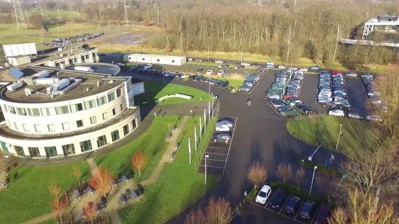
Hasselt University (UHasselt), Faculty of Engineering Technology (IIW), Campus Diepenbeek
Campus Diepenbeek
City of Hasselt
The city of Hasselt is only 4 km from campus Diepenbeek and has much to offer. Be sure to visit it.
Coordination & Organisation
Academic coordination
Prof. dr. Bart Vermang (UHasselt)
Prof. dr. Ir. Eric Demeester (KU Leuven)
Administrative coordination and contact
Mrs. Karine Evers | karine.evers@uhasselt.be
Organisation
Faculty of Engineering Technology
UHasselt - KU Leuven
Agoralaan Buildings H and B
3590 Diepenbeek
BELGIUM
With the support of Erasmus+ and VLAIO*
*This Spring School is part of the VLAIO project Promoting Sustainable Development Goals (SDGs) in existing education and training programmes for strengthening competences in the labour market and SMEs. Contact: Prof. Wouter Schroeyers (UHasselt).
Follow us on Instagram
circular_engineering