
Our Approach
Our approach is a continuous, iterative process in which we constantly evaluate, refine and retest. Each phase is distinct, yet intrinsically connected to the others:
• Technological innovation
• Process innovation
• Implementation
• Routine care
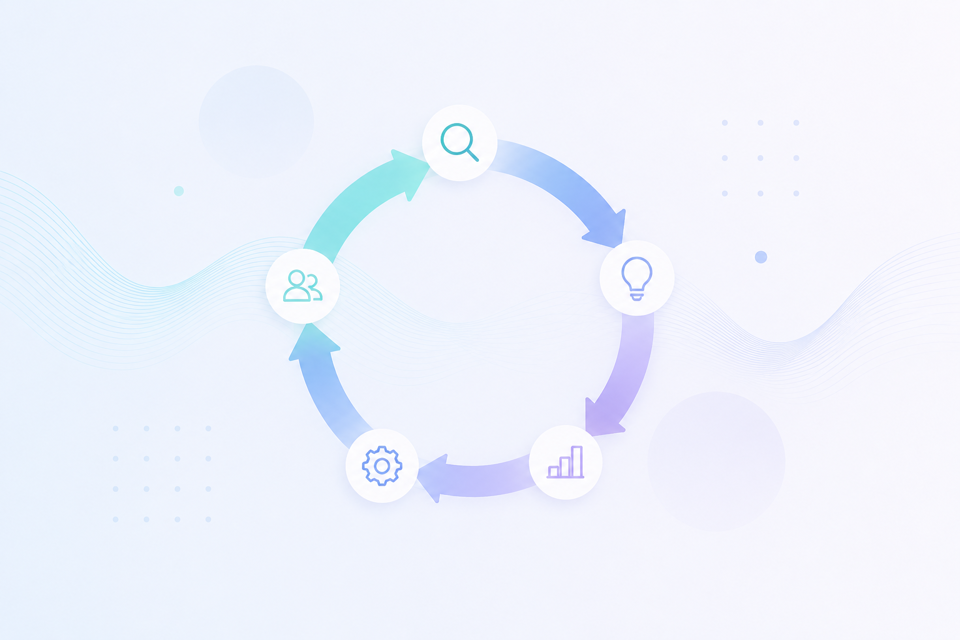
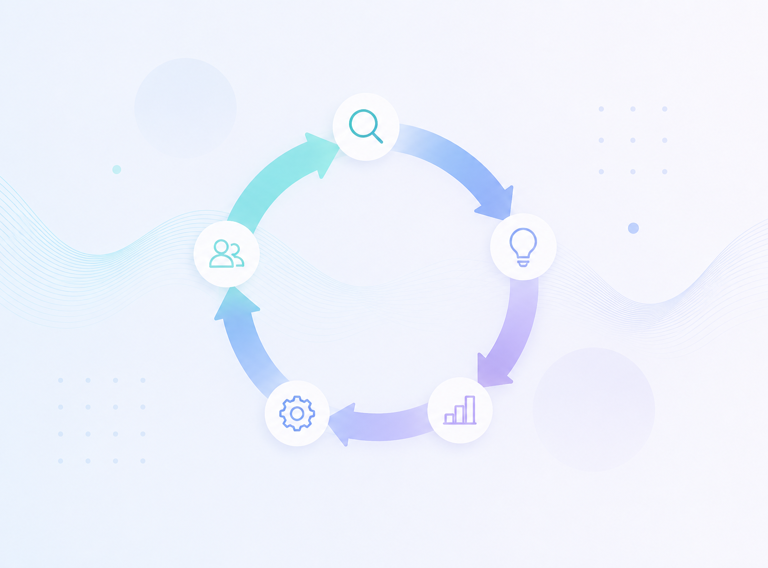
Cyclical innovation model

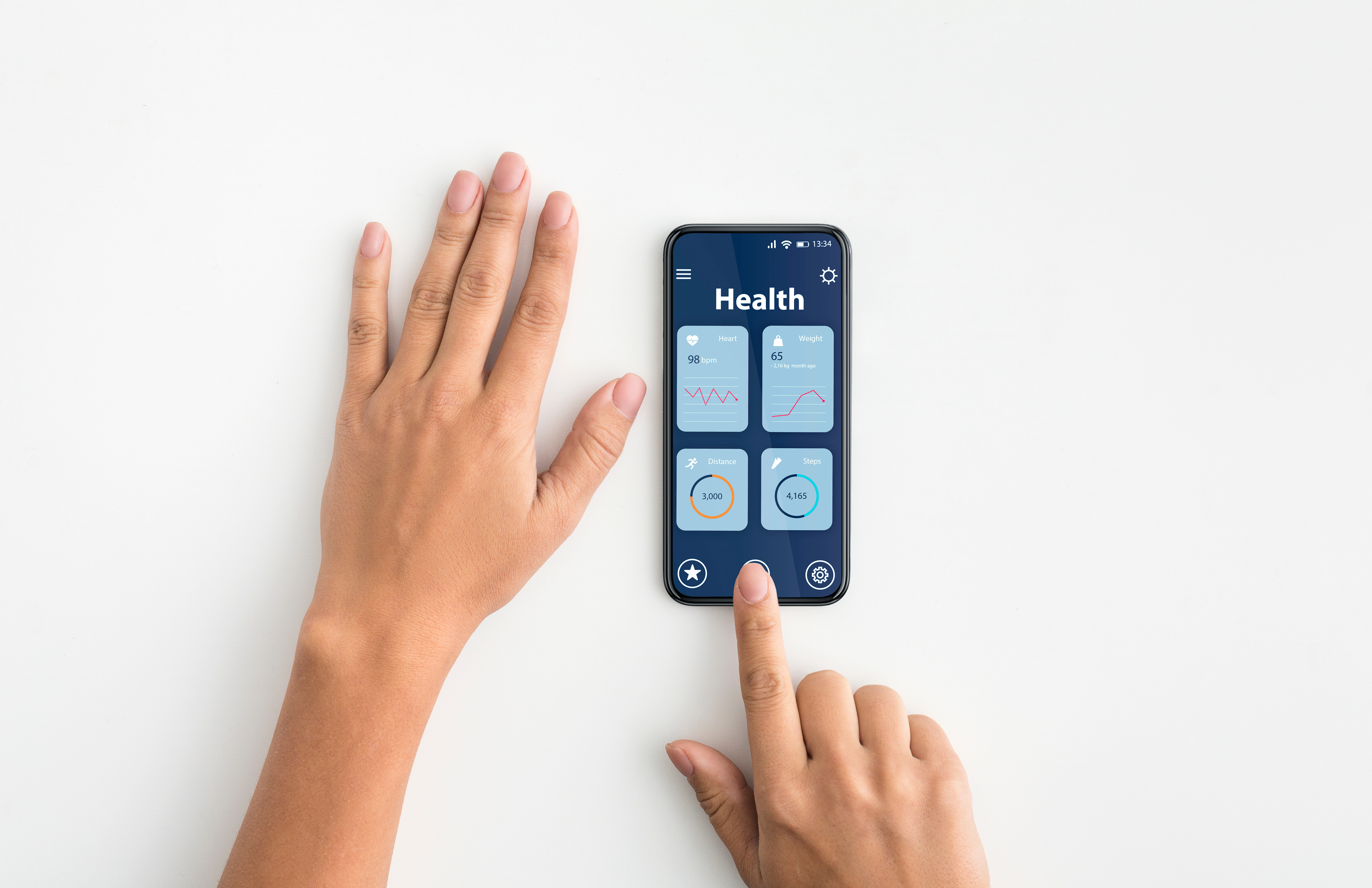




Starting from a clinical need
At the Mobile Health Unit, technology is never the starting point. Every trajectory begins with a clearly defined care need emerging from clinical practice. Together with healthcare professionals, patients and other stakeholders, we translate that need into focused research questions. These questions guide our assessment of which digital applications may be appropriate and meaningful — and which may not.
This care-driven approach prevents innovation for innovation’s sake. It ensures that hybrid care always starts from the real needs of patients and healthcare professionals.
Working through a cyclical innovation model
Our approach is structured around four core pillars. Rather than following a fixed sequence, these form a continuous, iterative process in which we constantly evaluate, refine and retest. Each phase is distinct, yet intrinsically connected to the others:
Technological innovation
Technological innovation
In this phase, we explore which technological solutions may contribute to the identified care need. This may include sensors, wearables, mobile applications, algorithms or data platforms.
Every technology — including those that already hold (medical) certification — is critically assessed for reliability, usability and clinical relevance.
Process innovation
Process innovation
Integrating digital and hybrid care involves far more than adding technology to existing workflows. It requires redesigned care processes, new forms of collaboration between healthcare actors, and often a redistribution of roles and responsibilities.
The Mobile Health Unit therefore examines how care processes must be reconfigured to integrate digital applications safely, efficiently and feasibly into everyday care pathways. This work is often carried out in co-creation with stakeholders and is already being applied across several hybrid care pathways in fields such as cardiology and gynaecology.
Hybrid care is also systematically tested in clinical practice. We evaluate feasibility, effectiveness, user experience and organisational impact. Research questions remain central throughout: does the solution genuinely improve care? How does it affect workload distribution? What are the implications for quality, safety and cost-effectiveness?
The answers to these questions determine whether — and how — further scaling is possible.
Implementation
Implementation
During the implementation phase, the focus shifts to the evidence-based introduction of digital and hybrid care pathways into real-world practice. Once an innovation moves beyond a defined study context, additional factors become critical. Widespread acceptance among healthcare professionals and patients, smooth integration into existing workflows, and viable funding models all play a decisive role in long-term success.
The Mobile Health Unit anticipates these conditions in earlier research phases. By doing so, we facilitate the transition towards implementation, reimbursement and other financing mechanisms that enable sustainable integration.
We work closely with partners specialising in implementation science, such as the THINK³ Innovation and Simulation Lab at Hasselt University. Several projects are currently in this phase.
Routine care
Routine care
In the final phase, innovations are sustainably embedded in everyday clinical practice. Even at this stage, processes continue to be optimised, with particular attention to scalability and structural integration. Our close collaboration with the Remote Clinical Monitoring Centre (RCMC) is a key asset in this phase.
Evaluation does not stop at implementation. We continue to monitor and assess outcomes to safeguard quality, safety and long-term impact.

Scientific validation at every stage
Across each pillar, we work with clearly defined research questions and pre-established, measurable endpoints. Statistical analysis, benchmarking against the current gold standard, and objective evaluation form the basis of our decisions.
This approach ensures that digital health and hybrid care are not implemented on the basis of expectations or promises, but on demonstrable added value. When a solution does not lead to improvement, we make this equally transparent.

Connecting research, care and innovation
The Mobile Health Unit operates at the intersection of academic research, clinical practice and technological innovation. From this position, we translate between:
-
what healthcare professionals need;
-
what technology makes possible;
-
and what can be scientifically validated.
We bring together the right partners, define the right research questions at the right time, and ensure coherence across the entire process.

Collaborating towards sustainable transformation
Hybrid care can only succeed through collaboration between all involved stakeholders. Co-creation is therefore structurally embedded in our way of working.
Patients, healthcare professionals, researchers, companies and policymakers are actively involved at every stage of the process. This broad collaboration strengthens support and increases the likelihood that innovation is effectively adopted in clinical practice.