Strengthening international energy storage research: Muhammad Danish Ali’s EURECA-PRO Visit to UHasselt
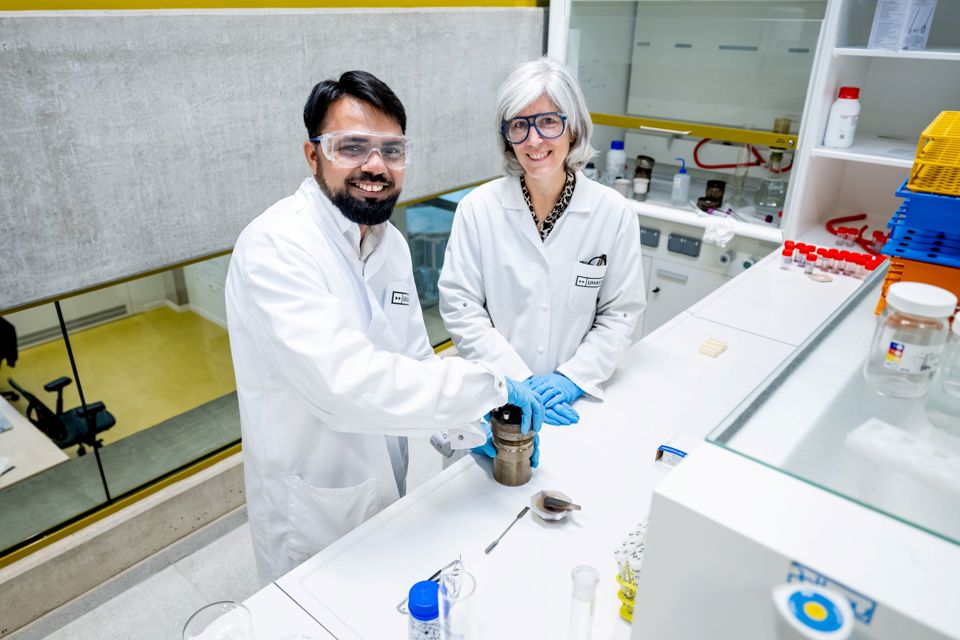
The EURECA-PRO program continues to foster meaningful international collaborations for early-career researchers. One recent example is the visit of Muhammad Danish Ali, a fourth-year PhD student from Silesian University of Technology under the supervision of Prof. Anna Starczewska, who spent a week at Hasselt University’s Materials Chemistry DESINe group under the supervision of Prof. An Hardy. Muhammad Danish’s visit, a return from an initial connection made during the 2024 edition of the EURECA-PRO PhD Journey, highlights the power of international mobility in sharing expertise and equipment, accelerating research, and strengthening scientific networks.
Building bridges through EURECA-PRO
The collaboration between Muhammad Danish and UHasselt began during the EURECA-PRO PhD Journey, hosted by UHasselt last year. “Through the PhD Journey, we met because of shared research interests. Otherwise, we probably wouldn’t have come into contact,” recalls Muhammad Danish. Prof. Hardy was one of the hosts during the PhD Journey and enthusiastically presented the research conducted at IMO-IMOMEC, which immediately drew Muhammad Danish’s interest and opened the door for future collaboration.
Muhammad Danish notes that his initial impressions of UHasselt were positive: “The labs are advanced, with equipment similar to what I have at my home institution, but arranged in a very professional, almost company-like environment. The professor was open and cooperative from the start, which is rare even after visiting ten countries during my PhD.” He also appreciated the collaborative spirit: “Some professors I met elsewhere only want to work alone. Here, they were open to collaboration, which is really encouraging.”
Prof. Hardy emphasises that trust is crucial for productive collaboration: “One plus one is more than two in science. EURECA-PRO facilitates contacts and allows collaborations to start on a foundation of trust.”
Research synergy: supercapacitors and energy storage
Muhammad Danish’s PhD focuses on the sustainable production and characterisation of advanced nanomaterials for supercapacitors, including composites of graphene oxide, metal oxides, and tellurium halides. These materials are optimised to enhance energy density, cycle life, and charge-discharge efficiency. “Supercapacitors - energy storage devices that bridge the gap between conventional capacitors and batteries, storing energy electrostatically rather than chemically - handle short-term, high-power needs, while batteries manage long-term energy storage. Both are critical in the transition to sustainable energy,” explains Prof. Hardy.
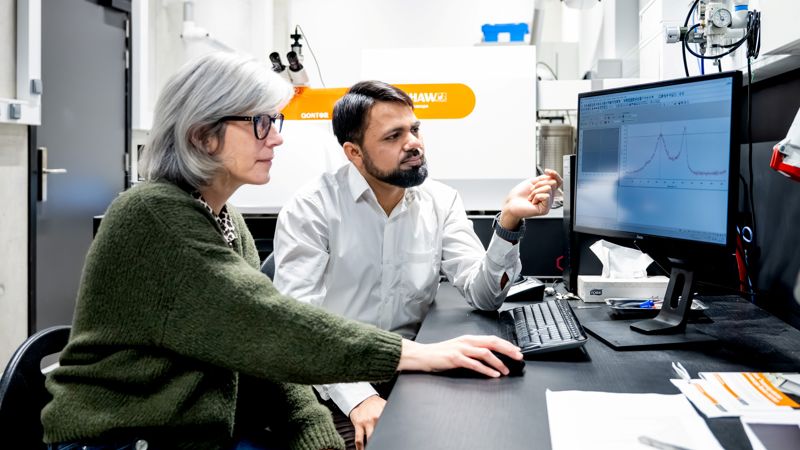
The collaboration is mutually beneficial. Muhammad Danish brings expertise in supercapacitor materials, which allows the DESINe group to gain complementary knowledge in characterisation and energy storage systems. “It’s a win-win. Muhammad Danish intensifies our understanding of material properties, and we learn more about supercapacitors,” Hardy says. “The collaboration also allows both sides to explore complementary topics, for example, while we focus more on batteries, Muhammad Danish’s work on supercapacitors enriches our understanding of energy storage as a whole.”
Advancing sustainable practices
Sustainability is central to the collaboration. Muhammad Danish emphasises that his research contributes directly to UN Sustainable Development Goal 12 on responsible consumption and production: “Our focus is on eco-friendly synthesis methods and materials that minimise environmental impact. By improving supercapacitor efficiency, we support clean energy technologies and reduce reliance on fossil fuels.”
In line with the broader DESINe group and EURECA-PRO sustainability agenda, the work explores the reuse and recycling of electrode materials. In the early stages, these initiatives aim to make energy storage devices more sustainable across industrial applications such as automotive, electronics, and medical devices.
The human side: safety and humour
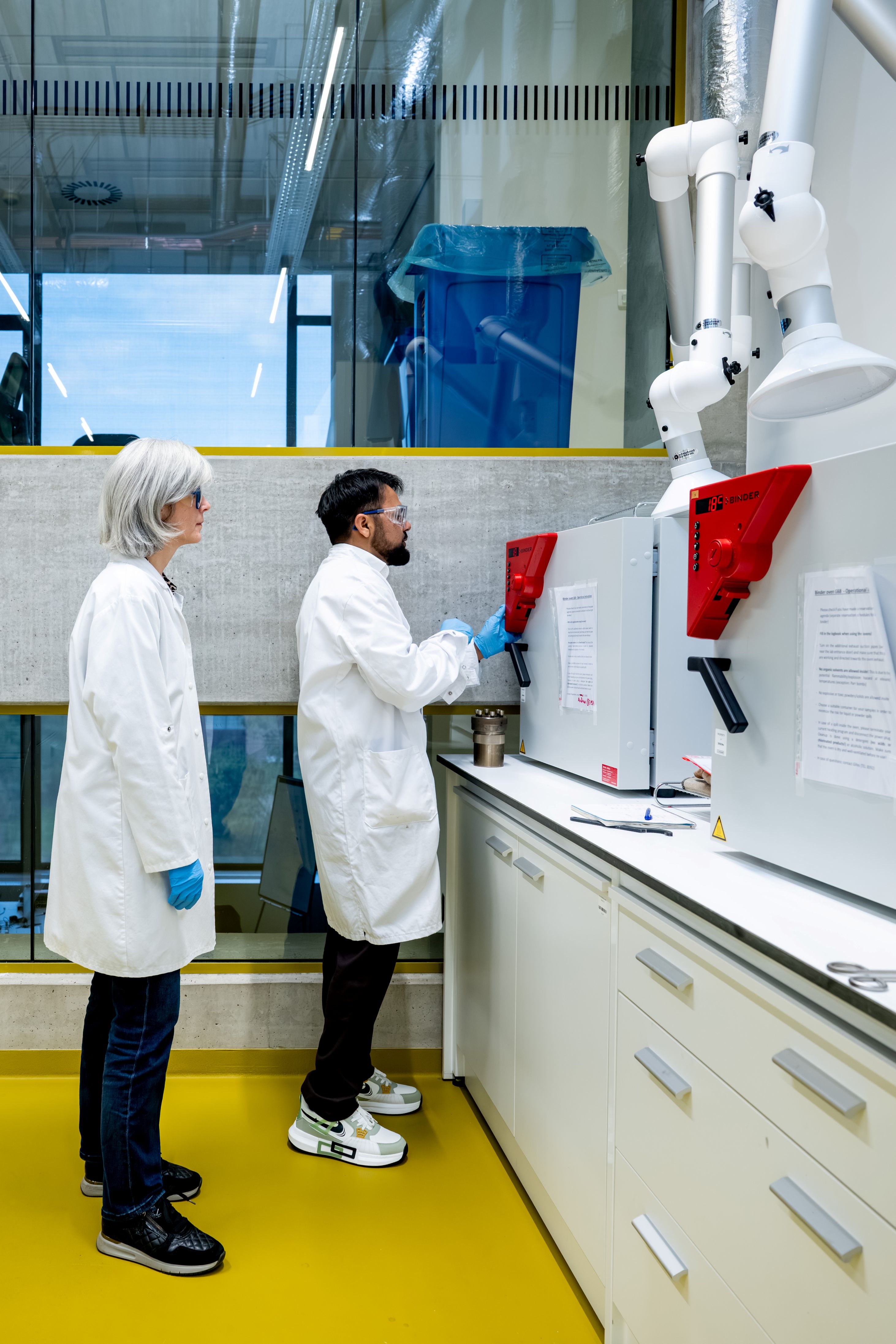
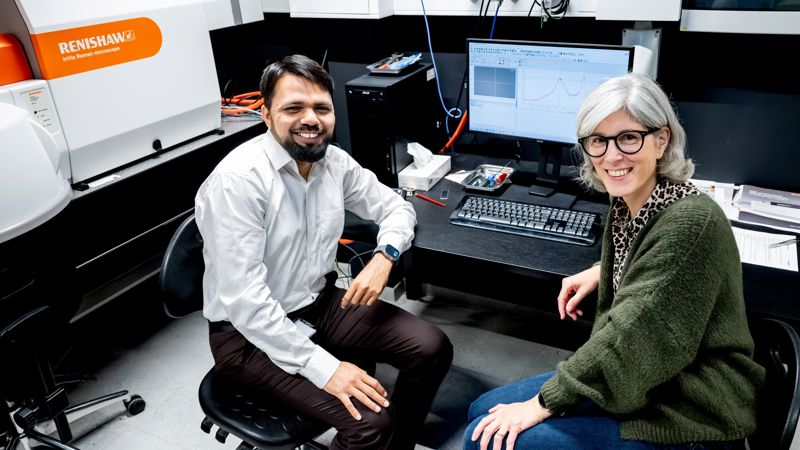
Beyond efficiency, Muhammad Danish also highlighted the lighter side of lab life. “Sometimes I was multitasking, trying to complete three or four things in a day, and I almost forgot the instructions. But then the professor reminded me: “Make sure your lab coat is closed when walking around the lab!” Prof. Hardy adds with a laugh, “We are very strict regarding safety, but it became a running joke: multitasking vs. lab safety!” This combination of rigorous safety and friendly humour created a productive yet welcoming environment.
Maximising impact in a short visit
Despite the brief one-week visit, Muhammad Danish’s stay was highly productive. “We managed to produce samples, develop a new protocol, and start characterisation in just a few days,” notes Prof. Hardy. Muhammad Danish adds, “With the professor’s support, I could use lab equipment efficiently and interact with other PhD students, sharing ideas and learning new techniques.”
Key factors in achieving such rapid progress included Muhammad Danish’s preparation, flexibility, and drive, coupled with the hands-on guidance of UHasselt lab staff. Even last-minute changes, including flight delays due to unforeseen events, were managed smoothly by Prof. Hardy and her team, ensuring Muhammad Danish could fully focus on his experiments. “Everything was last-minute: flights postponed, lab schedules changed, and yet the team managed to make it work, for which I’m very grateful”, Muhammad Danish recalls.
The value of international collaboration
Muhammad Danish has visited over ten countries during his PhD, gaining insights into diverse approaches to energy storage research. “Every visit added precious insights. I could adopt new methods, discuss them with my supervisor, and adjust my PhD plan. The knowledge gained here in Belgium builds on all these experiences,” he reflects.
Prof. Hardy highlights the benefits of hosting international students: “Working with students from different backgrounds enriches the lab. They bring new experiences and perspectives, which diversify our approach as supervisors. It’s a rewarding exchange.”
Both agree that EURECA-PRO exchanges are invaluable. Hardy says, “It also helps focus by identifying preferential partners, making collaborations more effective and productive.”
Future directions
The collaboration does not end with this short visit. Plans are underway for joint publications, longer follow-up stays, and participation in summer schools, such as the Materiomics one, all framed within EURECA-PRO mobility programs. Muhammad Danish also envisions continued academic collaboration while engaging with industry: “Understanding the gap between academic research and industrial needs is important for future applications. I hope to stay in academia while collaborating with industry.”
A personal and professional reward
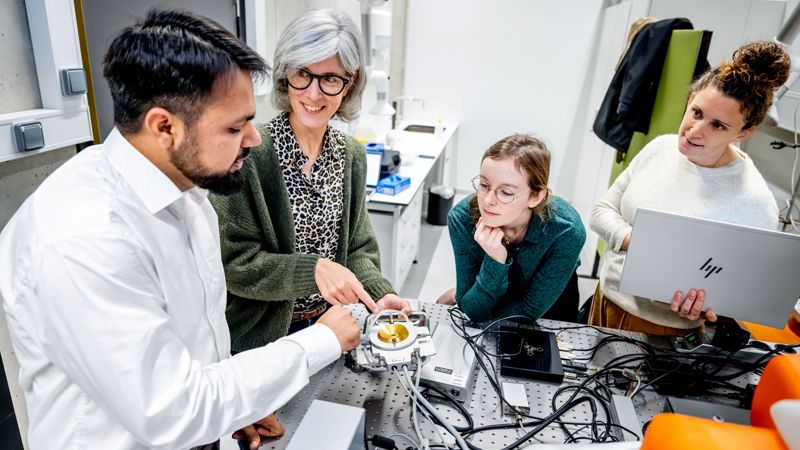
For Muhammad Danish, the well-organised lab environment, clear instructions, and supportive mentoring by both prof. Hardy and Prof. Bjorn Joos made the visit highly rewarding. “The preparation allowed me to multitask efficiently and focus on research,” he notes. Prof. Hardy highlights the personal enrichment of mentoring international students, emphasising that diverse experiences strengthen supervisory skills and scientific exchange.
Both encourage others to participate in EURECA-PRO activities: “Go for it. It’s a valuable experience,” says Hardy. Muhammad Danish adds, “Use the available (financial) resources to gain new skills, access specialised labs, and broaden your scientific horizon.”
Conclusion
The collaboration between Muhammad Danish Ali and UHasselt’s Materials Chemistry DESINe group showcases the transformative power of international mobility. By combining complementary expertise, fostering trust, emphasising sustainability, and sharing moments of humour over lab safety, the partnership advances cutting-edge research in energy storage while cultivating the next generation of global scientific leaders.