
Lecture by Guillaume Schweicher
This event has already taken place.
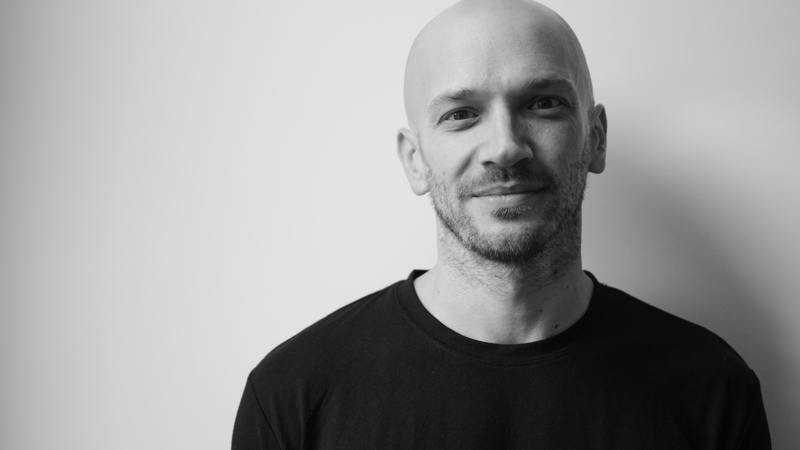
Lecture by Guillaume Schweicher
ABOUT THE LECTURE
In spite of tremendous progress in molecular design, engineering and processing, only few small molecule organic semiconductors (OSCs) have reached charge carrier mobilities (µ) higher than 10 cm 2 /Vs, typically with single-crystal devices. However, µ is a material property and not a molecular one. It is thus of paramount importance to take supramolecular order into consideration at all length scales.
As recently evidenced, the best OSCs tend to self-organize into large plate-like single-crystals exhibiting a layer-by-layer herringbone packing motif. Moreover, thermal lattice fluctuations cause temporal variations of transfer integrals (J) and impose a transient localization of charges leading to reduced macroscopic µ in these weakly bonded van der Waals solids.
Guillaume Schweicher will present recent progress achieved in their group in terms of molecular design and understanding of the impact of thermal energetic disorder: design by theory, crystal engineering, quantum-chemical calculations and evaluation of transport properties in electronic devices
ABOUT THE SPEAKER
Guillaume Schweicher is a Research Associate of the FNRS at the Laboratory of Polymer Chemistry, Université Libre de Bruxelles (ULB). He obtained his MSc in Chemical Engineering in 2008 and his PhD in Engineering Sciences from ULB in 2012. He conducted postdoctoral research at Stanford University in 2013 under the supervision of Professor Zhenan Bao, and at the University of Cambridge from 2014 to 2019 with Professor Henning Sirringhaus.
His research focuses on the design of organic and hybrid semiconductors, with an emphasis on the fundamental understanding of charge, heat, and spin transport, toward the development of sustainable and green electronic materials. In parallel, he has been involved since 2019 in interdisciplinary outreach activities with the Belgian collective Ohme, contributing to the development of educational and interactive content at the interface of science and art.