
Research Platforms
At LCRC, a set of research platforms is provided to ensure that investigators can conduct high-quality clinical studies within a supportive and well-coordinated environment. By integrating these services across the partner institutions, LCRC enables researchers to work efficiently, meet regulatory and quality standards, and focus on generating reliable and impactful clinical evidence.


View the content of this page
University Biobank
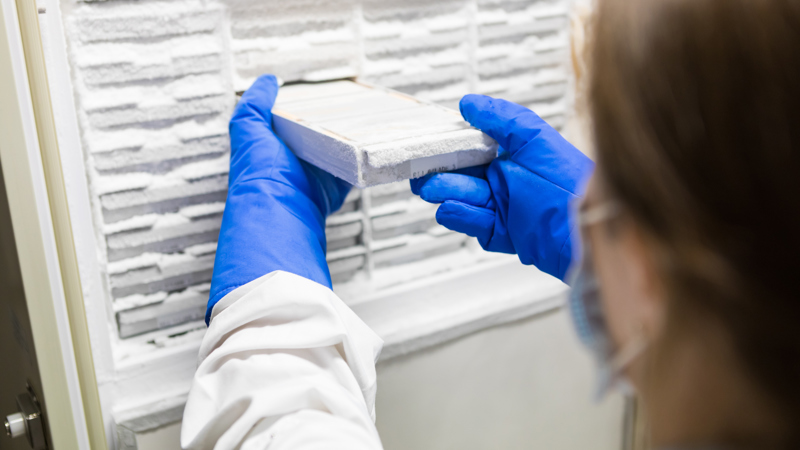
The University Biobank Limburg (UBiLim) is an essential and legally required component of high-quality clinical and translational biomedical research. It provides well-documented, high-quality human biological materials such as blood, bone marrow, urine, and tissue samples, together with relevant clinical data from patients with conditions including haematological disorders, multiple sclerosis, and rheumatoid arthritis. In addition to ensuring the optimal preservation of locally collected samples, UBiLim offers researchers within LCRC and beyond access to a unique collection of valuable patient materials and specialised expertise in sample processing and storage. This enables investigators to initiate their studies more efficiently and saves considerable preparation time. UBiLim operates in full compliance with national and international standards and actively participates in Belgian and European biobanking initiatives.

Clinical Trial Units & Ethics Committees
Clinical Trial Units
Belgium is among the leading European regions in the number of clinical studies conducted, offering significant opportunities for both scientific progress and early patient access to innovative treatments. To support this dynamic research environment, Clinical Trial Units (CTUs) have been established at each LCRC partner institution: Hasselt University (ctu@uhasselt.be), Ziekenhuis Oost-Limburg (FutureHealth) and Jessa Hospital (Clinical Trial Center). These units provide specialised expertise in study design and feasibility, regulatory and contractual processes, monitoring and study coordination, ensuring that clinical investigations are conducted efficiently, transparently and in line with Good Clinical Practice.
→ All clinical studies involving Hasselt University should be submitted and managed via the UHasselt research dashboard.
Ethics Committees
Ethical oversight is an essential component of high-quality clinical and societal research. Within the LCRC network, researchers are supported by several recognised ethics committees, including the Medical Ethics Committees of Hasselt University, Jessa Hospital and Ziekenhuis Oost-Limburg, as well as the Social and Societal Ethics Committee of Hasselt University. These committees provide independent review of study protocols, informed consent procedures and regulatory compliance, ensuring that the rights, safety and wellbeing of participants are protected at all times. Through their guidance, all LCRC-supported studies adhere to national and international ethical standards and are conducted with scientific and societal integrity.

Dataplatforms
LCRC provides researchers with secure and compliant digital tools that facilitate high-quality data collection and management across clinical and digital health studies. The DHARMA platform (Digital Health Research Platform for mHealth Research), developed in collaboration with IMOB, supports real-time data capture and remote monitoring through a broad range of connected medical devices and commercial wearables. As a vendor-independent and scalable environment, DHARMA enables continuous physiological monitoring, the development and validation of mHealth solutions, and the implementation of digital care pathways. For more information or access, contact julie.vranken@uhasselt.be.
Complementing this, Castor EDC is offered as the standard electronic data capture system for LCRC studies, ensuring that clinical data are documented in a structured, GDPR-compliant manner using validated electronic case report forms. Castor EDC is provided via Hasselt University as a secure web application for building and managing electronic case report forms, online surveys and research databases. A license can be requested via hilde.kelchtermans@uhasselt.be.
Together, these platforms provide researchers with a robust digital ecosystem for efficient, interoperable and regulation-aligned clinical research.