
The Role of Consumers in the Retail Design Process (PhD Constant Berkhout)
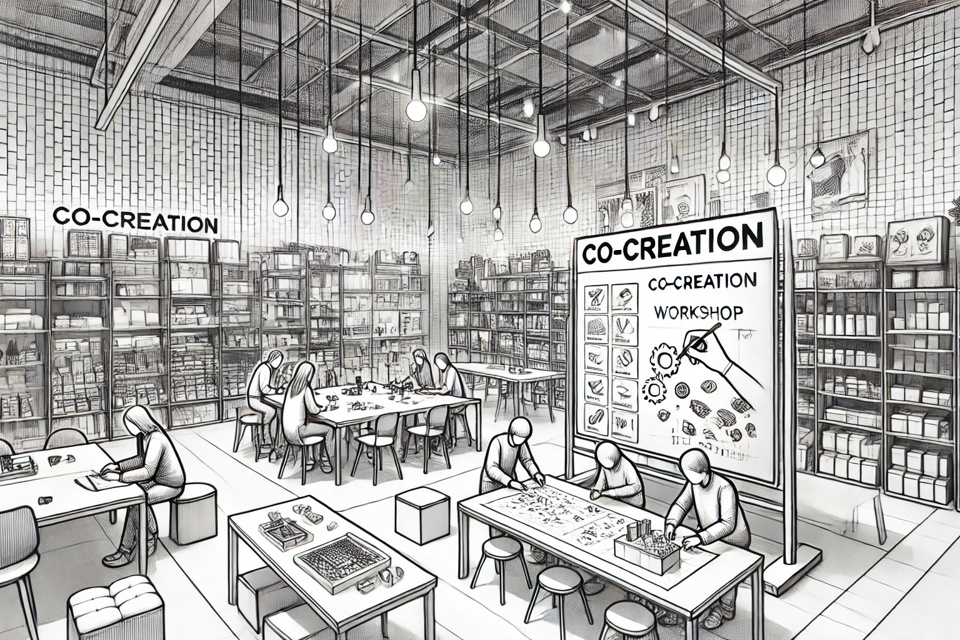
Retailers and designers view an understanding and empathy of consumers as essential for effective retail design. However, consumers are minimally in the retail design process. We study why this is not happening. We are wondering if consumer involvement will lead to more consumer-centric and successful design. And what the opportunities are for a highly participatory or co-creative role of consumers
- Constant Berkhout
- 2023 - 2028
- Promotor: Prof. dr. Katelijn Quartier
Retailers are increasingly shifting their perspective on consumers, viewing them not merely as targets but as sources of inspiration and value creation. Concurrently, consumers, empowered by new technologies, are becoming more comfortable actively engaging in design processes. However, our research suggests that consumers continue to play a passive and limited role in the design of retail stores. This raises two key questions: What opportunities exist for greater consumer involvement in the retail design process? And does increased involvement lead to more consumer-centric and successful stores?
Our study comprises three phases. In the first phase, we conducted a systematic scoping review to examine consumers' role in retail design. The findings indicate that consumer involvement remains minimal, despite advocacy within the broader design and marketing communities for a participatory, co-creative approach. Existing literature highlights two primary barriers to consumer co-creation: the role of the retail designer and the complexity of the retail design process.
In the second phase, we conducted approximately 30 interviews with retailers and designers across nine countries and three continents. Beyond the two previously identified barriers, our analysis revealed seven additional challenges related to the retailer's role and the retail context. Moreover, we identified five potential benefits of consumer co-creation in retail design. Through thematic analysis, we established five key decision areas that illustrate how retailers and designers can apply consumer co-creation effectively.
The third, more quantitative phase builds upon these findings. Our study aims to contribute to the development of consumer-centric retail environments and strategies that incorporate varying levels of consumer involvement, tailored to the specific needs of retail design projects.