
Catt Trial
The CATT trial is a scientific project, funded by Research Foundation Flanders (FWO), that aims to improve the treatment of a specific form of somatosensory tinnitus. The project is a collaboration between Hasselt University, University of Antwerp, Antwerp University Hospital and University of Regensburg.
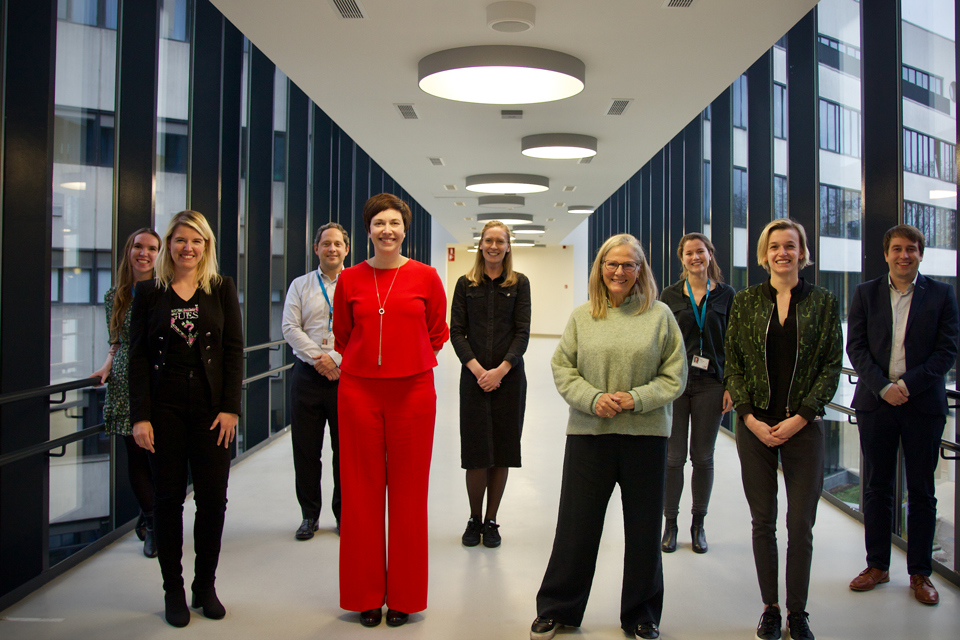
The CATT trial is a research project focused on improving the treatment of somatosensory tinnitus, a specific type of tinnitus that can be influenced by neck and jaw dysfunctions.
Between 2022 and 2025, the study investigated the effectiveness and cost-effectiveness of a blended physiotherapy programme that combines face-to-face treatment with support through a smartphone application.
Somatosensory tinnitus is estimated to affect approximately one in four people with tinnitus, highlighting the need for accessible and evidence-based treatment options. Through the CATT trial, researchers aimed to explore how digital health solutions can support patients and healthcare providers while maintaining treatment effectiveness.
The project has now been completed. Information about the study outcomes, scientific publications and opportunities to gain access to the programme is available below.
Structure, organization and collaborating institutions

Funded by the Research Foundation Flanders (FWO), the CATT-trial brought together researchers and clinicians from several institutes.
The main host institution and sponsor was Hasselt University.
The collaborating institutions were the Antwerp University Hospital, University of Antwerp and University of Regensburg.
In the spotlight
CATT trial demonstrates effectiveness of blended care for somatosensory tinnitus
The CATT trial investigated whether a blended physiotherapy programme, combining 6 face-to-face treatment sessions and smartphone-based support, could achieve outcomes comparable to traditional 12 physiotherapy sessions in patients with somatosensory tinnitus.
Key findings
- Both treatment approaches significantly reduced tinnitus-related burden.
- Improvements remained present up to three months after treatment.
- The blended treatment achieved outcomes comparable to traditional physiotherapy despite fewer sessions in the clinic.
- Participants evaluated the smartphone application positively.
Why is this important?
These findings show that digital support can be successfully integrated into physiotherapy for somatosensory tinnitus.
By reducing the number of in-person visits while maintaining treatment effectiveness, blended care may increase flexibility for patients and improve accessibility of care.
We would like to sincerely thank all participants who contributed to this research. Their involvement was essential in generating these insights and advancing tinnitus treatment for future patients.
Interested in using the programme yourself?
Somatosensory tinnitus? You can now start the programme yourself!
Discuss the programme with your physiotherapist and then contact us through one of the links below to obtain access to the application. The app is available in Dutch, English, German and French.
You can use the app free of charge if you participate in our User Experience study and agree to share your experiences through a short online survey.


Prof. dr. Annick Gilles
dr. Laure Jacquemin
Prof. dr. Wim Marneffe
Prof. dr. Annick Timmermans

Prof. dr. Vincent Van Rompaey
Prof. dr. Olivier Vanderveken
Publication list
Recent publications
Project registration
Data Privacy
Hasselt University, the study sponsor, confirms that collection and processing during clinical trials is done in full compliance with the European Regulation 2016/679 of 27 April 2016 on the protection of natural persons with regard to the processing of personal data and on the free movement of such data (GDPR).