Investigating the synergistic effects of music and neuromodulation in healthy subjects
Music and low-intensity brain stimulation may help improve rehabilitation for patients with disorders of consciousness. To better understand how these methods influence brain activity and how their synchronised application might enhance recovery, we are conducting a research study with healthy volunteers.
By participating, you can help us uncover the neural mechanisms behind these approaches and contribute to improving future patient care. Let us know via the form below.
What do you do in research?
We are looking for 35 healthy volunteers between 18 and 65 years old.
Are you in good health? Do you have no contraindications for brain stimulation, such as epilepsy, pacemaker, metal implant in the brain or sensitive skin?
As a participant, you will complete four sessions of approximately two hours each. During these sessions:
- You will listen to auditory stimuli while we apply low-intensity non-invasive brain stimulation.
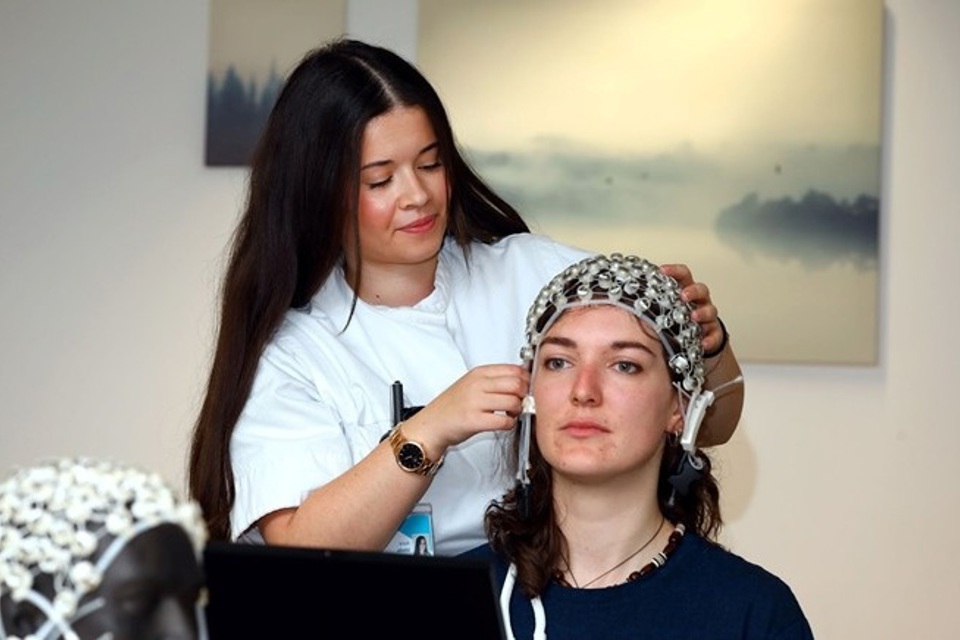
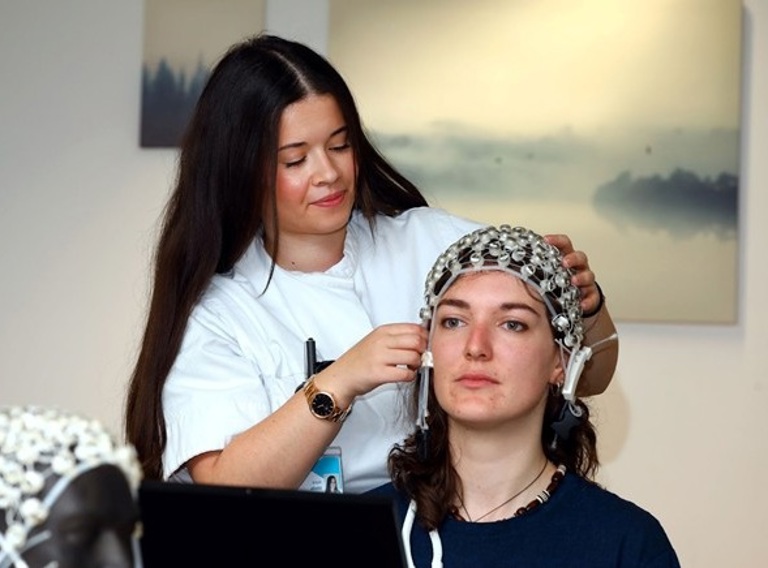
- We will measure your brain activity using electroencephalogram (EEG).
- You will be asked to perform a simple behavioural task.
- The study is completely non-invasive, and you will receive 25€ per session, including travel compensation.
What does it mean in practice?
- Number of sessions: 4 (2 hours per session), each session should be at least 1 week apart
- Duration of the research:
- Duration per participant: 1 month (4 sessions, 1 per week)
- Duration of the study: We will be recruiting for 7-8 months, or until we have our 35 participants recruitment objective.
- You can participate until: July 2026
This PhD project is in collaboration with the university of Liège (NeuroRecovery Lab, GIGA-Consciousness).