
Research in numbers
View the content of this page
Facts and figures
The following facts and figures provide an overview of Hasselt University's research environment.
Research staff
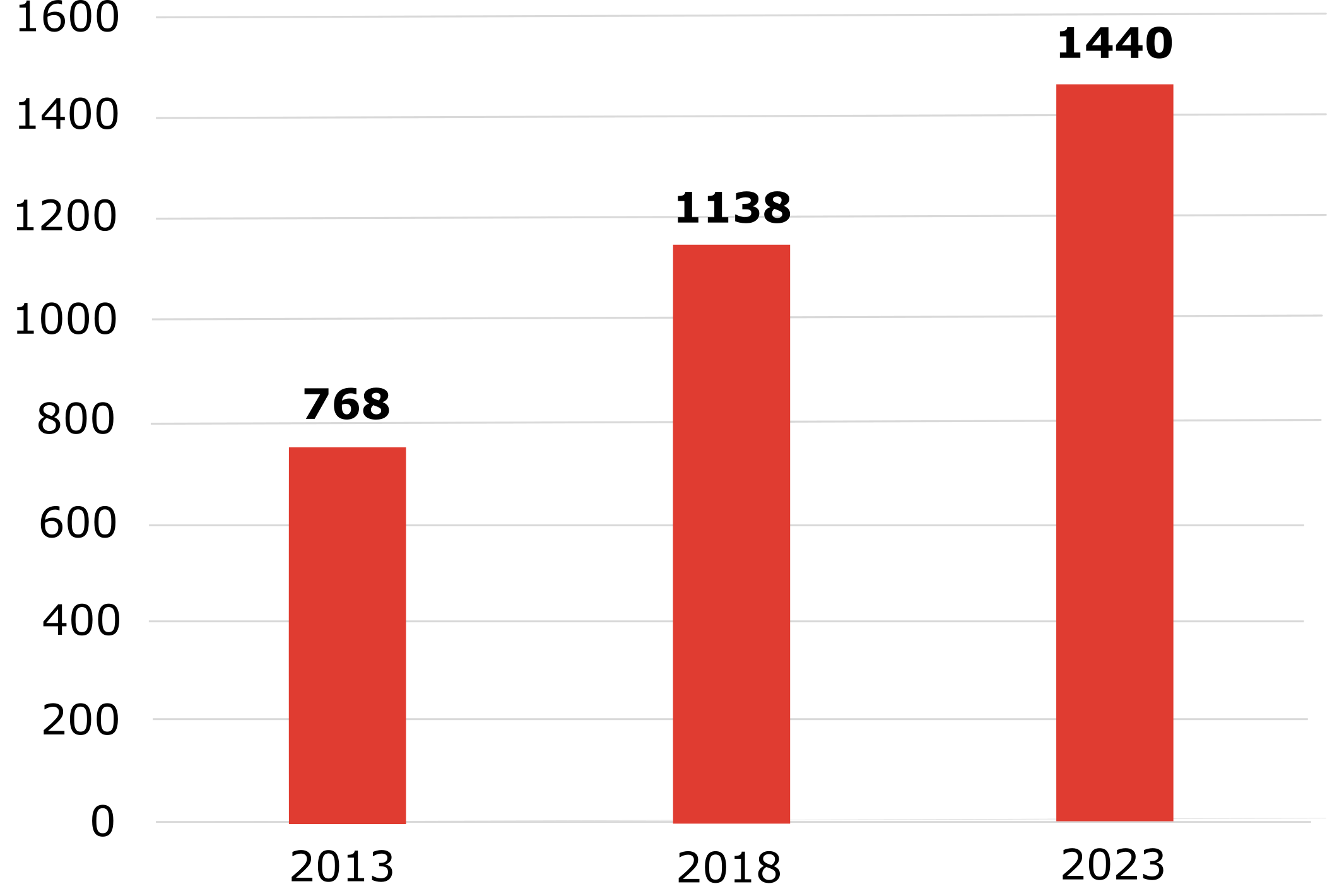
1440 academic staff* in 2023
- 21% professorships (ZAP)
- 15% postdoctoral researchers
- 43% predoctoral researchers
* Based on the VLIR personeelsstatistieken 2023
PhD students
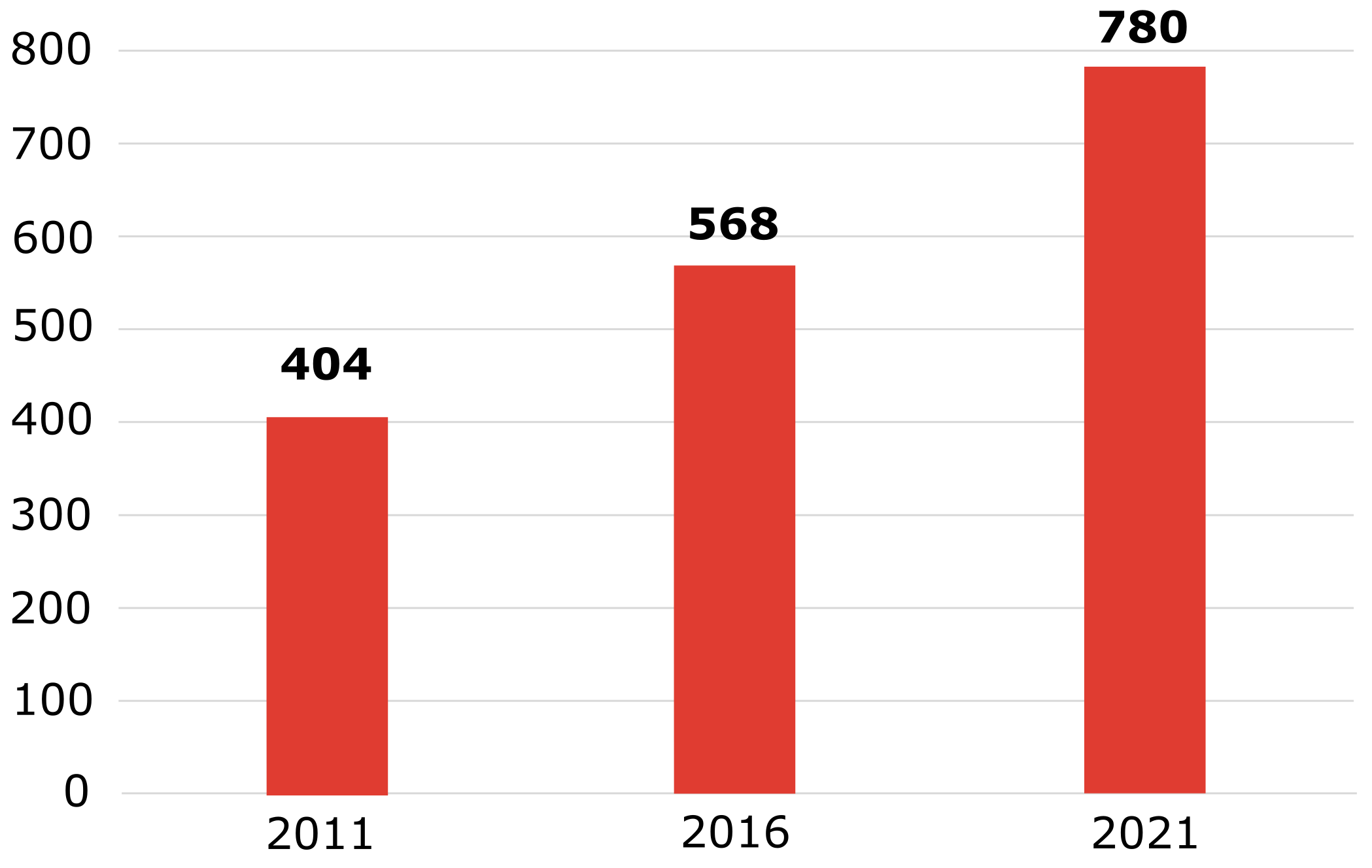
855 PhD students
- 47% international PhD students
- 53% female PhD students
- 28% in collaboration with a partner university
Publications
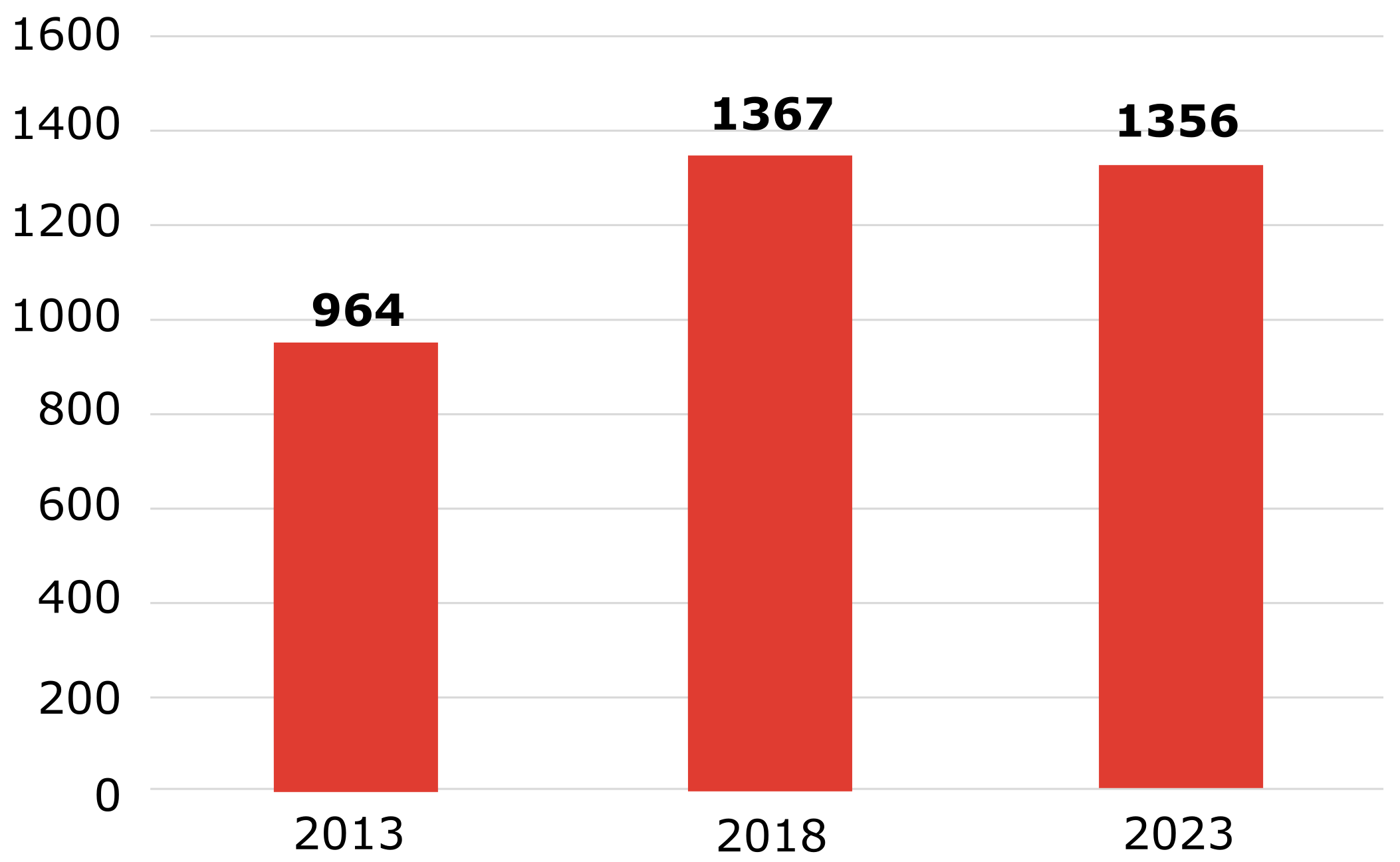
1356 peer-reviewed publications
- 59% international collaboration
University Rankings
University rankings compare universities worldwide on aspects such as research, teaching, internationalisation, knowledge transfer, regional involvement and reputation of teaching and research. Because they are easy to use, they have a large target audience. Ranking results, however, are strongly determined by the choice and the assigned weight of the indicators used in the ranking.
Times Higher Education Rankings
Times Higher Education Rankings
The Times Higher Education Ranking (THE) is an international league table that ranks universities based on 17 performance metrics that are clustered into five core indicators: teaching (the learning environment), research environment (volume, income and reputation), research quality (influence en excellence), industry income (knowledge transfer) and international outlook (staff, students and research).
Every year, the Times Higher Education publishes its main ranking, the World University Ranking, that ranks universities worldwide. Additionally, a number of subrankings are published every year. These subrankings focus on universities with similar profiles (e.g. age, size, etc.).
Hasselt University in the THE Rankings
In edition 2026-2027 Hasselt University was ranked in the Times Higher Education - World University Ranking in section 351-375 of the best universities worldwide.
Hasselt University was also ranked in the following subrankings of the Times Higher Education Ranking in the edition 2025-2026:
- # 201-250 of the best universities worldwide in the field of “Medical and Health”
- # 251-300 of the best universities worldwide in the field of “Life Sciences"
- # 401-500 of the best universities worldwide in the field of “Business and Economics”
- # 401-500 of the best universities worldwide in the field of “Computer Science”
- # 501-600 of the best universities worldwide in the field of “Engineering”
- # 801-1000 of the best universities worldwide in the field of “Physical Sciences"
QS Rankings
QS Rankings
The Quacquarelli Symonds ranking (QS) ranking is, similar to the Shanghai ranking and the Times Higher Education ranking, a “league table” ranking that ranks universities worldwide based on a number of indicators, i.e. academic reputation, employer reputation, faculty/student ratio, number of citations per faculty, proportion of international faculty and the proportion of international students. Characteristic for the QS ranking is the high weight that is given to reputation surveys (50%) in the calculation of the ranking.
Every year, the QS ranking publishes its main ranking, the QS World University rankings, in which the best 1000 universities worldwide are ranked. In addition, the QS also offers numerous subrankings that rank specific groups of universities (e.g. based on age, geographical location, etc.).
One of these subrankings is the QS Sustainability Ranking. This ranking assesses social and environmental sustainability performance of higher education institutions. The QS Sustainability Ranking uses 9 indicators, which cover 3 main categories:
- Environmental Impact (Education, Research, and Sustainability)
- Social Impact (Employability and Outcomes, Equality, Health & Wellbeing, Impact of Education, and Knowledge Exchange)
- Good Governance
Hasselt University in the QS Rankings
Hasselt University appeared for the fifth time in the QS World University Rankings in edition 2025 and was ranked on position 554 of the best universities worldwide.
For the QS Sustainability Ranking, Hasselt University was ranked on position 663 of the best universities worldwide this year.
Hasselt University was also ranked in the following subrankings of the QS Ranking in the edition 2025-2026:
- # 201-300 of the best universities worldwide in the field of “Art & Design”
- # 401-450 of the best universities worldwide in the field of “Medicine”
- # 751-850 of the best universities worldwide in the field of “Computer Science and Information Systems”
ARWU - Shanghai Ranking
ARWU - Shanghai Ranking
The Academic Ranking of World Universities (ARWU), also known as the Shanghai ranking, was the first ranking to compare performance of universities worldwide. This ranking ranks 1000 universities worldwide that score best on a set of indicators. These indicators are mainly related to prestigious research activities and absolute research output, i.e. the number of alumni winning Nobel Prizes and Fields Medals, the number of staff winning Nobel Prizes and Fields Medals, the number of Highly Cited Researchers, number of papers published in Nature and Science, number of papers in Web of Science, and the weighted scores of the above five indicators divided by the number of full-time equivalent academic staff.
The Shanghai ranking yearly publishes a main ranking, i.e. the Academic Ranking of World Universities (ARWU) and about 54 discipline-specific subrankings.
Hasselt University in the Shanghai Ranking:
In 2026, Hasselt University was ranked in the Shanghai ranking in the section 701-800 of the best universities worldwide.
Hasselt University was ranked in the following subrankings of the Shanghai ranking in 2026:
-
#201-300 of the best universities worldwide in the field of 'Clinical medicine'
-
#401-500 of the best universities worldwide in the field of 'Public Health'
-
#201-300 of the best universities worldwide in the field of 'Statistics'
More information?
For more information, please contact the Information Management and Strategic Data-Analysis Unit on obi_data@uhasselt.be.