Day 2: Education & Research
Research serves as a vital tool for ensuring that glocalisation efforts in European universities are based in evidence, which responds to local needs and global goals. This is put into practice by transferring knowledge and skills through education.
Morning tracks
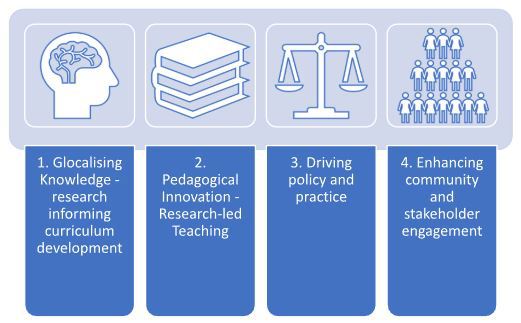
Track 1: Glocalising knowledge
1A – Building Glocal Partnerships
How can universities form partnerships that balance global ambition with local relevance? This discussion explores models of collaboration that co-create knowledge across regions, cultures, and disciplines.
1B – Translating Research into Education (flagships)
How can we strengthen the two-way relationship between research and teaching? This discussion explores how cutting-edge research can inspire innovative curricula and learning experiences and, conversely, how creative teaching practices can spark new research ideas, collaborations, and impact pathways. Participants will share examples of integrating research findings, methods, and questions into education, as well as cases where teaching innovations have led to new lines of inquiry or partnerships within and beyond the university.
Track 2: Pedagogical Innovation
2A - Digital learning ecosystems for lifelong learning (LLL)
The focus is on building ecosystems that promote accessibility, creativity, and sustained learner engagement: connecting formal study, professional development, and community learning across the Lifespan. How can universities design flexible, technology-enhanced learning environments that support lifelong and continuous learning? This discussion examines how digital tools, hybrid teaching models, and open learning resources can facilitate meaningful engagement for learners of all ages and backgrounds in higher education.
2B – Co-creating Curricula with Researchers and Students
This sub-session explores how educators, researchers, and students can collaboratively design learning experiences grounded in inquiry and experimentation, transforming the classroom into a space of shared discovery.
Track 3: Driving policy and practice
3A - Building Institutional Capacity for Change
How can universities strengthen leadership, governance, and support structures to make innovation sustainable? This discussion examines how institutional frameworks can embed transformation rather than treating it as a project-based approach.
3B - From Pilot to Policy: Embedding Innovation in Universities
Many great initiatives remain isolated. What does it take for successful pilots in teaching, research, or engagement to become lasting institutional practices and influence policy development?
Track 4: Enhancing community and stakeholder engagement
4A - Strengthening Regional Innovation Ecosystems
How can universities collaborate with local businesses, public institutions, and communities to create innovation ecosystems that generate economic and social value? Participants will share approaches for building long-term partnerships and regional trust.
4B - Storytelling and Visibility of Impact
How can universities and European university alliances better communicate their impact and inspire public engagement? This discussion examines how storytelling, evidence, and visibility strategies can make the value of academic work more tangible to broader audiences.