Chronic inflammation and blood-brain barrier disruption in neurodegeneration
“On a quest to find the cause of neurodegeneration”
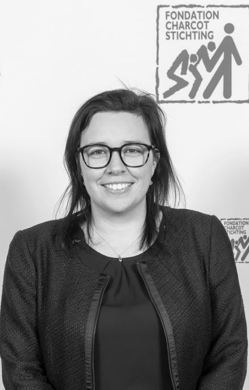
Prof. dr. Bieke Broux
Neuroinflammation
Blood brain barrier
Multiple sclerosis
T cells
Flow cytometry
Contact:
+32 (11) 26 92 54
Bieke.broux@uhasselt.be
Research focus
Research focus
Research Focus:
Research towards treating neurodegenerative disorders, such as multiple sclerosis, is aimed at halting ongoing inflammation and restoring brain function, but the (environmental) trigger of disease is still unknown. Therefore, our team searches for the cause(s) of neurodegeneration, combining fundamental research on mechanisms of chronic inflammation and blood-brain barrier (BBB) disruption with the investigation of obesity as an inflammatory cause of neurodegeneration. In this way, novel therapeutic targets are identified and validated for use in patients.
Research lines:
1. Identifying the reciprocal communication between the (inflamed) blood-brain barrier and (regulatory) T cells before, during and after migration, and the impact thereof on both cell types.
2. Examining the role of adipose tissue-derived immune cells or extracellular vesicles in triggering neuroinflammation and identifying other dietary influences like high salt on BBB permeability.
Core techniques/models
Core techniques/models
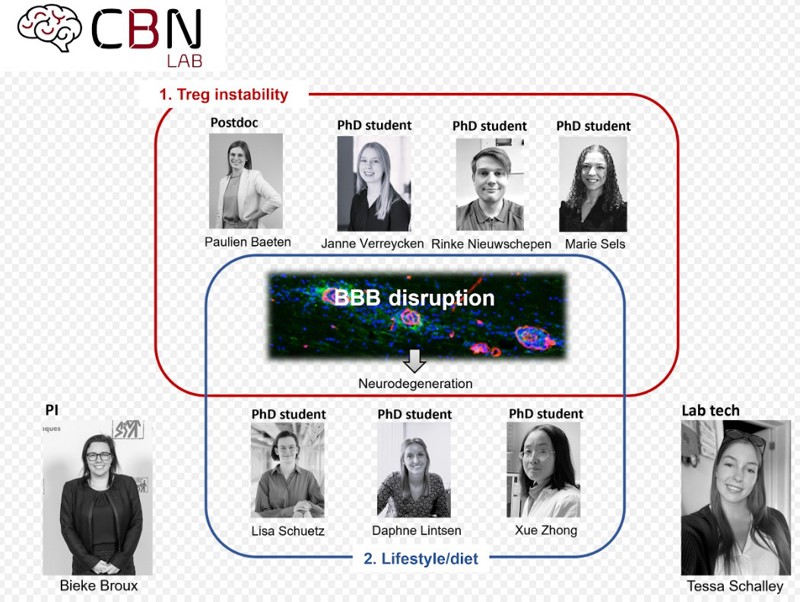
- (Spectral) Flow cytometry and cell sorting: help with design and optimization, or use of validated immune phenotyping panels (including 14 to 30 colour panels). More information on the ‘Flow Cytometry Unit’ can be found here.
- In vitro and in vivo blood-brain barrier models: to study immune cell adhesion and migration, transport of compounds, activation and integrity of the BBB.
- Molecular and cellular tools to investigate T lymphocyte function, including Treg suppression, T cell proliferation, cytotoxicity etc.
- Bulk and single cell RNA sequencing: help with experimental design and work flow.
- In vivo models of multiple sclerosis, including clinical and pathological readouts.
Team members
Team members
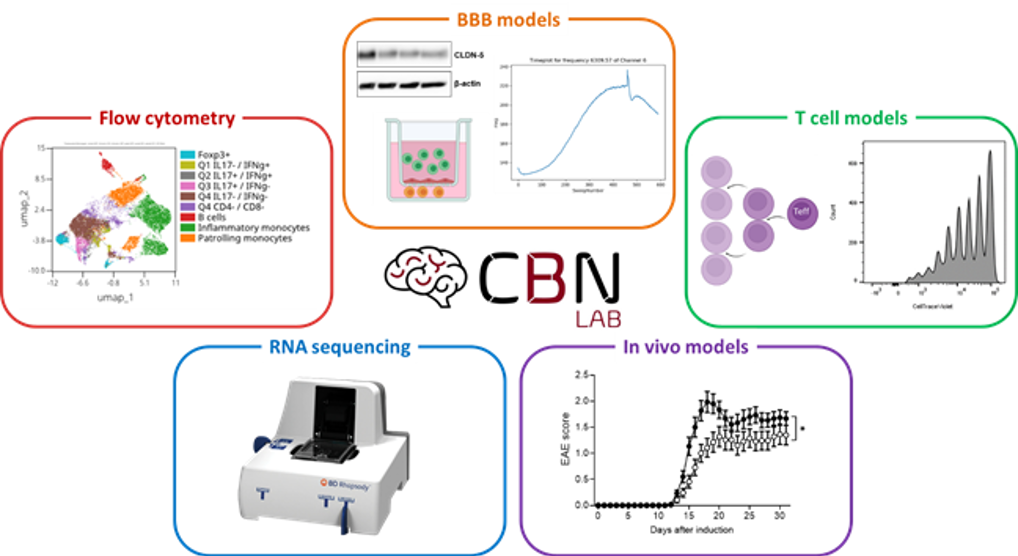
Prof. dr. Bieke Broux: group leader
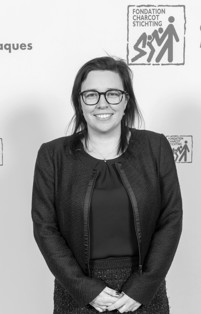 Bieke Broux (°1985), PhD, is Assistant Professor Immunology and group leader of the CBN team at Hasselt University (Biomedical Research Institute). After her PhD, she obtained a postdoctoral fellowship grant from the Fund for Scientific Research Flanders (FWO). During the first two years of this postdoctoral fellowship, she worked in the lab of Prof. Dr. Alexandre Prat (CRCHUM, Université de Montréal, Canada), on blood brain barrier biology and disruption in multiple sclerosis. For her return to BIOMED, she obtained a prestigious European ECTRIMS postdoctoral fellowship grant, as well as several bench fee grants (Belgian Charcot Foundation, FWO, Belgian MS support fund) to start a research line on the blood brain barrier in multiple sclerosis at the Biomedical Research Institute. In addition, she recently received a Global MS Research Booster Award, an international fellowship grant awarded once every two years by the Dutch “Stichting MS Research” to boost the development of a postdoctoral fellow into an independent group leader. Since 2021, she is appointed as Assistant Professor Immunology at Hasselt University.
Paulien Baeten: Postdoctoral fellow
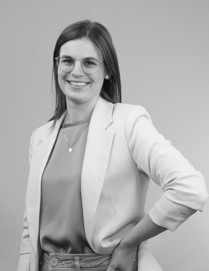 Paulien Baeten (°1994) is a postdoctoral researcher in the CBN lab of Prof. Dr. Bieke Broux at Hasselt University (Biomedical Research Institute). After studying Biomedical Sciences at Hasselt University, she started as a FWO-SB PhD fellow in 2018. Her PhD project focused on regulatory T cells (Tregs) interacting with the inflamed blood-brain barrier in MS. After obtaining her PhD in 2022, she received a VLAIO postdoctoral innovation mandate to translate the results of her PhD towards clinical application. For this topic, she performed in vitro BBB modelling and human Treg assays (FACS, extended spectral flow cytometry, suppression assays, ...) and human Treg genome editing (CRISPR-Cas9-mediated knockout and mRNA induction). In addition, in vivo MS models using FOXP3 reporter mice are developed. The VLAIO-inspired collaboration with industry lead our team to multiple research collaborations with Flemish companies using the team’s and Paulien’s expertise in flow cytometry, in vivo MS models (including models new to the team such as the PLP-induced EAE and 2D2 transgenic mice), T cell and Treg biology and in vitro BBB assays. Paulien is leading and managing these projects. The team’s ultimate goal of these unique and innovative collaborations is to bring our research and knowledge towards the clinic.
Lisa Schuetz: PhD candidate
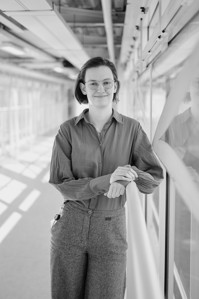 Lisa T Schuetz (°1996) started her joint PhD project at Hasselt University and Maastricht University in 2022. At the end of her Neuroscience master's program at Maastricht University, she did a 9-month internship in Prof. Michela Matteoli’s lab (Milan) to gain more expertise in neuroimmunology. Supervised by Bieke Broux, Tim Vanmierlo and Kristiaan Wouters, Lisa combines her expertise on immunometabolism and neuroscience to investigate how obesity impacts the immune system and how this correlates with the risk of Alzheimer’s dementia. Therefore, she uses a mouse model to investigate the contribution of the adipose tissue-brain axis to neurodegeneration and employs spectral flow cytometry to immunophenotype human blood samples.
Sarah Chenine: PhD candidate
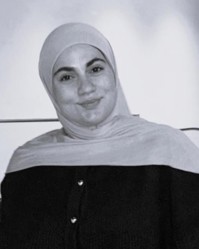 Sarah Chenine (°1997) started a joint PhD project at Hasselt University and Maastricht University on November 1st 2021, funded by ‘Fonds Wetenschappelijk Onderzoek’ (FWO). She did her internship working on epigenetics in oligodendrocytes at Hasselt University and graduated in the research master Cognitive & Clinical Neuroscience with a specialization in Drug Development and Neurohealth, at Maastricht University. Supervised by Profs. Bieke Broux, Tim Vanmierlo and Daniel van den Hove, she now focuses on the epigenetic features of regulatory T cells and their restoring capacity during neurodegeneration.
Janne Verreycken: PhD candidate
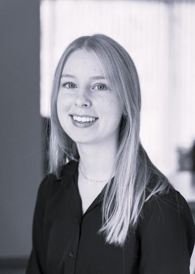 Janne Verreycken (°2000) started her PhD in November 2023 funded by the special research fund of Hasselt University. This allowed her to build on the research she conducted during her seven-month internship in the CBN lab, where she focused on the brain barrier-repairing capacity of regulatory T cells in multiple sclerosis. In November 2024, she acquired funding from ‘Fonds Wetenschappelijk Onderzoek’ (FWO) for her PhD project, which explores the pro-inflammatory phenotype switch of regulatory T cells following blood-brain barrier migration.
Daphne Lintsen: PhD candidate
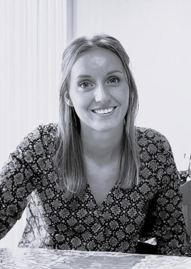 Daphne Lintsen (°1998) started her PhD at Hasselt University in November 2023 on a ‘Fonds Wetenschappelijk Onderzoek’ (FWO) funded project. After her bachelor in biology at Hasselt University, she proceeded her academic path at Radboud University Nijmegen where she obtained her master in medical biology with a specialization in human biology. Under the guidance of prof. dr. Bieke Broux in collaboration with prof. dr. Kristiaan Wouters and prof. dr. Kenneth Verboven, she focuses on the impact of adipose tissue-derived extracellular vesicles (EVs) on the blood brain barrier (BBB) in the context of obesity. The project involves in-depth characterization of human adipose tissue-derived EVs and a combination of in vitro and in vivo models to study the BBB. Hereto, she aims to understand the adipose tissue-brain axis in the light of BBB disruption.
Xue Zhong: PhD candidate
 Xue is a clinician specializing in rheumatology and immunology from China. With her strong clinical foundation, Xue is dedicated to understanding how dietary factors influence neuroimmune interactions and contribute to disease pathology. Currently, Xue is conducting research on the mechanisms through which salt intake affects blood-brain barrier integrity, with implications for neurological and autoimmune diseases.
Marie Sels: PhD candidate
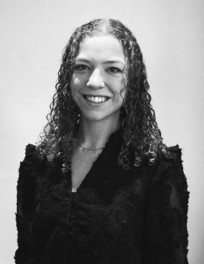 Marie Sels (°1997) obtained her master’s degree in biomedical sciences, specializing in tropical and infectious diseases, at the University of Antwerp. She has a strong interest in immunology and parasitology, which she explored further during two international research internships in South Africa and South Korea. She started a joint PhD at Hasselt University and Maastricht University in January 2023, funded by the special research fund in Hasselt. In November 2024, she obtained funding from ‘Fonds Wetenschappelijk Onderzoek’ (FWO) for her PhD project. Under guidance of Prof. Dr. Bieke Broux and Prof. Dr. Ingrid Dijkgraaf, she focuses on a tick protein, salp15, and its therapeutic potential in (auto)immune diseases, by investigating the mode of action and effects of Salp15 on human CD4+ T cells.
Rinke Nieuwschepen: PhD candidate
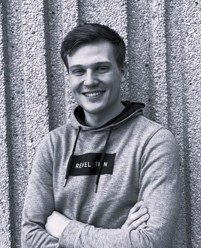 Rinke Nieuwschepen (°2001) began his PhD at Hasselt University in November 2025. He holds a Master’s degree in Infection and Immunity from Utrecht University. Rinke has developed a strong background in immunology, starting with his bachelor’s thesis on regulatory T cells (Tregs) in Psoriatic Arthritis. He further expanded his expertise during an internship at the laboratory of Dr. V.K. Kuchroo, where he investigated the role of B cells in EAE and microglia in early brain development. Currently, his doctoral research focuses on elucidating the relationship between Foxp3 stability in Tregs and brain repair mechanisms, with a particular emphasis on microglia.
Brecht Moonen: PhD candidate
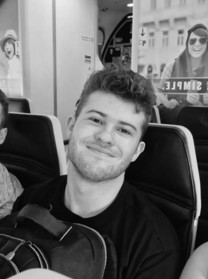 Brecht Moonen, born in 2000 and raised in Grote-Brogel, Limburg, Belgium, achieved distinction in obtaining his master's degree in Biomedical Sciences from Hasselt University. Throughout his academic journey, Brecht has demonstrated a keen interest in the intersection of lipid metabolism in immunity and multiple sclerosis, which he passionately pursued from the onset of his master's program. To deepen his understanding, he embarked on a senior internship in Lund, Sweden.
In November 2023, Brecht initiated a new phase in his academic and research pursuits. His focus is on elucidating the role of S-palmitoylation as a functional regulator of autoimmunity in Multiple Sclerosis. Guided by the expertise of Jeroen Bogie as the Promotor and Bieke Broux and Sam Vanherle as co-promoter, Brecht is committed to contributing valuable insights to the understanding of autoimmune processes in MS.
Tessa Schalley: Lab technician
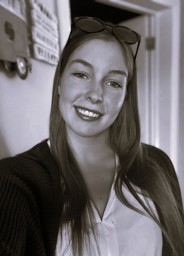 Tessa Schalley joined the lab in 2023 as lab technician. She followed the biomedical science Bachelor and Master programme at UHasselt and prior to joining the lab she worked for two years as technician in VIB laboratories in Leuven and Diepenbeek. With her expertise in cell culture and animal handling she is supporting the running projects of the team.
Master students 2025/2026
Hugo Henriques Fernandes
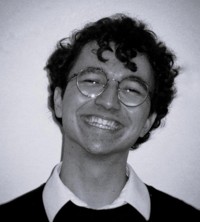
Berre Opsteyn
Past team members
Gayel Duran (PhD candidate)
Doryssa Hermans (PhD candidate)
Cindy Hoeks (PhD candidate)
Baharak Hosseinkhani (Postdoctoral fellow)
Key publications
Key publications
Full publication list: Google Scholar
1 Beyond the innate immune system: rethinking inflammasomes in multiple sclerosis
Duran G., Verreycken J., Dombrowski Y., Lamkanfi M., Broux B.
Trends Immunol 2025 Nov 20:S1471-4906(25)00271-6.
Schuetz L.T., Duran G., Baeten P., Lintsen D., Hermans D., Chenine S., Verreycken J., Vanmierlo T., Wouters K.*, Broux B.*
* equally contributing authors
Biol Sex Differences 2024 Dec 18;15(1):105.
3 Rapamycin rescues loss of function in blood-brain barrier–interacting Tregs
Baeten, P., Hamad, I., Hoeks, C., Hiltensperger, M., Van Wijmeersch, B., Popescu, V., Aly, L., Somers, V., Korn, T., Kleinewietfeld, M., Hellings, N.*, Broux, B.*
* equally contributing authors
JCI insight 2024 Feb; 9(7) p.e167457.
4 Cerebral microvascular endothelial cell-derived extracellular vesicles regulate blood− brain barrier function
Hosseinkhani, B.*, Duran, G.*, Hoeks, C., Hermans, D., Schepers, M., Baeten, P., Poelmans, J., Coenen, B., Bekar, K., Pintelon, I., Timmermans, J.P., Vanmierlo, T., Michiels, L., Hellings, N., Broux, B.*
* equally contributing authors
Fluids and Barriers of the CNS 2023 Dec, 20(1), 95.
5 Oncostatin M triggers brain inflammation by compromising blood–brain barrier integrity
Hermans, D.*, Houben, E.*, Baeten, P., Slaets, H., Janssens, K., Hoeks, C., Hosseinkhani, B., Duran, G., Bormans, S., Gowing, E. and Hoornaert, C., Beckers, L., Fung, W. K., Schroten, H., Ishikawa, H., Fraussen, J., Thoelen, R., de Vries, H. E., Kooij, G., Zandee, S., Prat. A., Hellings, N.*, Broux, B*.
* equally contributing authors
Acta Neuropathologica 2022 June, 144(2), 259-281.