
OSCAR-BLINQ quantum sensor set for the International Space Station in 2026
In late 2026, Belgian ESA astronaut Raphaël Liégeois will travel to the International Space Station (ISS) carrying a highly advanced diamond-based quantum sensor developed by researchers at imo-imomec, the joint research institute of Hasselt University and imec. This sensor is the core of the OSCAR-BLINQ project, a Belgian research collaboration selected by the Belgian Science Policy (BELSPO).
Cutting-edge quantum sensing
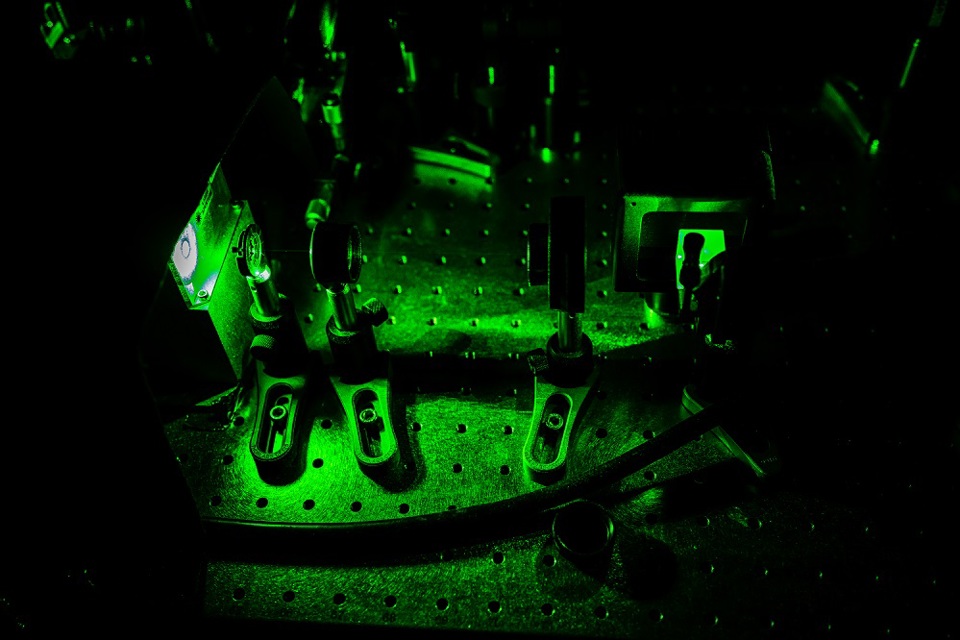
The OSCAR-BLINQ quantum sensor will enable groundbreaking astrochemical research in microgravity. It focuses on studying how specific light-sensitive molecules behave and transform when exposed to light in space, revealing insights into radical formation and pH shifts in a weightless environment.
“At the heart of our sensor are six nano-engineered diamond samples, each with unique quantum properties. This allows us to monitor how molecules reset after light exposure — either by releasing radicals or through acidity changes,” explains Jaroslav Hrubý, OSCAR-BLINQ coordinator and professor at imo-imomec.
This research contributes to a deeper understanding of chemical and biological processes in space, which is crucial for future long-term space missions involving humans, plants, and other life systems.
OSCAR-BLINQ stands for Optical Sensors based on CARbon materials - Belgian Light-Induced astrochemistry study using (Nano)diamond-based Quantum sensors.
From student project to space mission
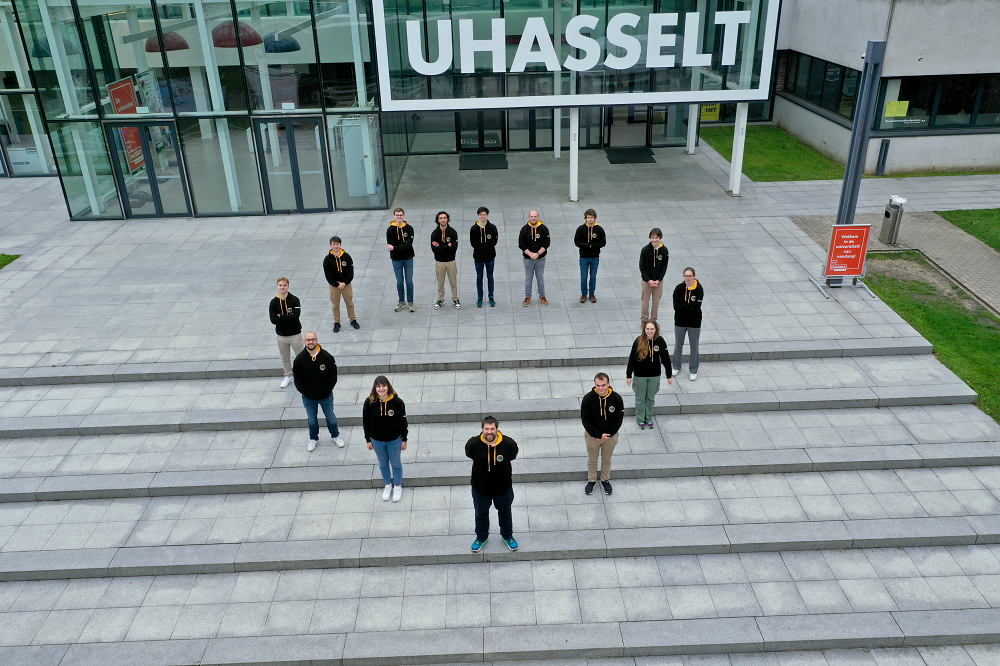
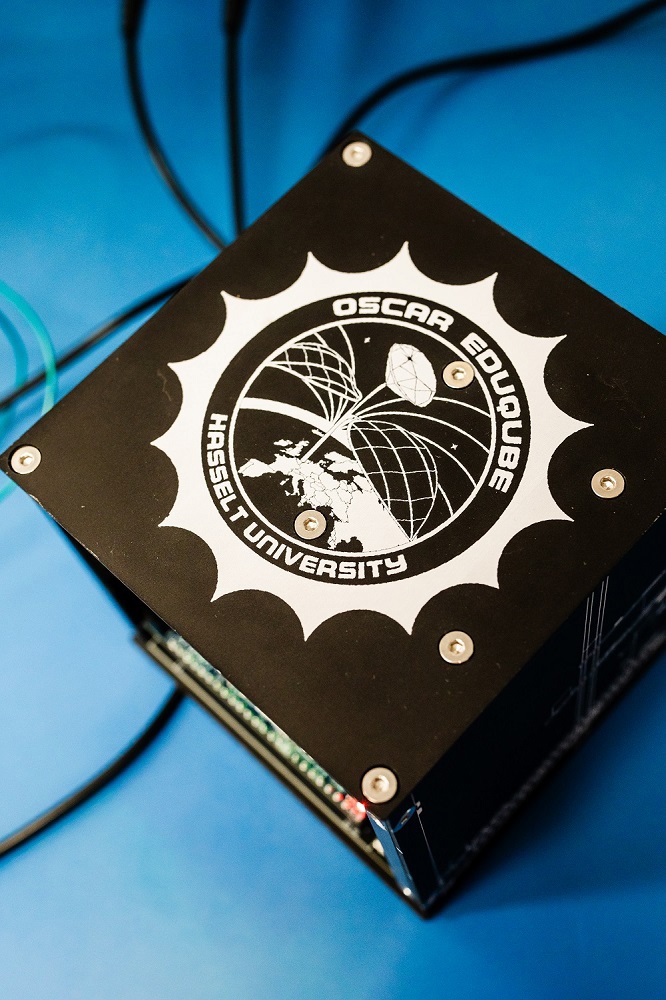
The project builds on the earlier success of Team OSCAR, a UHasselt student initiative that launched a diamond-based magnetometer to the ISS in 2021. That mission confirmed the stability and reliability of diamond quantum sensors in space conditions — a critical step toward more ambitious applications.
“This is a remarkable next step. What started as a student-led experiment has evolved into a high-impact international mission,” says Hrubý. “At imo-imomec, we’re proud to support this type of innovative and hands-on research, pushing the boundaries of quantum technology in space.”
A national collaboration with global ambitions
OSCAR-BLINQ is a collaboration between imo-imomec, BIRA-IASB, and UCLouvain, with each partner contributing specialized expertise. While imo-imomec leads the sensor development, UCLouvain focuses on synthesizing the light-sensitive molecules, and BIRA-IASB develops the measurement protocols for astrochemical analysis.
“This project opens exciting new doors for BIRA-IASB in astrochemistry and space biology,” says Prof. Anna Ermakova, head of space physics at BIRA-IASB and lecturer in the Master of Materiomics at Hasselt University. “It’s a truly interdisciplinary effort with strong educational value — a perfect example of how space research can inspire and train the next generation of scientists.”
The OSCAR-BLINQ sensor will be installed in the ICE Cubes facility on board the ISS, with data transmitted live to Earth. The mission will run for approximately six months, opening new horizons for quantum sensing and space-based chemistry.
The launch of the mission to the ISS with astronaut Raphaël Liégeois and the diamond-based quantum sensor is scheduled for the end of 2026. Over six months, the sensor will carry out measurements in space, with live data being transmitted back to Earth for analysis.
More information
Jaroslav Hrubý

Wetenschapspark 1
3590 Diepenbeek, Belgium
Professor
Anna Ermakova

Wetenschapspark 1
3590 Diepenbeek, Belgium
Professor