The Research Center for Entrepreneurship and Family Firms
Welcome to the website of the Research Center for Entrepreneurship and Family Firms (RCEF). Our interdisciplinary group of experts is passionate about family firms and entrepreneurship. Together, we aim to create societal value through relevant and rigorous academic research, education, and high-quality services to business firms and organizations.
From theory to practice



Ready to get involved?
- Joint research projects: research and development in close partnership possibly financed by a third party (FWO, VLAIO, EFRO, H2020, etc.)
- Scientific services or consultancy
- Collaboration with the research group through bachelor and master theses, or internships
- Submit your candidacy for a PhD position
Want to collaborate? Check our contact details below!
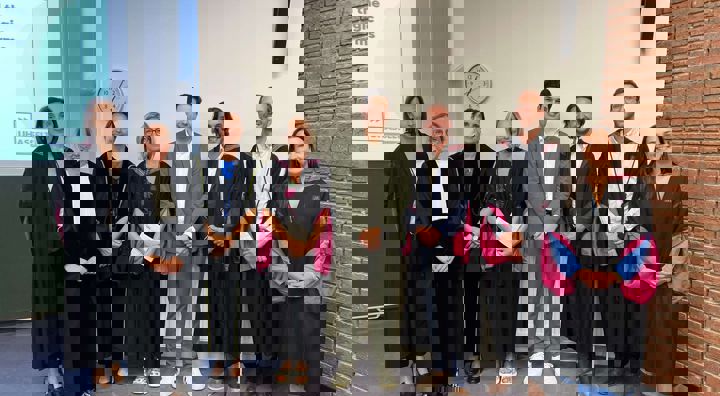
The Top Management Team and the Board of Directors as the Strategic Leadership System in Family Firms
Dr. Kris Thys investigated strategic decision-making processes within private family firms, focusing on the collaborative dynamics between top management teams (TMTs) and boards of directors as a unified strategic leadership system (SLS). Using multiteam systems theory, the research examined collaboration, conflict, and diversity between the TMT and board through data collected from all top managers and board members in 41 Belgian family firms, yielding individual data on 387 SLS members. The most important findings revealed that high collaboration between TMT and board significantly enhances strategic decision-making quality, particularly in complex environments. Conversely, task conflict negatively impacts a shared strategic vision within the SLS, especially when leadership roles remain unclear. Additionally, the research found that diverse knowledge within the SLS affects decision-making quality depending on the degree to which members vary in their inclination to pursue family-oriented goals versus financial objectives.
These findings are crucial for family businesses because they underscore the critical role of interdependence between the TMT and board in improving strategic decisions, offering practical insights for enhancing governance practices by demonstrating the importance of integrating diverse knowledge while mitigating conflict.
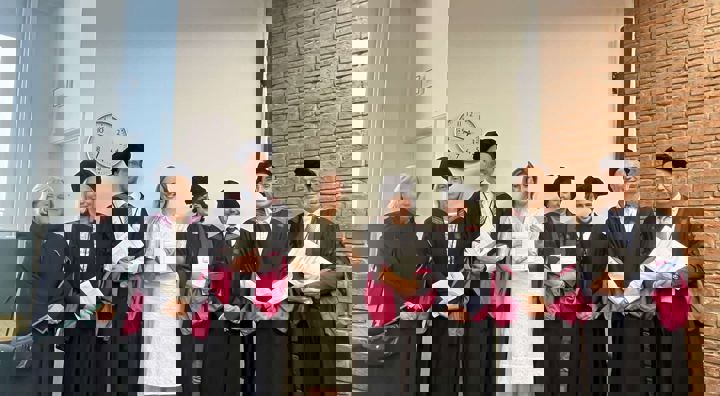
Legal Ingredients for SME Success: The Legal Context and the CEO's Legal Literacy as Catalyst of Growth and Internationalization
Dr. Maren Forier conducted research investigating the impact of the legal context and CEO legal literacy on the growth and internationalization of small and medium-sized enterprises (SMEs). Given the critical role SMEs play in driving economic growth, fostering innovation, and creating employment, understanding how they navigate complex international legal frameworks is essential. The research employed a dual methodological approach: an empirical analysis using public data from 25,284 Belgian SMEs, focusing on their financial behavior before and after a law change, and a survey of 209 CEOs to assess how their legal literacy influences internationalization efforts. The findings revealed that while a more debtor-friendly insolvency law may encourage entrepreneurship, it can complicate access to debt financing, especially for growth-oriented SMEs. Moreover, CEOs with higher levels of legal literacy are more effective in turning internationalization intentions into actual expansion, with their confidence in their international legal knowledge playing a crucial role.
This research is important for family businesses because it underscores the necessity of balancing legal reforms to avoid unintended negative consequences for SMEs and highlights that improving CEO legal literacy could be a key factor in overcoming legal challenges and successfully navigating both domestic and international markets.
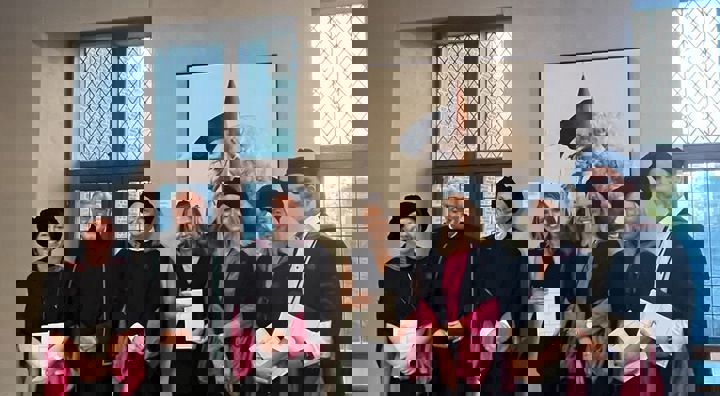
A Closer Look into Bank Lending Behavior toward Family Firms
Dr. Lien Vekemans made significant contributions to understanding how financial institutions behave toward family firms, focusing on the critical intersection between corporate bank lending practices and the unique dynamics inherent in family businesses. Bank financing is a cornerstone of business growth and sustainability, particularly for SMEs, as it provides necessary capital for expansion, innovation, and operational stability. For family firms, which often rely on internal funds and are more risk-averse, securing external financing through banks is crucial when internal resources are insufficient to fuel growth. The research involved conducting in-depth interviews and comprehensive surveys with bank loan officers. Through this empirical approach, the study discovered that financial professionals tend to view family firms differently from non-family counterparts, and this distinction in perception directly impacts how loan officers evaluate and decide on loan requests. The findings suggest that when family firms demonstrate a higher level of professionalization—such as formalized governance structures—they are more likely to receive favorable consideration for bank loans.
This research is important for family businesses because it sheds light on often-unseen biases in the banking sector, demonstrating that the degree of professionalization can significantly influence lending outcomes, thereby helping family firms better position themselves for success in securing financial resources needed for growth and sustainability.
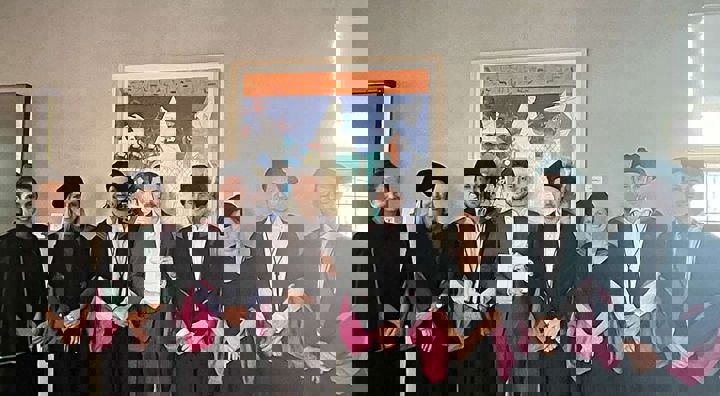
Disentangling Entrepreneurial Passion in Family Firms
Dr. Rik Vanhees examined how entrepreneurial passion affects family businesses, particularly through the actions of family CEOs. Understanding this relationship is important because it reveals how family CEOs' passion not only drives business success but also influences their personal work-family balance. The research comprised three studies: first, investigating how a family CEO's entrepreneurial passion affects the firm's entrepreneurial orientation, finding that the impact is strongest in first-generation CEOs and becomes negative in third-or-later generation CEOs; second, exploring how different types of passion—harmonious and obsessive—affect the work-family conflict experienced by the CEO, revealing that harmonious passion reduces conflict, particularly when there is open communication within the family, while obsessive passion increases it; and third, developing a new scale to measure "Family Entrepreneurial Passion," capturing the unique passion family CEOs have for working with their family, an area previously overlooked in research. The key finding is that the type of entrepreneurial passion a CEO possesses can significantly influence both the business's entrepreneurial behavior and the CEO's work-family balance.
This research is important for family businesses because it suggests that nurturing the right kind of passion and fostering open communication can lead to better business outcomes and a healthier family life, with practical applications for helping family businesses succeed while ensuring the well-being of those who run them.
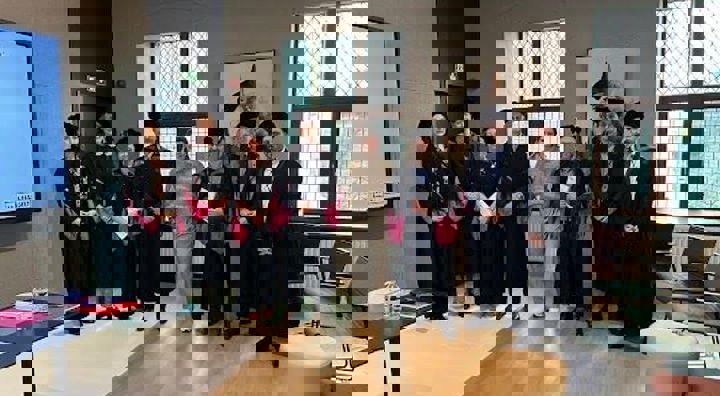
Governance of Family Firm Internationalization: A Family Perspective
Dr. Hannah Verleye investigated the governance of family firm internationalization from a family perspective, addressing the urgent need to pay greater attention to the family component of family business despite the central role played by the family itself in family firms' internationalization. The researcher conducted a thorough literature review on the topic and sent out a survey to CEOs of Belgian firms, performing quantitative statistical analyses on survey data from a sample of 182 Belgian private family firms. The research focuses on three different governance angles: first, exploring the impact of family CEOs on internationalization and how this relationship is moderated by family communication patterns, finding that family CEO education has a positive effect on internationalization, but this effect decreases as family conformity orientation increases; second, offering a novel conceptualization of family firms' board of directors, explaining how the family and the board essentially comprise a multiteam system and jointly affect internationalization decisions as a result of carrying out specific shared tasks; and third, demonstrating that family firms' internationalization could be a direct reflection of the functioning of the family itself due to families' various ways of intrinsic functioning that spill over into business processes and strategic decisions.
This research is important for family businesses because it may help families become aware of the powerful role of unconscious family forces that influence business outcomes, providing a fruitful starting point for understanding how family communication patterns and governance structures can either facilitate or hinder international expansion efforts.
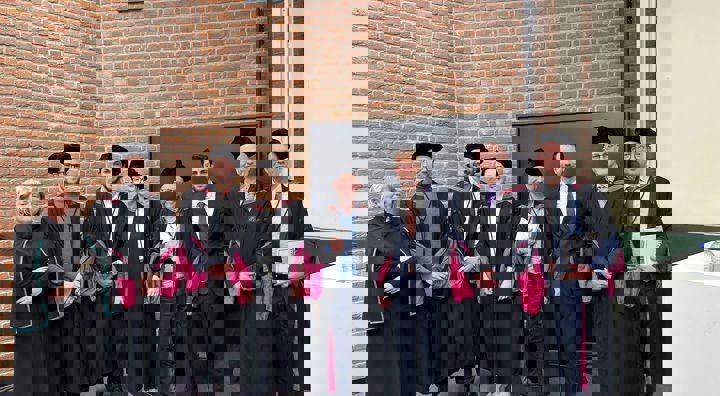
Navigating the Emotional Landscape of Strategic Change in Family Firms: The Crucial Role of Relational Dynamics
Dr. Niklas Engelhard focused his PhD research on the relational and emotional aspects behind strategic changes and their influence on the business and the strategic changes that are implemented, placing emphasis on the human dimension of change. This research was part of a large-scale SBO project focused on strategic changes within family businesses, conducted in collaboration with the University of Antwerp to address this essential topic, as research has barely focused on studying strategic changes in family firms despite their crucial importance for long-term survival and the fact that family businesses are seen as the backbone of the global economy. Using qualitative research methods, particularly interviews, the research team examined how family businesses successfully implement strategic changes and what role relational aspects play in this process. The research revealed critical insights about how emotional and relational dynamics within family firms affect their readiness for change and their capacity to navigate strategic transformations, with particular attention to the development of willingness to change at both individual and team levels.
This research is important for family businesses because it illuminates the often-overlooked human and relational factors that determine whether strategic changes will succeed or fail, providing family firms with insights into how managing emotions and relationships effectively can enhance their adaptability and long-term survival in changing business environments.
prof. dr. Wim Voordeckers
Agoralaan building D