What Remains: Four Video Meditations on Environments of Displacement
This screening program features four video works by Belgium-based artists Nicoletta Grillo, Emma van der Put, Juliette Le Monnyer and Rune Peitersen.
The screening will be followed by a conversation moderated by writer and researcher Bas Blaasse, which will open up a dialogue with the audience.
Dit event is reeds afgelopen
What Remains: Four Video Meditations on Environments of Displacement
This screening program features four video works by Belgium-based artists Nicoletta Grillo, Emma van der Put, Juliette Le Monnyer and Rune Peitersen.
A daughter and her father trace a family history of migration from Southern Italy across fossil cliffs, an industrial port, and an abandoned village — a territory defined, across geological and human timescales, by leaving. In Brussels, a park at the foot of a half-empty office tower is cleared of the refugees who had camped there, and a new sign goes up: SOON, offices to let. In Ramallah, a single unedited shot witnesses a confrontation between Palestinian residents and Israeli soldiers: the camera widens, the scene unfolds in real time, and at the end, the same men are still watching, still waiting. A dune landscape in northern Denmark, shaped over centuries by climate, extraction and government intervention, is now considered natural.
Across coastal territories, urban districts, occupied streets, and shifting dunes, these four video works approach the environment not as a fixed backdrop, but as a site of tension, memory, and projection. Each work reveals how places are shaped by forces that exceed them, at the same time political, geological, and intimate. Moving between different temporalities—from the immediacy of the present to deep environmental time, and from collective histories to personal narratives—the screening program traces how landscapes are continually redefined by movement: of people, of capital, of sand, of water. In these videos, to inhabit a place is never stable. It is to negotiate what has been erased, what persists, and what is yet to come.
The screening will be followed by a conversation moderated by writer and researcher Bas Blaasse, which will open up a dialogue with the audience.
About the speakers
Bas Blaasse is a writer and researcher working on art and visual culture in relation to political, ecological, social and philosophical questions. His current research examines the long history of the notion of autonomy, collective artistic practices in the Netherlands, and the concept of landscape.
Nicoletta Grillo is an assistant professor of Visual Arts at the Faculty of Architecture and Arts of Hasselt University. Active as both an artist and a researcher, she graduated in architecture (Politecnico di Milano) and in photography (CFP Bauer). She later obtained a PhD with a thesis on forms of counter-representations of border landscapes through photography (Politecnico di Milano and KU Leuven, 2022). She is the author of the book Photography and Invisible Borders: Spaces of Imagination between Switzerland and Italy (Brill, 2024). She has published in academic journals such as Vesper, Territorio, Image [&] Narrative, and Passage. Her artistic works have been displayed in venues such as Museo di Fotografia Contemporanea, Careof, Fondazione Stelline, Video Sound Art festival, and Palazzo Forti.
Juliette Le Monnyer (b. 1993, France) is a Brussels-based visual artist and filmmaker. Working at the intersection of cinema and visual arts, her practice explores ecological and geopolitical crises, with a particular focus on the mechanisms of domination operating within contexts of violence. In 2025, she was awarded the New:Vision Award at CPH:DOX for her short film Ramallah, Palestine, December 2018. Recent exhibitions and screenings include Bozar, Beursschouwburg, CPH:DOX, Dokufest, Ji.hlava, EnVille!, Open City Documentary Festival.
Rune Peitersen (DK 1971) based in Amsterdam and Brussels. In his work, Rune Peitersen attempts to identify and problematize some of the deep-rooted (visual) narratives and systems of thought that lie at the base of the construction of our contemporary societal structures. Next to his artistic practice, Peitersen teaches at St. Joost School for Art & Design, is a cofounder of several artists’ initiatives among which the think-tank Platform Beeldende Kunst (Platform for Visual Arts). He is a member of the supervisory board of the Mondiaan Fund and a researcher at Economy in Common at BWNO Avans University (NL). He has written several essays and op-eds on the position of art and artists in society. In 2022, his first publication, RAABJERG, was published and selected among The Best Dutch Book Designs of the year.
The films by Emma van der Put originate from looking closely at urban public space. In her position as an observer, she tries to maintain a balance between empathy and detachment. Even though she is physically part of the crowd, the telescopic lens of her camera is creating a distance, a private space within the public space. With an interest in how the future is visualized in the public space of the city, through digital renderings and building plans, the films of Van der Put question what these envisioned forecasts can tell us about our current wishes for the future and for whom exactly the imagined future is intended. Emma van der Put is represented by tegenboschvanvreden, Amsterdam. Her work has been shown a.o. in Mu.ZEE, WIELS, Museum De Pont, Museum Boijmans van Beuningen, KM21, PILAR, La Loge, Holland Festival, LOOP Barcelona, IDFA, Lo schermo dell’arte Florence, OFFoff Cinema Ghent.
Date and locations:
- Friday July 3rd 2026
- Campus Oude Gevangenis, Martelarenlaan 42, 3500 Hasselt (aula Louis Roppe)
- Timing: 17h00 - 19h00
- This event is free for everyone, but registration is required
Registration
- Registration is free via this form.
For PhD students and postdocs, we would like to draw your attention to the cancellation and no-show policy of UHasselt.
More information
- Research domain MARGES
- basblaasse.nl
- juliettelemonnyer.com
- emmavanderput.com
- runepeitersen.com
- nicolettagrillo.com
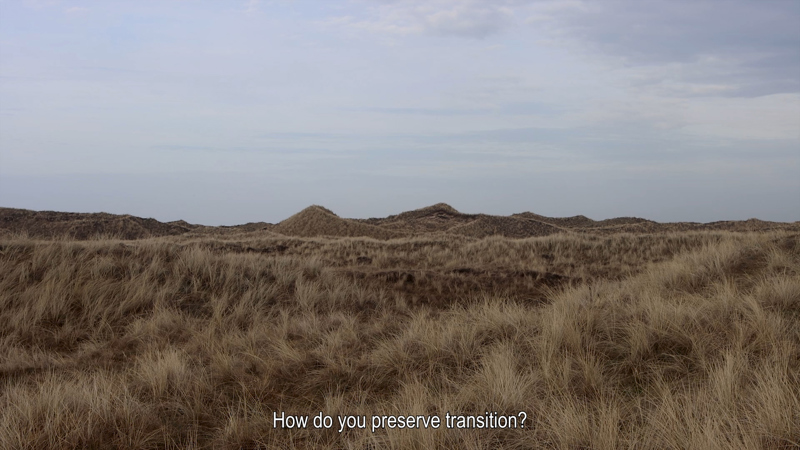
Raabjerg - still - Rune Peitersen (2022)
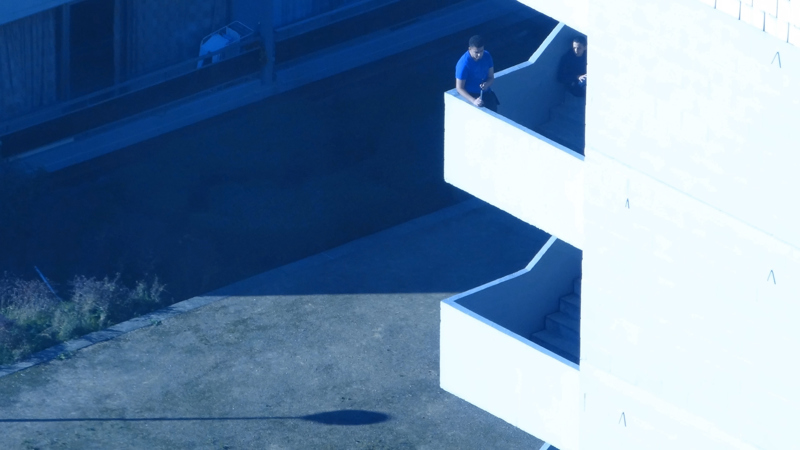
WTC - still - Emma van der Put (2016) - courtesy tegenboschvanvreden, Amsterdam
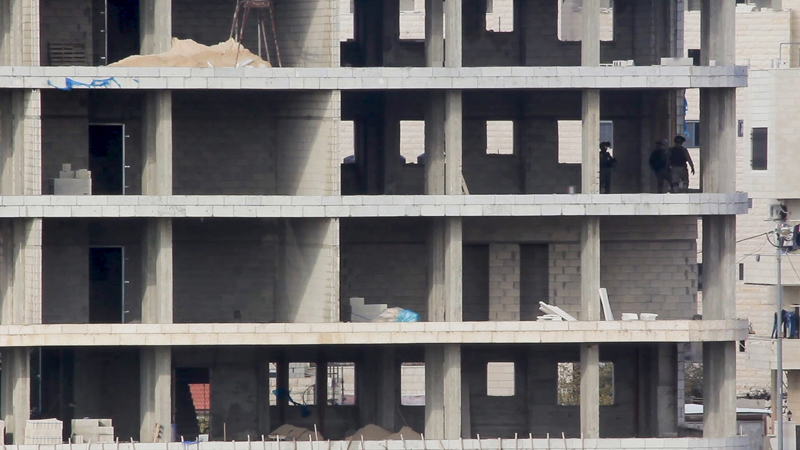
Ramallah, Palestine, décembre 2018, still © Juliette Le Monnyer (2025)
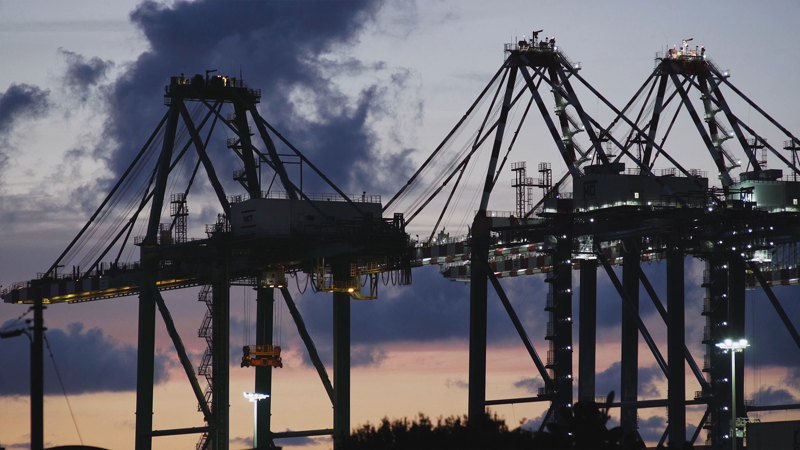
Oltremare, still © Nicoletta Grillo (2025)