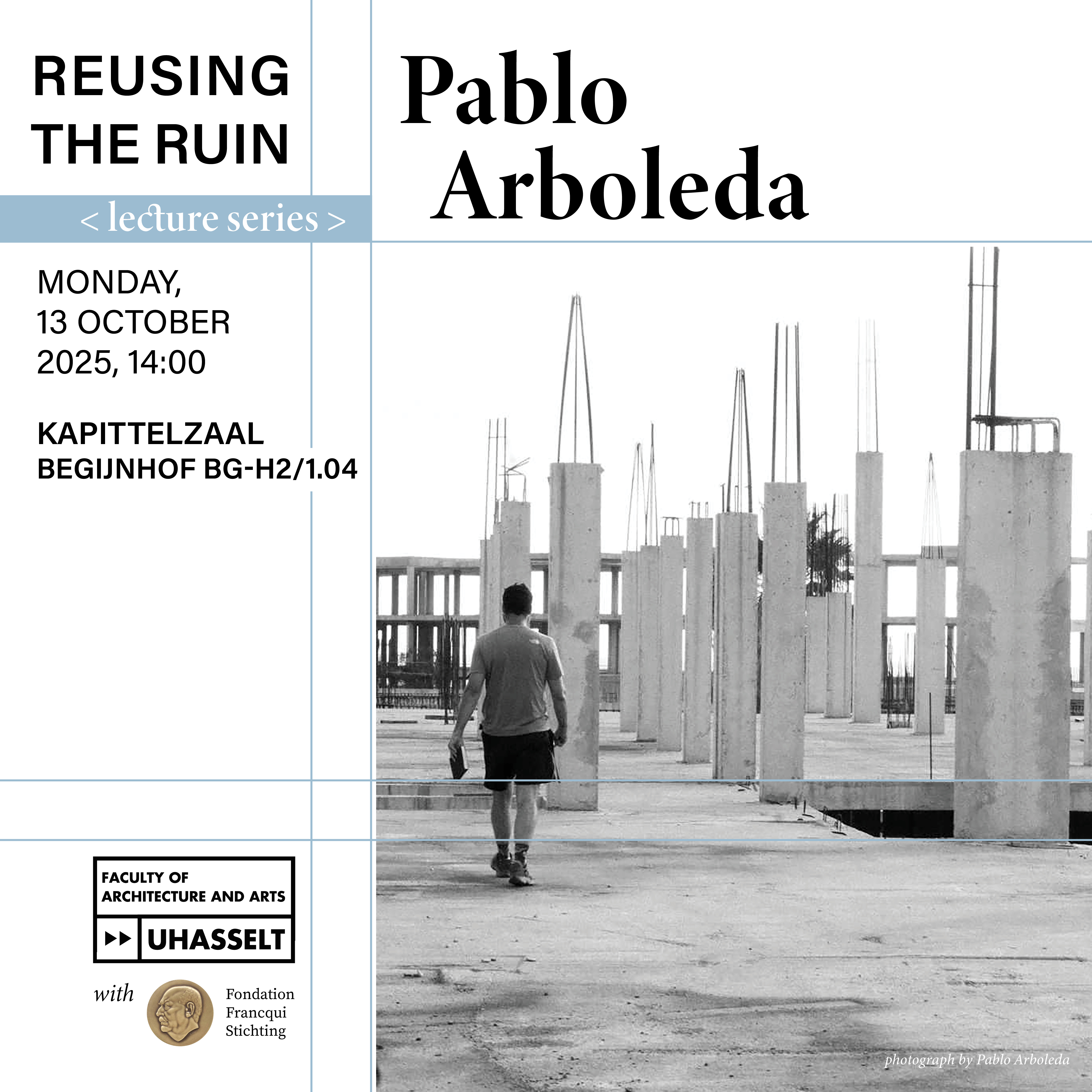
Reusing the ruin < lecture series > Pablo Arboleda
The < lecture series > are part of the Reusing the ruin project with the help of the Francqui Start-Up Grant.
On October 13th we welcome Pablo Arboleda in the Kapittelzaal of the beguinage in Hasselt.

Dit event is reeds afgelopen
Modern ruins. New heritages. Creative methods.
Over the past decade, the concept of ‘modern ruin’ has increasingly positioned itself as a figure of social critique, capable of challenging the omnipresent order of a capitalist world and its dominant narratives of transformative progress. However, acknowledging the ruin as a growing figure, it can also be argued that its visibility has increased and its meaning has evolved, giving rise to new forms of valuation and appreciation. By embracing their ambivalent nature—always fluctuating between tragedy and fascination, frustration and hope, memory and futurity—this talk proposes an overview of Pablo Arboleda’s research/artistic work in Berlin, Sicily and Spain, where post-industrial and unfinished sites are not (only) presented as problems to solve, but rather as complex cultural heritage realities with which to coexist. Here, creativity and sensibility are integral methodological dimensions within a consistent academic production enriched by experimental videos, photo-essays, photo-comics, poems, and video-poems.
About Pablo Arboleda
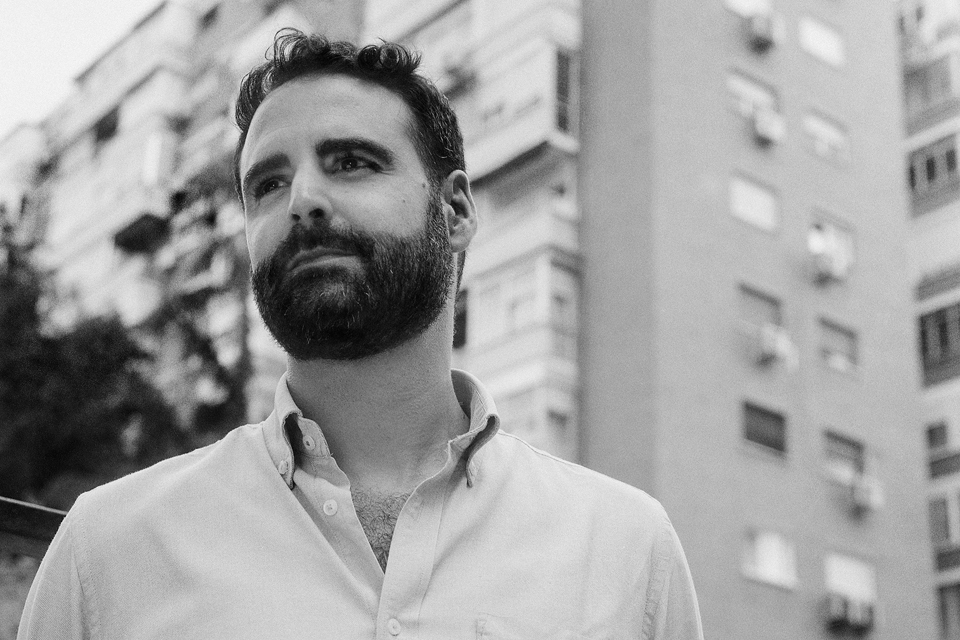
Pablo Arboleda graduated as an architect, and his interdisciplinary education and working history spans heritage, urban studies, geography, anthropology, and arts. At present, he is a ‘Ramón y Cajal’ Senior Fellow in the Department of Anthropology of the Spanish National Research Council (CSIC), and prior to this, he accumulated more than 10 years affiliated to different universities in Spain, France, Canada, Germany, and the UK. His research tackles the multifaceted dimensions of modern ruins in post-industrial and post-crises scenarios, opening a series of debates on the futures of urban peripheries, participatory place-making, alternative conservation, and counter-aesthetics reclaimed. He approaches these angles through site-specific studies, experimental collaborations, urban exploration, and visual methods—in his contributions, the boundaries between science and artistic practices are blurred, or even inexistent. Further information about his profile and publications is available at www.pabloarboleda.com.