Live Projects 2026 - 2027
Gedurende de eerste twee weken van het academiejaar krijgen onze studenten de opdracht om na te denken over de mogelijke toekomsten van een bepaalde plek of een bepaalde ruimtelijke kwestie. En dat met de "hulp" van de lokale bewoners, beleidsmakers, enz...
Aan de start van het komende academiejaar, september 2026, sturen we onze masterstudenten naar Hasselt, Houthalen-Helchteren, Genk en Euregio Maas-Rijn. Ontdek hieronder de projecten!
During the first two weeks of the academic year, our students are given the task of thinking about the possible futures of a certain place or a certain spatial issue. And that with the "help" of local residents, policy makers, etc...
At the start of the next academic year, September 2026, we will send our master students to Hasselt, Houthalen-Helchteren, Genk and Euregio Maas-Rijn. Discover the projects below!
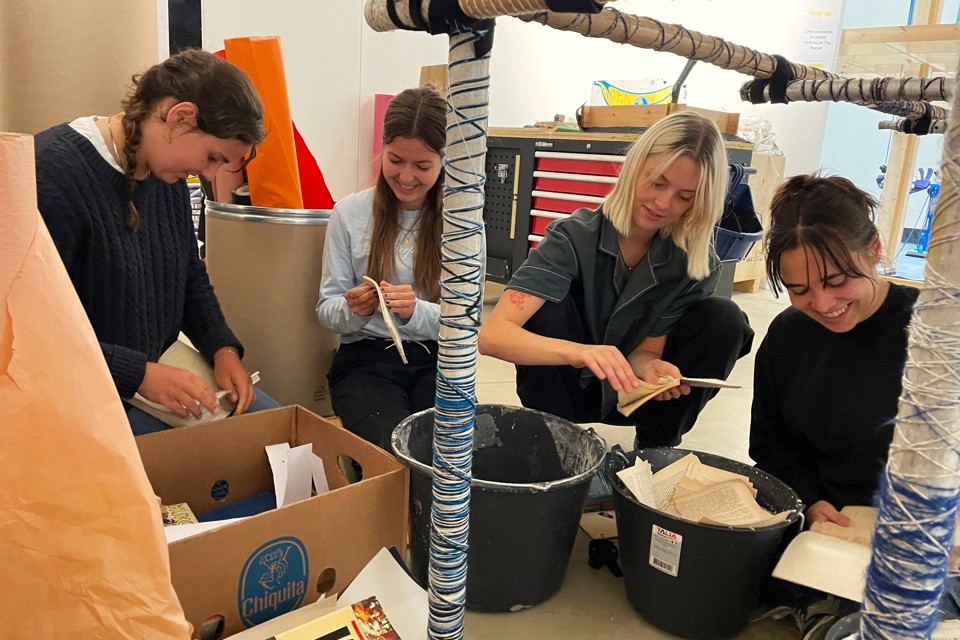
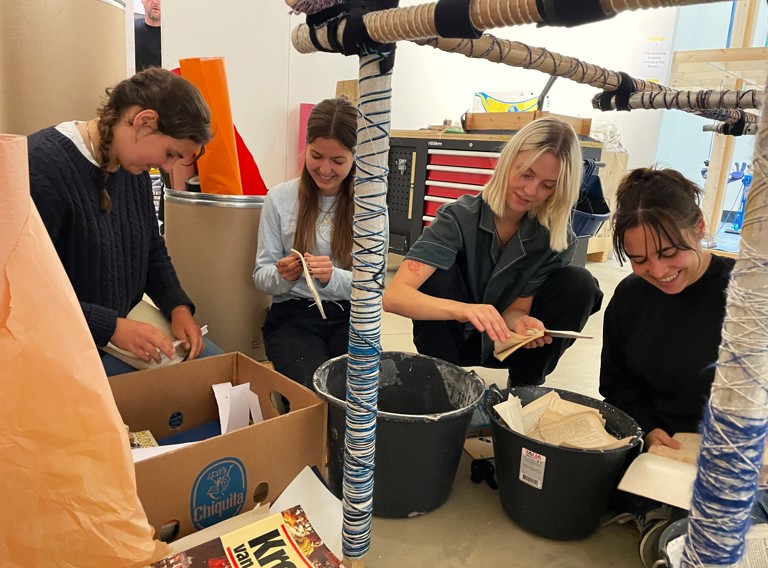
Living Lab Festival - 5 oktober 2026 - 18.00 - 20.00 uur
Ontdek wat onze studenten dit jaar realiseerden binnen de Live Projects tijdens het Living Lab Festival op maandag 5 oktober in het Begijnhof. Van ruimtelijke interventies tot samenwerkingen met lokale partners: de overzichtstentoonstelling brengt de verschillende projecten van dit jaar samen. Kom tussen 18u en 20u kennismaken met het werk, de plekken en de verhalen achter de projecten. En omdat Live Lab dit jaar de EAAE Pedagogy Award 2026 won, maken we er uiteraard een extra feestelijke editie van! 🎉
📅 maandag 5 oktober
🕕 18u tot 20u
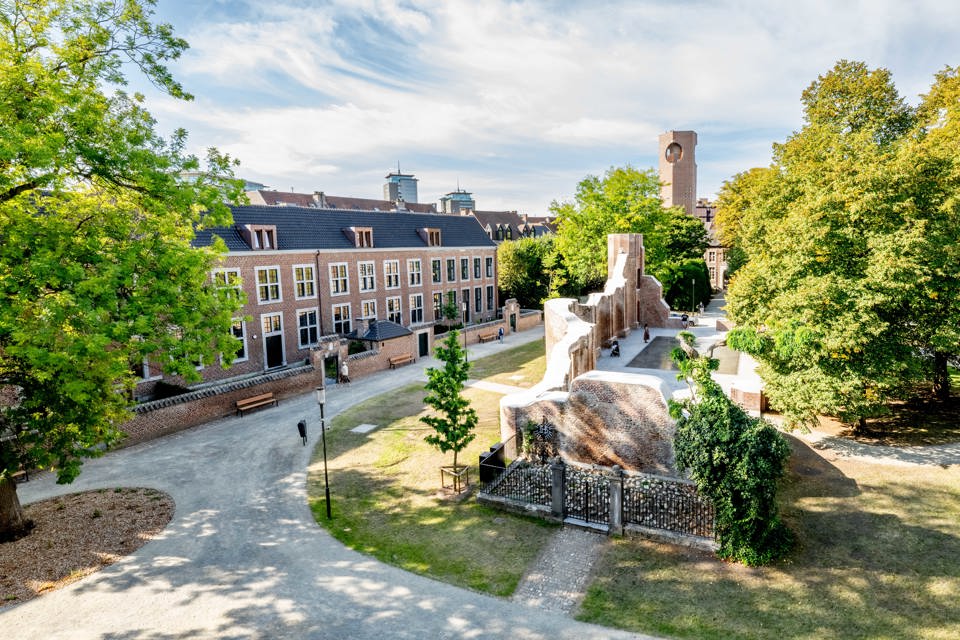
📍 Begijnhof, Hasselt
for English, click here.
Live Projects?
De eerste twee weken van academiejaar 2026-2027, organiseren we opnieuw onze Live Projects. Dit is verplicht onderdeel voor alle studenten 2 master Architectuur en 1 master Interieurarchitectuur en de Internationale master.
In een Live Project stappen studenten en begeleiders in een ontwerpproces samen met lokale bewoners, beleidsmakers, verenigingen, … om na te denken over mogelijke toekomstmogelijkheden van een bepaalde plek of een bepaalde ruimtelijke kwestie. Die kan variëren qua schaal en de mate waarin de vraag op voorhand is afgelijnd, maar de insteek is steeds om door middel van kritisch ontwerpend onderzoek het publieke debat over toekomstige ontwikkelingen te ondersteunen. Architectuur is daarbij een middel en geen doel.
We gaan twee weken ‘op de plek’ zelf werken om door middel van interviews, mappings, ontwerpen en bouwen de vraag en potentiële oplossingen scherp te krijgen en tastbaar te maken door middel van meer of minder tijdelijke ‘prototypes’. Deze prototypes worden tijdens een slot-evenement aan de lokale stakeholders overgedragen.
Er wordt in die twee weken geluisterd, gewandeld, geschetst, gebouwd, gefilmd, gepitcht, gedanst, gekookt,… maar wat, hoe en waar we een interventie gaan maken is steeds opnieuw het resultaat van dit collectief leerproces.
Alle ontwerpen worden tijdens een slotevenement aan de lokale stakeholders overgedragen. De exacte momenten delen we later mee, want uiteraard is ook dit jaar iedereen welkom om het resultaat mee te ontdekken!
Live Projecten academiejaar 2026 - 2027
Hasselt - Atlas of Ruins
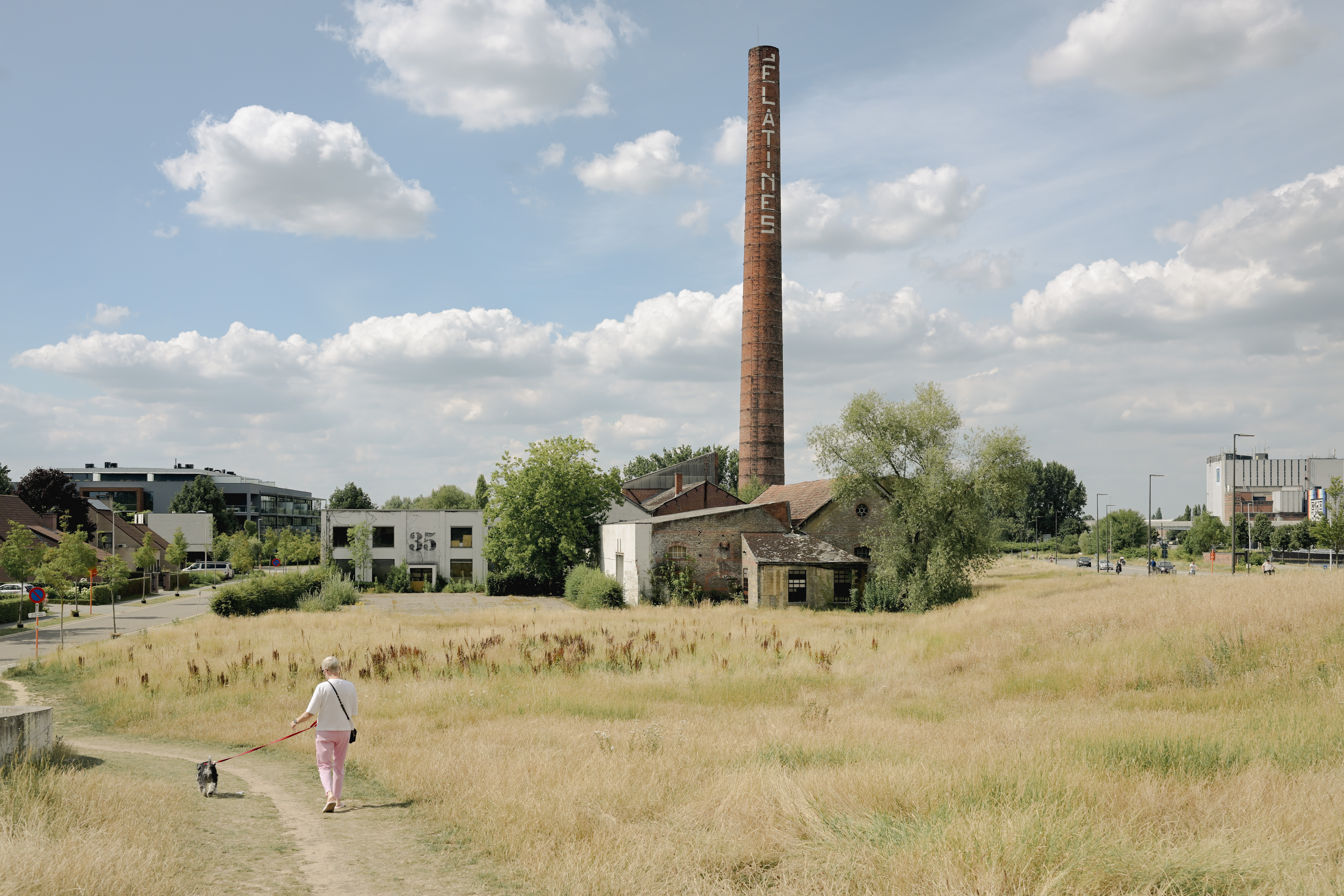
Wanneer wordt een gebouw een ruïne? Op welk moment verliest architectuur haar functie en status als bruikbaar object, en wordt ze een fragment van iets dat ooit was? En als een proces van verval wordt stopgezet door hergebruik, consolidatie of ontwerp — blijft het dan nog een ruïne, of ontstaat er een nieuwe architecturale conditie?
In dit Live Project gebruiken we deze vragen om de notie van de ruïne zelf in vraag te stellen en opnieuw te definiëren. We onderzoeken Hasselt als een atlas van zichtbare en latente ruïnes: verlaten gebouwen, restcondities, plekken in transitie en ruimtes waar gebruik, tijd, natuur en menselijke sporen samenkomen. Via wandelen, observeren, documenteren en gesprekken met bewoners ontwikkelen studenten een alternatieve lezing van de stad als een dynamisch landschap van vergeten, onafgewerkte en transformerende ruimtes.
Parallel experimenteren we met manieren om deze plekken architecturaal te representeren. Hoe kunnen tekeningen, collages, kaarten of scenografische technieken processen van verval, gebruik en tijd zichtbaar maken? Hoe kan representatie niet alleen registreren, maar ook speculeren en nieuwe betekenissen genereren?
De workshop combineert veldonderzoek, architecturale representatie en ruimtelijk experiment. Samen bouwen we aan een collectieve Atlas of Ruins die uitmondt in een scenografische installatie voor de tentoonstelling Z33 Building Ruins, gepresenteerd in Z33 en het Begijnhof.
Begeleiding: Bie Plevoets en Liene Jakobsone
Partners: Architectuurwijzer & Z33
Locatie: Begijnhof
Slotpresentatie: 02.10.2026, 9.00 - 10.00 (3 x 20 min)
Hasselt - Pukkelpop Costumes in North-South Limburg: a parade for reconnecting the west and east
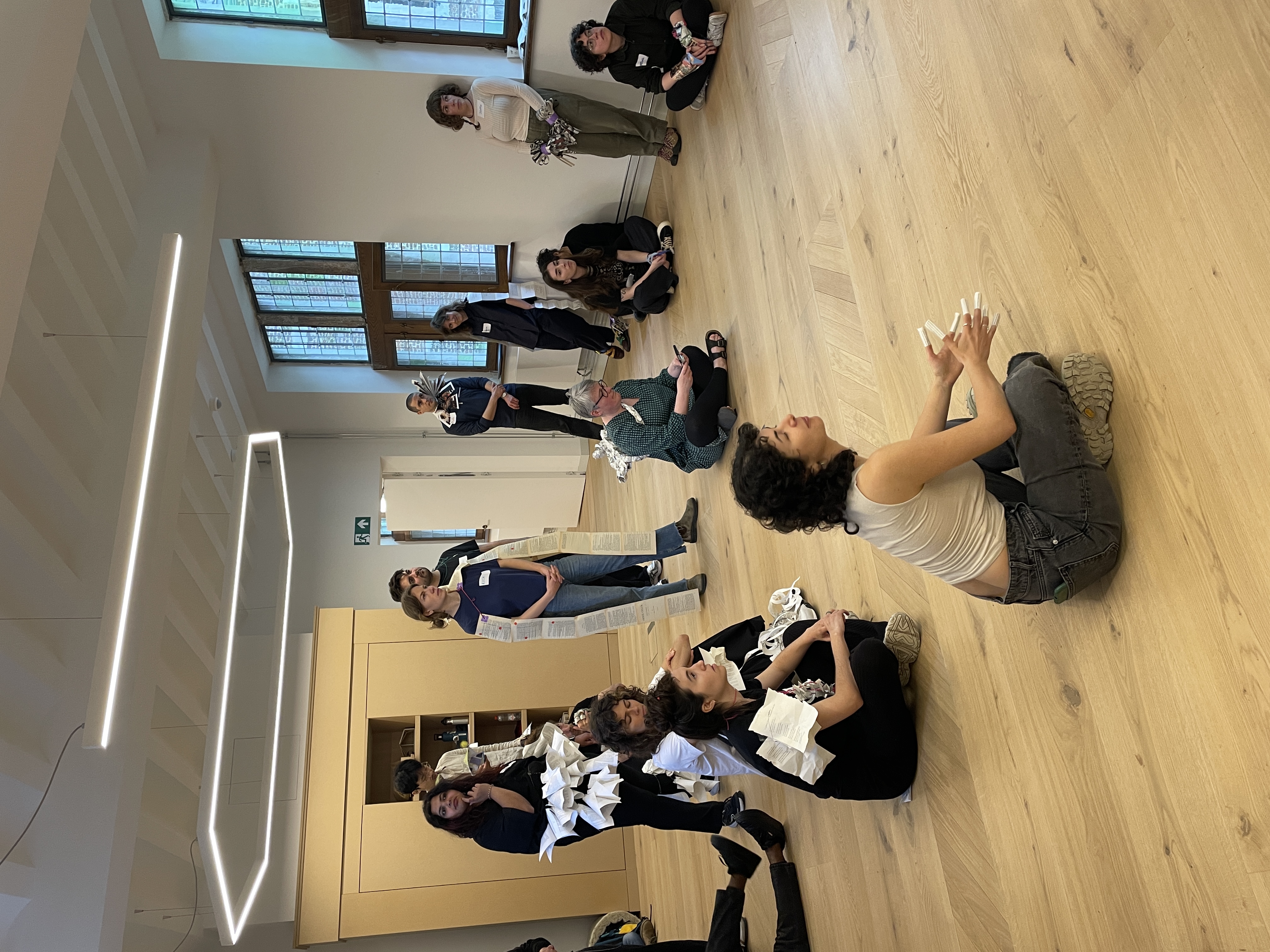
Dit live project bouwt verder op de veertigjarige geschiedenis van Pukkelpop en de sterke vrijwilligersnetwerken die het festival dragen. Tijdens het festival verandert de afsluiting van de Kempische Steenweg de straat tijdelijk van een verkeersas in een gedeelde ruimte voor ontmoeting, samenwerking en feest. Zo worden de westelijke en oostelijke zijde van Kiewit opnieuw met elkaar verbonden.
In plaats van deze tijdelijke verandering te zien als een kortstondige onderbreking, onderzoekt het project hoe deze ruimtelijke en sociale dynamiek ook inspirerend kan zijn voor het dagelijkse leven. Pukkelpop functioneert dankzij een complex netwerk van organisatoren, vrijwilligers, bewoners, lokale verenigingen en publieke instellingen. Tegelijk versterkt het festival langdurige sociale relaties en een gevoel van lokale verbondenheid.
De centrale vraag van het project is: hoe kunnen de tijdelijke sfeer en sociale kwaliteiten van Pukkelpop ook zichtbaar worden in het dagelijkse leven?
De workshop bouwt verder op drie eerdere onderzoekstrajecten:
- observaties van het Noord-Zuid onderzoeksteam rond hoe mensen zich kleden, bewegen en de straat gebruiken tijdens Pukkelpop
- het Live Project (september 2025), waarin dagelijkse bewegingen en ruimtelijke overgangen langs de Vijversstraat in kaart werden gebracht
- de workshopweek (maart 2026), die onderzocht hoe vrijwilligers van Kiewit VZW samen mobiliteit en publiek leven rond het festival organiseren.
Het live project vertrekt vanuit een performatieve en scenografische aanpak. Studenten werken met tools uit performance, kostuum- en ruimtelijk ontwerp om een collectieve parade te creëren die de twee zijden van Kiewit symbolisch opnieuw verbindt.
Begeleiding: Nikolas Kanavaris
Gastdocent/projectmedewerker: Marco De Francesca, PhD onderzoeker, Politecnico Di Milano
Partners: Studio Noord-Zuid Limburg, Kiewit VZW (lokale theater- en performancegroepen)
Locatie: Begijnhof Hasselt
Taal: Engels
Slotpresentatie: 01.10.2026, 15.00 - 15.40 (2 x 20 min)
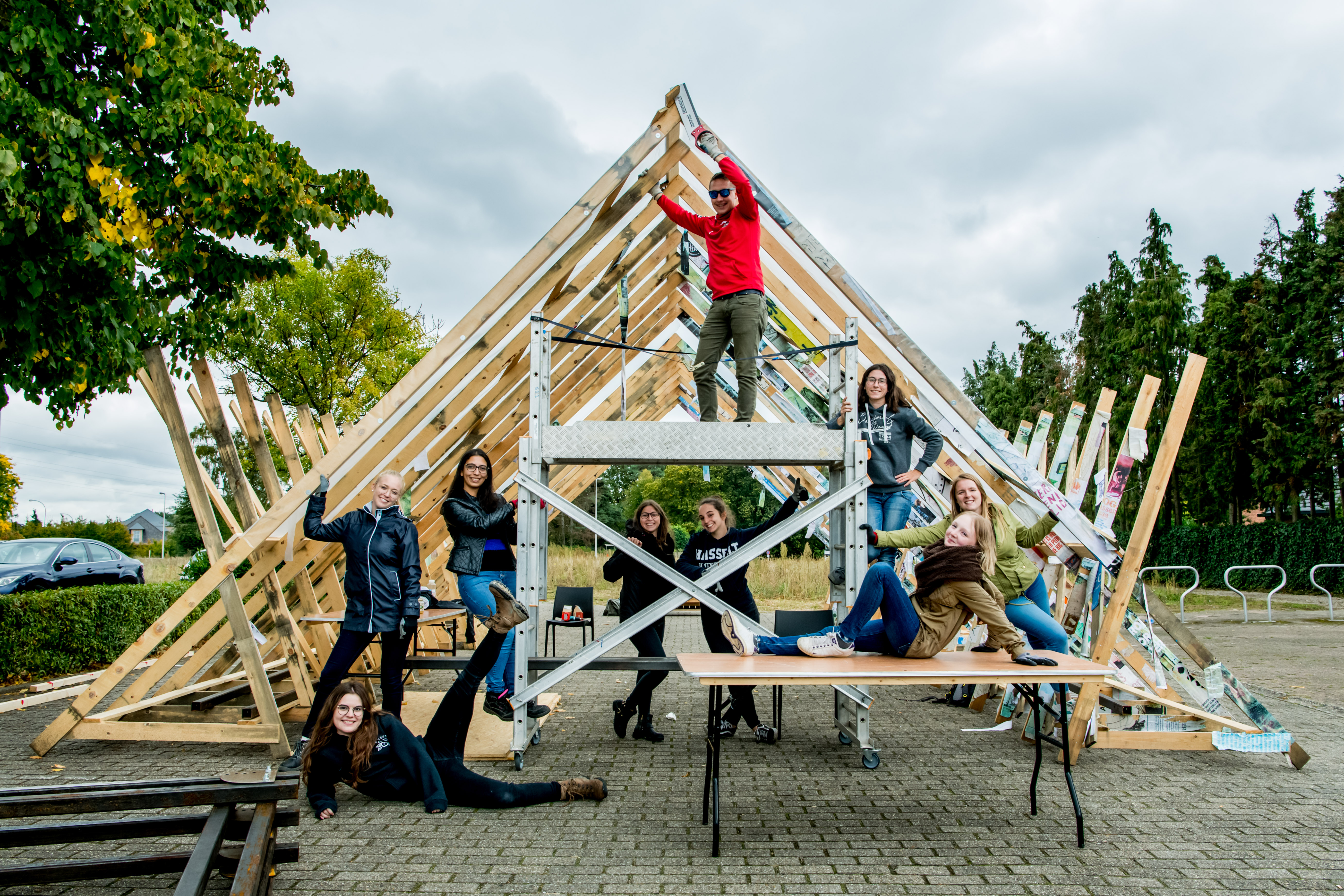
Hasselt - Living Labs Beguinage - Traces in Timber - Built To Unbuild
“What if a construction could be assembled and dismantled without leaving a trace, without wasting a single usable element?"
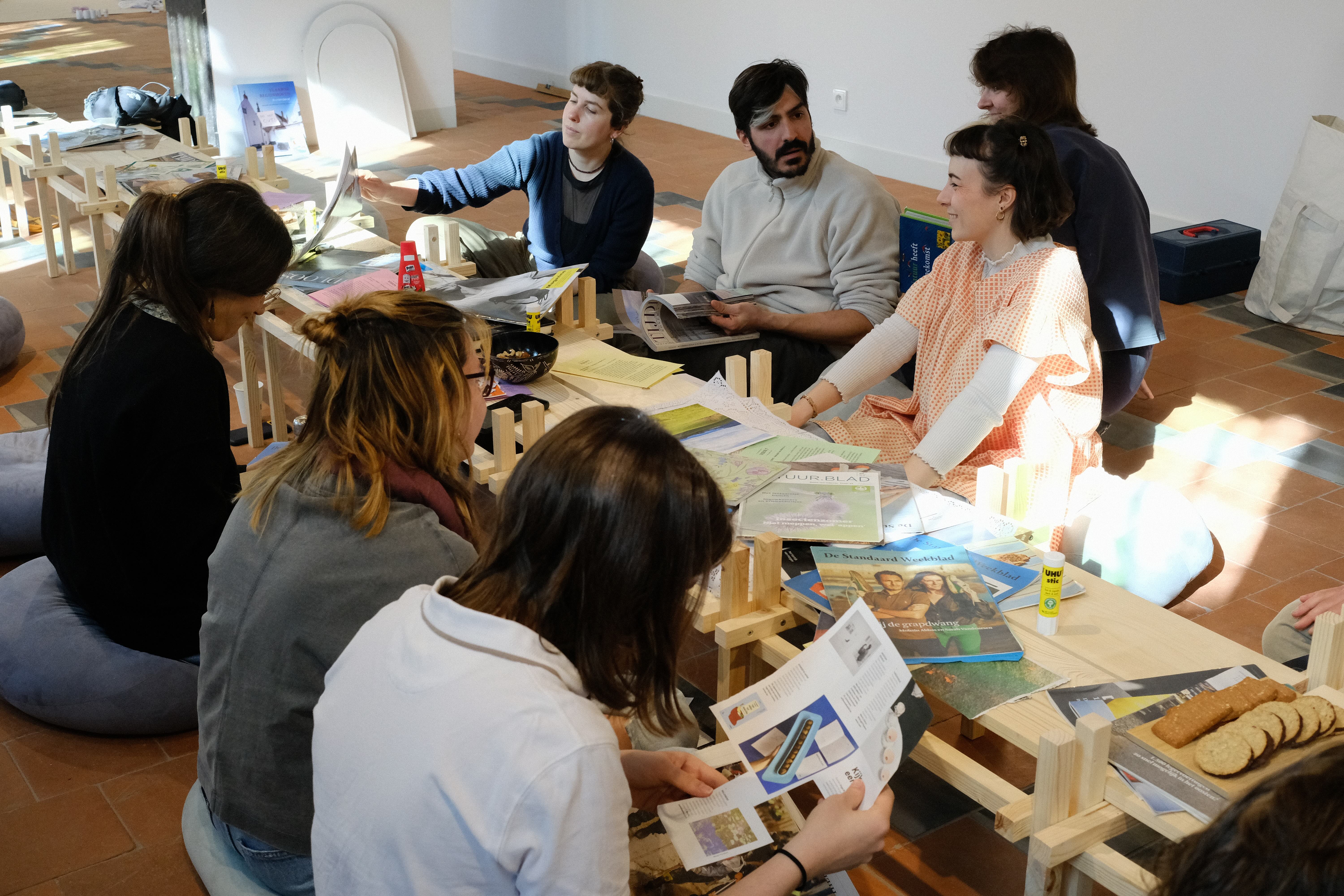
The Beguinage of Hasselt is a space in the making — a Living Lab developing step by step, in which you participate not as spectators, but as makers. The church ruin, the disappearing pond, and the interplay between presence and absence invite you to reflect on architecture consciously designed to appear and disappear again.
Solid timber elements such as CLT and glulam are remarkably underrepresented in Flemish architecture programs, despite being among the most relevant and sustainable building systems of our time. During this Live Project, you will explore the logic of demountable timber connections — from traditional Japanese joinery to contemporary mechanical systems — and translate these principles into a temporary yet considered intervention at various scales.
In collaboration with Rothoblaas, a market leader in high-tech connection systems for solid timber, and OpenStructures, the open source modular construction system by designer Thomas Lommée, you will investigate how components can be designed to be assembled, dismantled, and reused without loss of quality. Through mock-ups and demonstrations, you will actively integrate this knowledge into your own design.
The final result is a built intervention on the Beguinage site: a temporary structure that activates the place and makes a statement, yet can afterward disappear without a trace.
The Living Lab offers an alternative space for gathering, outside the academic setting, open to fellow students, local residents, and interested visitors. The final output can go beyond drawings or models — think workshops or spatial activations.
Begeleiding: Aaron Van Acker, Josymar Rodriguez Alfonzo
Partners: UHasselt, Rothoblaas, OpenStructures
Locatie: Begijnhof Hasselt
Slotpresentatie: 02.10.2026, 11.00 - 11.40 (2 x 20 min)
Hasselt - Ecologies of Compost
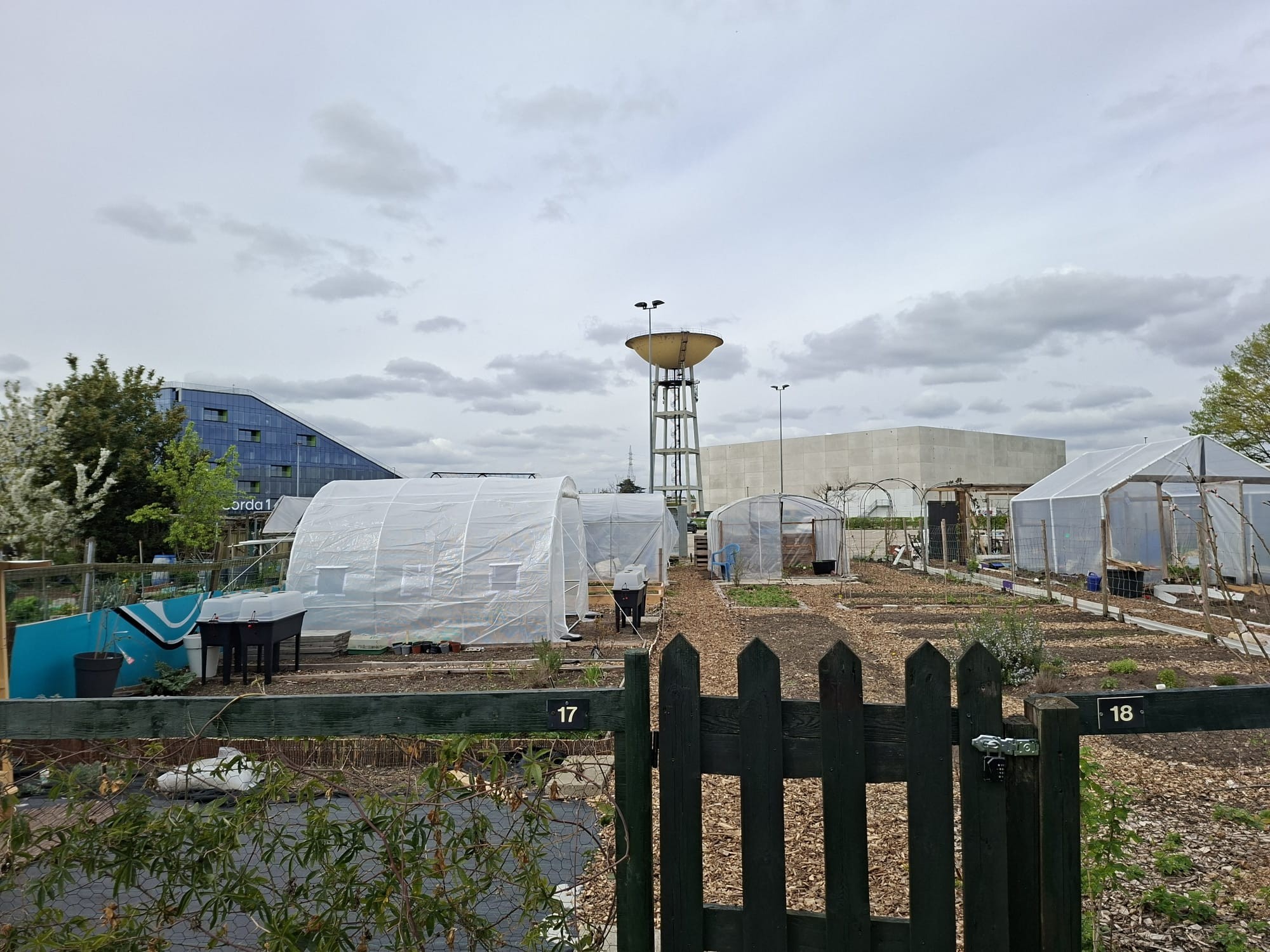
De volkstuinen van Banneux (Hasselt) vormen al jaren een bijzondere plek waar buurtbewoners samen tuinieren, composteren, kennis delen over plantensoorten en hierdoor een sterke sociale dynamiek opbouwen. Tegelijk staan deze groene ruimtes vandaag voor nieuwe uitdagingen. Materialen (zoals golfplaten, plastic zeilen, kunststof borderranden…) die jaren geleden gebruikt zijn voor het bouwen van constructies (zoals serres, tuinhuisjes en compostbakken) of het afbakenen van de volkstuinen zijn langzaamerhand aan het verduren, met ecologische gevolgen voor de bodem. Hoe kunnen de volkstuinen van Banneux duurzamer transformeren? Welke ruimtelijke ingrepen zijn er nodig om de bodem - de hoeksteen van de volkstuinen - zorgzamer op te nemen in dit transitieproces? Welke rol kan architectuur hierin opnemen?
Vanuit deze vraagstelling nodigt dit Live Project masterstudenten (interieur)architectuur uit om samen met de beheerders (Tuinvrienden VZW) en de tuinierders van de volkstuinen ontwerpend onderzoek te voeren naar duurzame alternatieven voor de volkstuinen. Hiervoor werken studenten aan twee concrete interventies: een duurzame compoststructuur voor de volkstuinen en een boombrug (of eekhoornbrug) die de ecologische verbinding met het bosgebied naast de tuinen versterkt. Participatief en duurzaam ontwerpen vanuit menselijke (tuinierders) en meer-dan-menselijke perspectieven (bodem, water, eekhoorns…) staan hierin centraal.
Hoe kan een compostbak uitgroeien tot een architecturaal, zorgvuldig ontworpen element dat circulaire processen zichtbaar maakt en een compostsysteem in de volkstuinen ondersteunt? Hoe kan een boombrug uitgroeien tot een architecturaal, zorgvuldig ontworpen element dat bewustzijn creëert rond lokale biodiversiteit en ecologische netwerken vanuit de volkstuinen zichtbaar maakt?
Experiment en participatie staan centraal in dit Live Project waarin kleine interventies katalysatoren vormen voor een grootschaligere, duurzame transitie van de volkstuinen.
Begeleiding: Leen Vansteenkiste
Partners: Tuinvrienden van Banneux (Alain Devroo)
Locatie: Volkstuinen van Banneux, Hasselt
Slotpresentatie: 02.10.2026, 16.00 - 16.40 (2 x 20 min)
Genk - Hacking for Caring: Samen de energietoekomst ontwerpen
In het Live Project van dit jaar gaan we verder waar het Live Project van vorig jaar, "Hack-the-Sun", ophield. Masterstudenten Architectuur en Interieurarchitectuur van UHasselt werken opnieuw samen met middelbare scholieren van Atlas College Genk om praktisch aan de slag te gaan met energie en duurzaamheid. Samen stellen jullie een simpele maar lastige vraag: hoe kunnen we energietransities begrijpelijk, beheersbaar en de moeite waard maken in het dagelijks leven in Genk?
Gedurende twee weken vindt het project zowel plaats op de campus in Diepenbeek als in Genk. In plaats van masterstudenten te vragen al het veldwerk zelf te doen, ligt de focus dit jaar op het ontwerpen van manieren waarop middelbare scholieren de belangrijkste schakel kunnen worden met de bredere gemeenschap. Samen zullen de teams tools, prikkels en tastbare communicatievormen ontwikkelen die jongere studenten helpen om vragen over energie, duurzaamheid en het dagelijks leven mee te nemen naar hun eigen huis en familiegesprekken.
Dit kan gaan om brieven, doe-het-zelfpakketten voor thuis, kleine opdrachten, interviewvragen of andere objecten die middelbare scholieren kunnen gebruiken met ouders, verzorgers en familieleden. Op deze manier wil het project verder reiken dan het klaslokaal en onderzoeken hoe leren over energie zich kan verspreiden via bestaande relaties van vertrouwen en zorg.

Tegelijkertijd blijft het project praktijkgericht en ontwerpgestuurd. Deelnemers gaan aan de slag met 'gehackte' materialen en prototypes, waarbij eventueel wordt teruggegrepen naar eerdere ideeën zoals de zonneboiler, de zonne-oven of de zonnedroger. Daarnaast creëren ze nieuwe installaties of interactievormen die voortvloeien uit wat ze door deze uitwisselingen leren.
Een speciale focus ligt dit jaar ook op de manier waarop de samenwerking vorm krijgt. Masterstudenten helpen niet alleen bij het vormgeven van materialen en ruimtes, maar ondersteunen ook hoe communicatie, verantwoordelijkheid, onzekerheid en zorg binnen de groep worden gedeeld. Geleid door een eenvoudige reflectietool van 5 stappen zullen de teams reflecteren op wat er is gebeurd, wat spanning of motivatie teweegbracht, hoe mensen reageerden en hoe het proces van koers veranderde.
Aan het einde van het project heeft de groep samen installaties en communicatietools gecreëerd die energievraagstukken zichtbaar en bespreekbaar maken in Genk. Minstens even belangrijk is dat ze hebben onderzocht hoe ontwerp kan helpen om ideeën over te dragen tussen generaties — van school naar het gezinsleven — en hoe zorg ingebouwd kan worden in zowel het proces als de resultaten.
Begeleiding: Asli Kolbas
Partners: Atlas College Genk
Locatie: UHasselt Campus Diepenbeek en Genk
Slotpresentatie @ Atlas College: 02.10.2026, 12.30 - 12.50
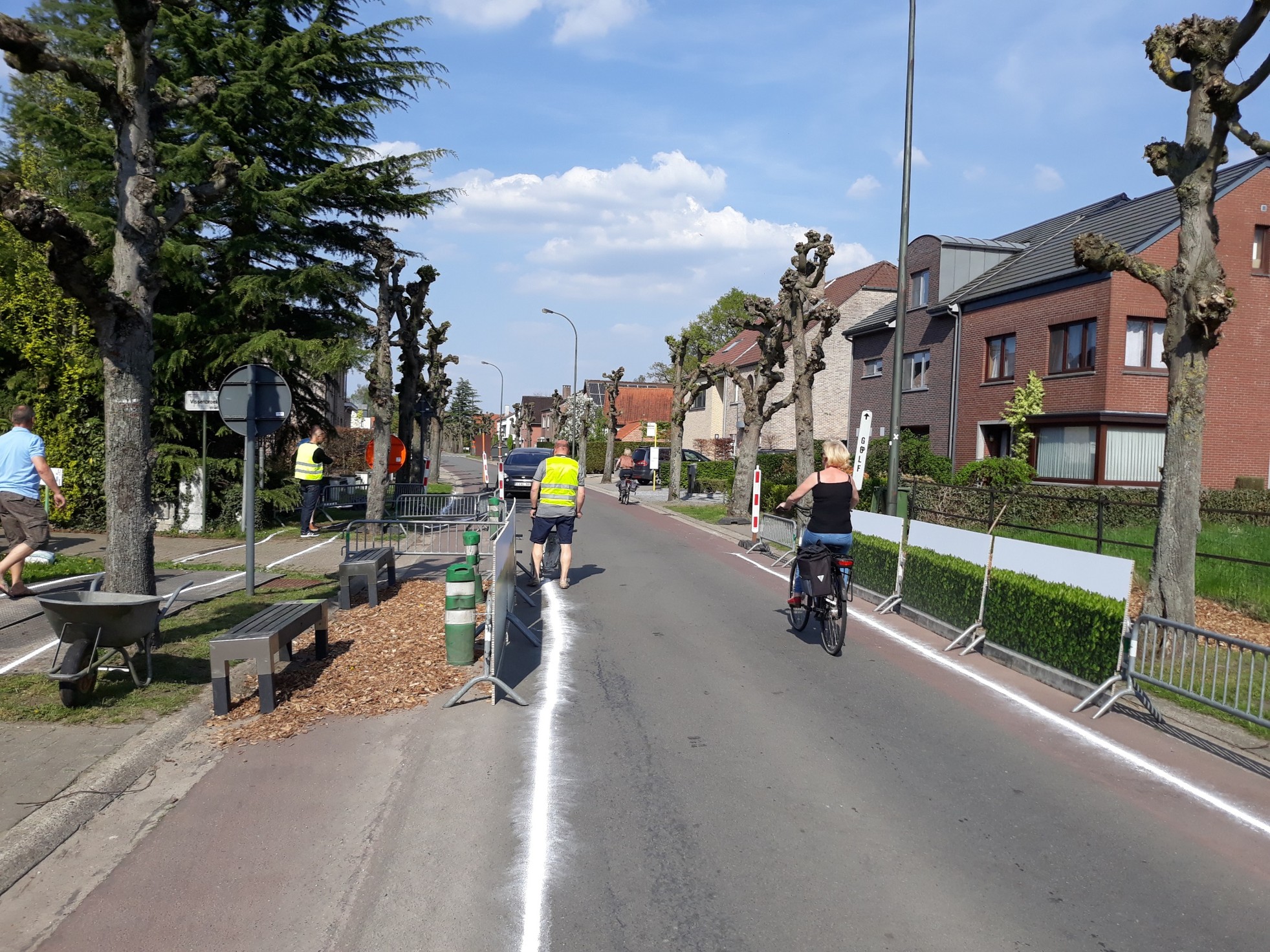
Hasselt - Werken aan wijken - Heilig Hartwijk Hasselt
Tussen 2020 en 2021 werkten bewoners van de Heilig Hartwijk samen aan het verbeteren van de leefbaarheid in hun wijk. Dat leidde tot verschillende ingrepen in de verkeerssituatie en ideeën voor de heraanleg van de publieke ruimte.
Recent werd, op initiatief van de stad en met steun van de wijkraad, een bewonerscollectief opgestart dat verder wil werken aan de toekomst van de wijk. Vanuit die groep kwam ook de vraag om samen na te denken over mogelijke acties en nieuwe manieren van gebruik van de publieke ruimte.
Dit live project focust op jongeren en hoe zij de Heilig Hartwijk vandaag gebruiken of in de toekomst zouden willen gebruiken. Door de nabijheid van Campus HAST zijn veel jongeren aanwezig in de wijk tijdens middagpauzes en na schooltijd. Voor sommige bewoners zorgt dit voor overlast, terwijl anderen net kansen zien voor meer leven in de wijk en extra klanten voor lokale handelszaken.
Via observatie, gesprekken, mapping en kleine experimenten onderzoekt het live project hoe verschillende gebruikers en belangen samenkomen in de wijk. Samen met bewoners, lokale actoren en de stad verkennen studenten mogelijke scenario’s en ideeën voor een meer gedeeld en aangenaam gebruik van de publieke ruimte.
Begeleiding: Oswald Devisch & Ankit Singh
Partners: Werkgroep Mobiliteit Heilig Hartwijk, Stad Hasselt, campus Hast,
Locatie: Heilig Hartwijk, Hasselt
Taal: Engels
Slotpresentatie: 01.10.2026, 14.00 - 14.20
Houthalen - Lentedreef - Van transitruimte naar gedeeld gebruik
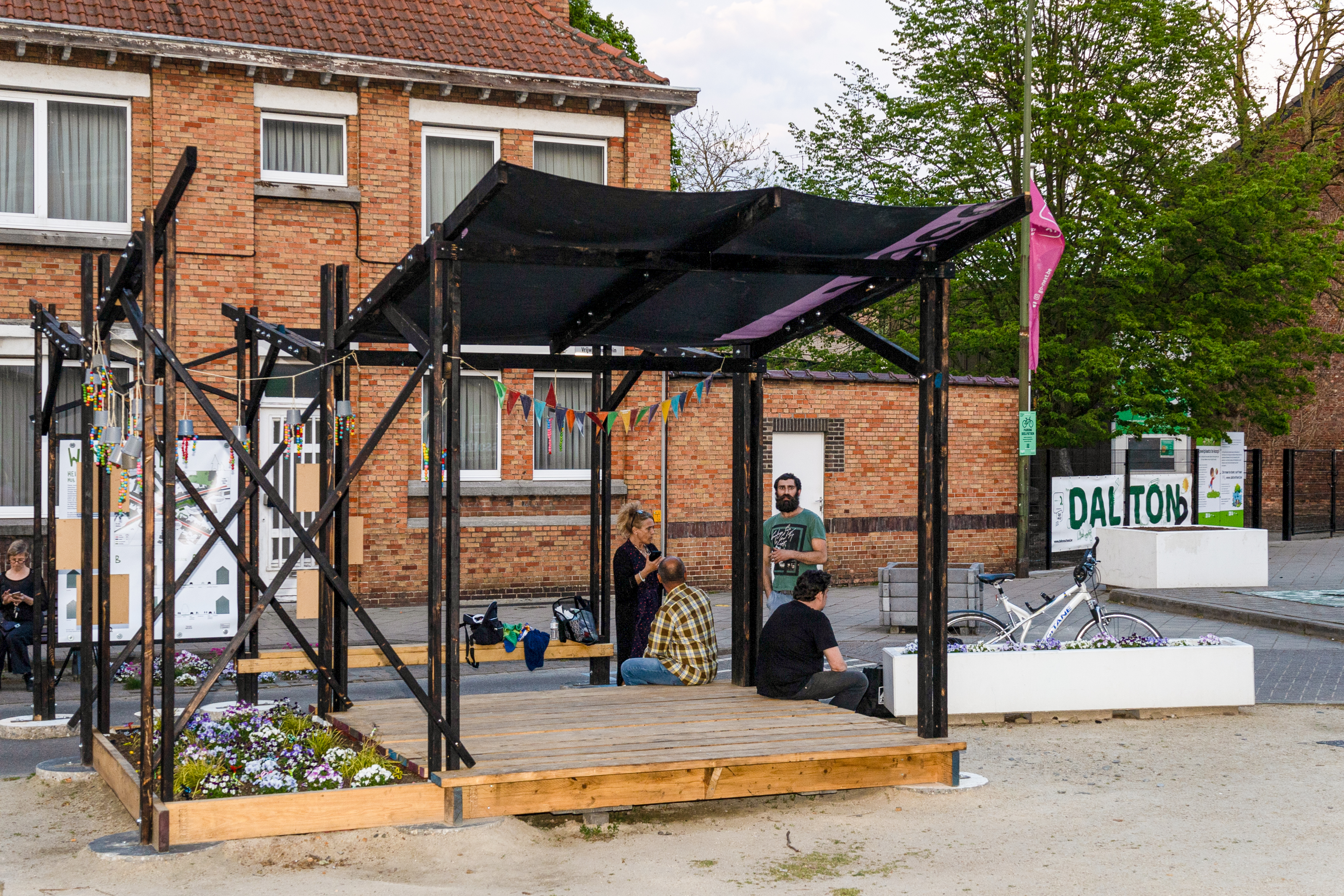
Dit live project onderzoekt hoe een toekomstig mobipunt in de Lentedreef kan functioneren als meer dan een mobiliteitsknooppunt alleen. Vanuit observatie, participatie en ruimtelijke analyse wordt samen met bewoners en lokale actoren onderzocht welke sociale en ruimtelijke condities vandaag aanwezig zijn, welke ontbreken en welke kansen bestaan om de plek te ontwikkelen als gedeelde publieke ruimte.
Het project vertrekt vanuit de vraag hoe dagelijkse ontmoeting, verblijf en informeel gebruik opnieuw een plaats kunnen krijgen binnen infrastructuur die traditioneel vooral functioneel wordt benaderd. Door middel van mapping, tijdelijke interventies en collectieve verkenning worden bestaande gebruikspatronen en potentiële vormen van toe eigening zichtbaar gemaakt.
Het live project fungeert daarbij als experimentele leeromgeving waarin mobiliteit, publieke ruimte en sociale infrastructuur samen worden onderzocht in relatie tot de ruimtelijke transities binnen Houthalen-Oost.
Begeleiding: Liese Mertens
Partners: Gemeente Houthalen-helchteren, Tractebel, lokale handelaars, GO! basisschool Park van Genk
Locatie: Lentedreef in Houthalen-Oost
Slotpresentatie: 01.10.2026, 16.30 - 16.50
Houthalen - Lindeplein - Publieke ruimte in spel
Dit live project onderzoekt hoe spel kan functioneren als ruimtelijke en sociale conditie binnen het Lindeplein in Houthalen-Helchteren. Het plein bevindt zich op het kruispunt van verschillende dagelijkse gebruikers en functies, waaronder de kerk, school, horeca, sportsite en culturele infrastructuur. Tegelijk blijven veel interacties gefragmenteerd of tijdelijk.
Het project onderzoekt niet spel als afzonderlijke activiteit, maar als mechanisme dat bestaande gebruikspatronen tijdelijk kan openbreken en sociale interactie zichtbaar maakt. Daarbij staat de vraag centraal welke ruimtelijke en sociale condities nodig zijn om publieke ruimte te laten functioneren als gedeeld en relationeel speelveld.
Het plein wordt benaderd als een experimentele publieke ruimte waarin via observatie, participatie en tijdelijke ruimtelijke interventies onderzocht wordt hoe ontmoeting, spel en collectief gebruik opnieuw zichtbaar en actief kunnen worden in het dagelijkse leven van het dorp. Het live project wil zo inzicht bieden in de relatie tussen publieke ruimte, sociale infrastructuur en alledaagse interactie binnen dorpscontexten in transitie.
Begeleiding: Liese Mertens
Partners: Gemeente houthalen-helchteren, kerkfabriek, lokale handelaars, Gemeentelijke gemengde lagere school De Griffel
Locatie: Lindeplein in Houthalen-Oost
Slotpresentatie: 01.10.2026, 16.00 - 16.20
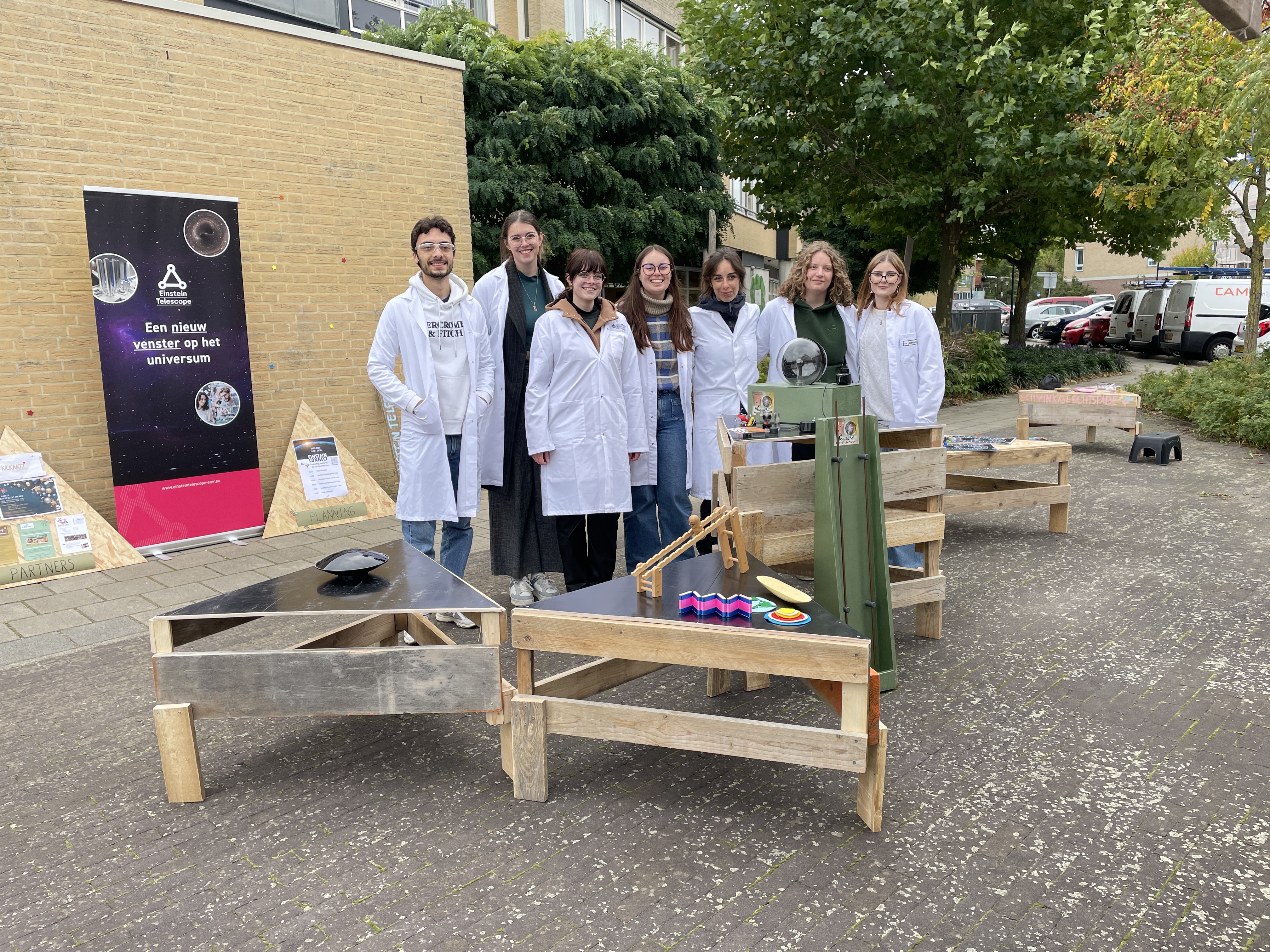
Euregio Maas-Rijn - Einstein Telescope: Regenerative Futures in Voeren
Dit Live Project onderzoekt hoe de toekomstige Einstein Telescope kan bijdragen aan regeneratieve landschappen en gemeenschappen in de Voerstreek – Grenzeloos Bocageland. Samen met onderzoekers, lokale actoren en gemeenschappen onderzoeken studenten hoe ruimtelijke interventies, storytelling en scenografische tools kunnen helpen om mogelijke toekomsten rond het Einstein Telescope-traject te verbeelden.
Het project is georganiseerd in twee trajecten:
- Scenografie Groep – Regeneration
Deze groep onderzoekt hoe ideeën rond regeneratie en de Einstein Telescope ruimtelijk gecommuniceerd en beleefd kunnen worden. In plaats van één locatiespecifieke interventie uit te werken, werken studenten met scenografie en ruimtelijke storytelling om thema’s zoals landschap, ecologie, wetenschap en gemeenschap te vertalen naar een publieke ervaring.
De groep werkt samen met lokale bibliotheken en community partners aan ruimtelijke installaties, storytelling tools of collectieve ervaringen die de regeneratieve ambities van het project tastbaar maken voor een breed publiek.
- Scenariogroepen – Restore / Connect / Transform
Elke groep werkt op een specifieke locatie en met een specifieke gemeenschap binnen het Einstein Telescope-onderzoeksgebied in Voeren. Studenten ontmoeten partners die betrokken zijn bij het ET-traject, waaronder landschapsarchitecten Heusschen-Copier.
De groepen werken rond één van drie regeneratieve scenario’s die binnen het project werden ontwikkeld: Restore, Connect en Transform.
Studenten verkennen het landschap, gaan in gesprek met lokale gemeenschappen — waaronder landbouwers, jeugdorganisaties en lokale erfgoed- en landschapsactoren rond Val Dieu en de wandelnetwerken in de regio — en onderzoeken kritisch welke ruimtelijke strategieën het best aansluiten bij de lokale context. Via workshops, terreinwerk en collectieve momenten ontwikkelt elke groep een ruimtelijke interventie of prototype verbonden aan hun scenario.
Begeleiding: Violeta Tsenova, Dolores Van den Eynde en Louise Mazet
Partners: Heusschen-Copier, lokale gemeenschappen en organisaties in Voeren
Locatie: Euregio Maas-Rijn
Slotpresentatie @ Begijnhof: 02.10.2026, 10.10 - 10.50 (2 x 20 min)
Diepenbeek - Embracing the Outdoors
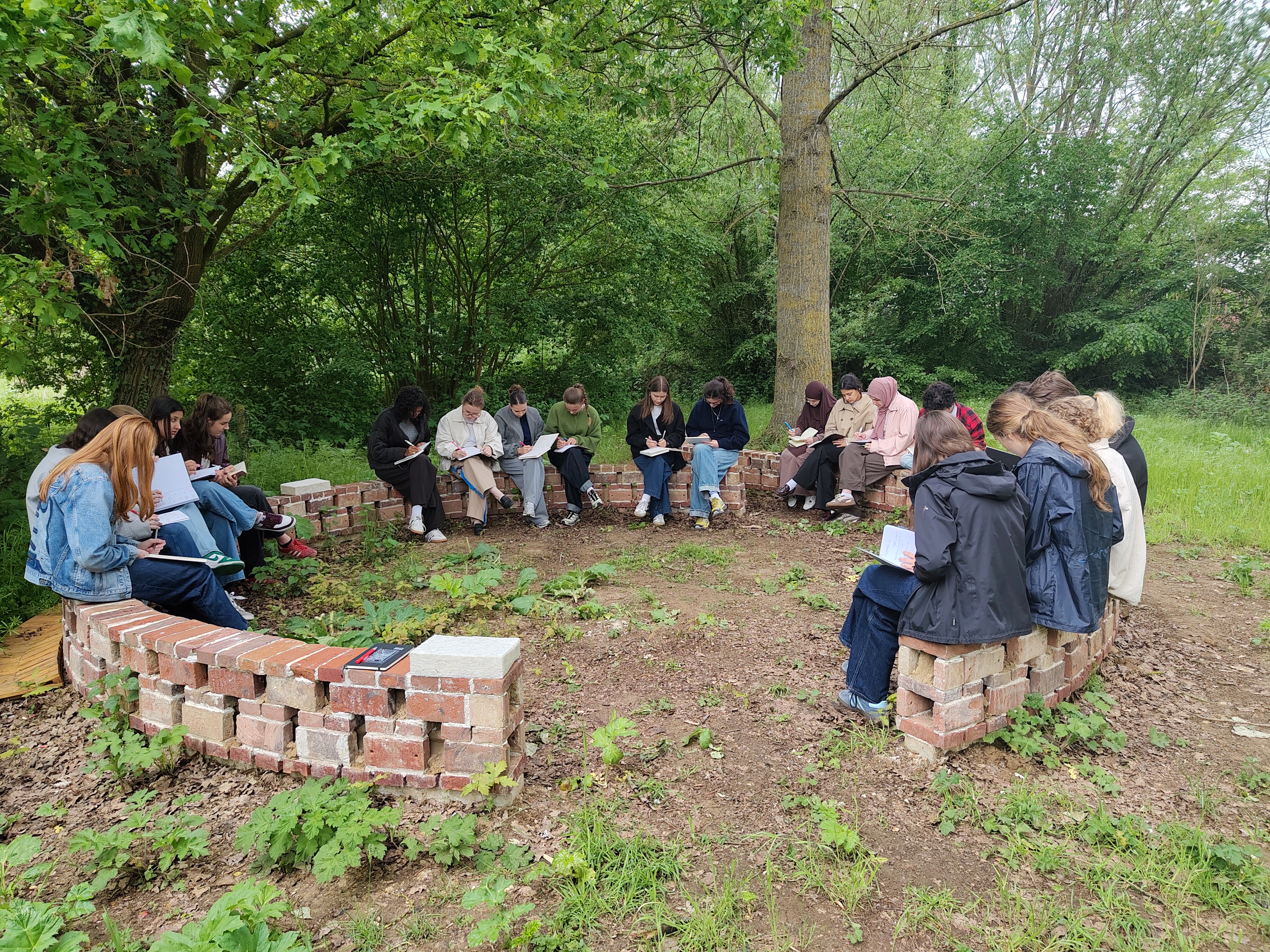
Dit Live Project bouwt verder op het IOP Seduced by Nature, waarin in AJ 25-26 verschillende buitenleerplekken werden ontworpen en gerealiseerd op en rond de campussen van UHasselt. Waar de focus in de eerste fase lag op het ontwikkelen en bouwen van deze plekken, verschuift de aandacht in dit Live Project naar hun daadwerkelijk gebruik en activering. Deze plekken zijn geen afgewerkte objecten, maar open en evoluerende leeromgevingen die pas betekenis krijgen door gebruik en interactie.
Tijdens dit Live Project onderzoek je hoe deze plekken worden gebruikt en ervaren. Door middel van observaties, interviews en mapping breng je bestaande gebruikspatronen, drempels en kansen in kaart. Vervolgens richt het onderzoek zich op het ontwikkelen van strategieën die deze toe-eigening mogelijk maken en versterken. Je gaat in dialoog met potentiële gebruikers en verkent hoe de buitenleerplekken zichtbaarder, toegankelijker en betekenisvoller kunnen worden bin het dagelijkse gebruik van de campus. Het eindresultaat ontstaat uit het proces zelf en kan verschillende vormen aannemen, gaande van het ontwikkelen van gebruiksscenario’s tot communicatieve of ruimtelijke ingrepen. Op die manier wordt het activeren van de buitenleerplekken zelf het centrale onderwerp van het project.
Begeleiding: Griet Verbeeck, Emmeline Hoogland, John Silvertand & Frank Vanden Ecker
Partner: UHasselt
Locaties: campus Diepenbeek, Hasselt
Slotpresention: 02.10.2026, 14.20 - 15.00 (2 x 20 min)
Diepenbeek - Holding Space for Biodiversity
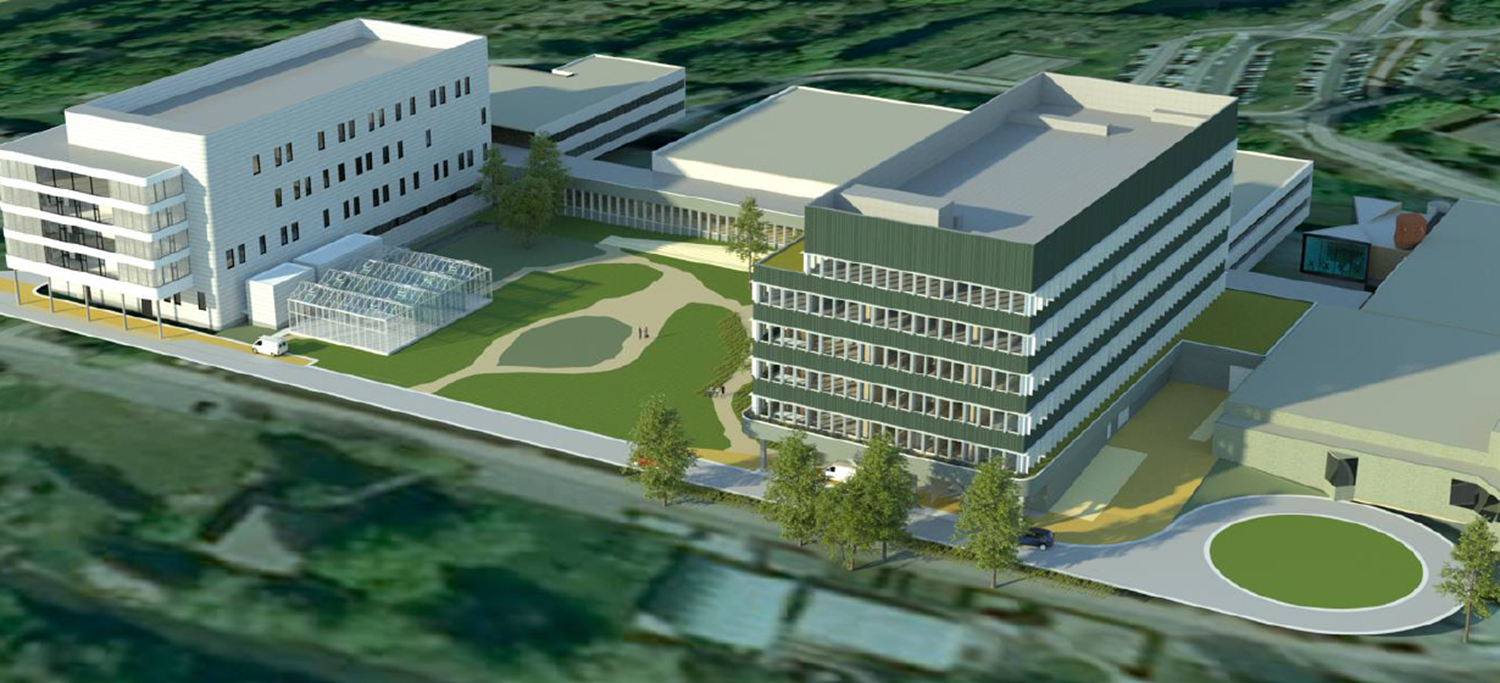
Dit Live Project focust op de rol van biodiversiteit in de verdere ontwikkeling van campus Diepenbeek, en dit voor een concrete ruimtelijke situatie: de zone die vrijkomt tussen de bestaande Science Tower en de toekomstige STEM-toren. Het project anticipeert op deze toekomstige transformatie en de inzichten en voorstellen die tijdens het Live Project worden ontwikkeld, kunnen een waardevolle input vormen voor de verdere concrete uitwerking en uitvoering van het project.
Tijdens het Live Project onderzoek je welke rol biodiversiteit kan spelen in de transformatie van deze plek. Daarbij wordt aandacht besteed aan zowel de aanwezige kwaliteiten als de potentiële verbindingen met de bredere campus en haar menselijke en niet-menselijke gebruikers. De focus ligt op het ontwikkelen van ruimtelijke strategieën die ecologische processen ondersteunen en tegelijk aansluiten bij het dagelijks gebruik van de campus.
De resultaten worden vertaald in duidelijke en communicatieve visualisaties die tonen hoe de plek zich in de toekomst kan ontwikkelen. Hierbij staat niet één oplossing centraal, maar een reeks mogelijke scenario’s die inspelen op verschillende ambities. Dit kan gaan van het ontwerpen van habitats voor meer dan menselijke soorten tot het integreren van vegetatie en het nadenken over water, bodem en gebruik.
Het Live Project benadert biodiversiteit niet als een bijkomende laag, maar als een structurerend principe dat richting geeft aan ontwerp, gebruik en beleving van de campus. Op die manier draagt het project bij aan een bredere reflectie over de rol van ontwerp in het versterken van levende systemen binnen onze academische context.
Begeleiding: Griet Verbeeck & John Silvertand
Partners: facilitaire diensten en werkgroep biodiversiteit UHasselt, Natuurpunt Diepenbeek
Locaties: campus Diepenbeek, Hasselt
Slotpresentie: 02.10.2026, 13.30 - 14.10 (2 x 20 min)
Live Projecten academic year 2026 - 2027
Hasselt - Atlas of Ruins
When does a building become a ruin? At what moment does architecture lose its function and status as a usable object, becoming instead a fragment of something that once was? And if a process of decay is interrupted through reuse, consolidation or design, does it remain a ruin — or does a new architectural condition emerge?
In this Live Project, we use these questions to challenge and redefine the notion of the ruin itself. We will explore Hasselt as an atlas of visible and latent ruins: abandoned buildings, residual spaces, sites in transition, and environments where use, time, nature and human traces intersect. Through walking, observation, documentation and conversations with residents, students will develop an alternative reading of the city as a dynamic landscape of forgotten, unfinished and transforming spaces.
At the same time, the workshop experiments with different modes of architectural representation. How can drawings, collages, mappings or scenographic techniques make processes of decay, use and time visible? How can representation move beyond documentation to speculate, interpret and generate new meanings?
The workshop combines field research, architectural representation and spatial experimentation. Together, we will develop a collective Atlas of Ruins culminating in a scenographic installation for the exhibition Z33 Building Ruins, presented at Z33 and the Beguinage.
Guidance: Bie Plevoets & Liene Jakobsone
Partner: Architectuurwijzer
Location: Begijnhof
Presentation: 02.10.2026, 9.00 - 10.00 (3 x 20 min)
Hasselt - Pukkelpop Costumes in North-South Limburg: a parade for reconnecting the west and east
This Live Project builds on the forty-year history of Pukkelpop and the dense volunteering networks that sustain it. During the festival, the closure of the Kempische Steenweg temporarily transforms the street from a traffic corridor into a shared space of encounter, cooperation, and festivity, reconnecting the west and east sides of Kiewit.
Rather than understanding this transformation as a short-lived disruption, the project approaches it as a spatial and social condition worth learning from. Pukkelpop operates through a complex and mutually beneficial relationship between organisers, volunteers, residents, local associations, and public institutions, while simultaneously sustaining long-term social bonds and forms of local belonging.
The central question of the project is: How can the ephemeral atmosphere and social qualities of Pukkelpop become more present in everyday life?
The workshop builds on three previous research trajectories: (1) observations by the Noord-Zuid research team on how people dress, move, and inhabit the streets during Pukkelpop. (2) the Live Project (September 2025), which mapped everyday circulation and spatial transitions along the Vijversstraat. (3) the workshop week (March 2026), which documented how Kiewit VZW volunteers collectively reorganise mobility and public life around the festival.
The Live Project adopts a performative and scenographic approach. Students will work with tools from performance, costume, and spatial design to create a collective parade to “reconnect” the two sides of Kiewit.
Guidance: Nikolas Kanavaris
Guest Lecturer/Project Collaborator: Marco De Francesca, PhD researcher, Politecnico Di Milano
Partners: Studio Noord-Zuid Limburg, Kiewit VZW (local theatre/performance groups)
Location: Begijnhof Hasselt
Language: English
Presentation: 01.10.2026, 15.00 - 15.40 (2 x 20 min)
Hasselt - Living Labs Beguinage - Traces in Timber - Built To Unbuild
“What if a construction could be assembled and dismantled without leaving a trace, without wasting a single usable element?"
The Beguinage of Hasselt is a space in the making — a Living Lab developing step by step, in which you participate not as spectators, but as makers. The church ruin, the disappearing pond, and the interplay between presence and absence invite you to reflect on architecture consciously designed to appear and disappear again.
Solid timber elements such as CLT and glulam are remarkably underrepresented in Flemish architecture programs, despite being among the most relevant and sustainable building systems of our time. During this Live Project, you will explore the logic of demountable timber connections — from traditional Japanese joinery to contemporary mechanical systems — and translate these principles into a temporary yet considered intervention at various scales.
In collaboration with Rothoblaas, a market leader in high-tech connection systems for solid timber, and OpenStructures, the open source modular construction system by designer Thomas Lommée, you will investigate how components can be designed to be assembled, dismantled, and reused without loss of quality. Through mock-ups and demonstrations, you will actively integrate this knowledge into your own design.
The final result is a built intervention on the Beguinage site: a temporary structure that activates the place and makes a statement, yet can afterward disappear without a trace.
The Living Lab offers an alternative space for gathering, outside the academic setting, open to fellow students, local residents, and interested visitors. The final output can go beyond drawings or models — think workshops or spatial activations.
Begeleiding: Aaron Van Acker, Josymar Rodriguez Alfonzo
Partners: UHasselt, Rothoblaas, OpenStructures
Location: Begijnhof Hasselt
Presentation: 02.10.2026, 11.00 - 11.40 (2 x 20 min)
Hasselt - Ecologies of Compost
For years, the allotments in Banneux (Hasselt) have been a shared space where local residents garden, compost, and share knowledge of plant species, thereby fostering a strong sense of community. At the same time, these green spaces face new challenges. Materials (such as corrugated sheets, plastic edging…) used to build structures (such as greenhouses, garden sheds and compost bins) or to demarcate the allotments are gradually deteriorating, with ecological consequences for the soil. How can the allotments in Banneux be transformed more sustainably? What spatial interventions are needed to incorporate the soil – the cornerstone of the allotments – more thoughtfully into this transition process? What role can architecture play in this?
Based on these questions, this Live Project invites (interior) architecture students to conduct design research into sustainable alternatives for the allotments, in collaboration with the allotment gardeners. Therefore, we will work on two interventions: a sustainable compost structure for the allotments and a tree bridge (or squirrel bridge) that strengthens the ecological connection between the allotments and the nearby forest. Participatory and sustainable design from human (gardeners) and more-than-human perspectives (soil, water, squirrels…) are central to this Live Project.
How can a compost bin evolve into an architectural, carefully designed element that visualises circular processes and supports a composting system? How can a tree bridge evolve into an architectural, carefully designed element that raises awareness of local biodiversity and makes ecological networks visible?
Experimentation and participation are central to this Live Project, in which small-scale interventions act as catalysts for a larger-scale, sustainable transition of the allotments.
Guidance: Leen Vansteenkiste
Partners: Tuinvrienden van Banneux (Alain Devroo)
Location: Volkstuinen van Banneux, Hasselt
Presentation: 02.10.2026, 16.00 - 16.40 (2 x 20 min)
Genk - Hacking for Caring: Samen de energietoekomst ontwerpen
In this year’s Live Project, we pick up where last year’s Live Project, “Hack‑the‑Sun” left off. Master students in Architecture and Interior Architecture at UHasselt will again team up with high school students from Atlas College Genk to work hands‑on around energy and sustainability. Together, you will ask a simple but difficult question: how can we make energy transitions feel understandable, manageable and worth caring about in everyday life in Genk?
Over two weeks, the project will take place both on campus in Diepenbeek and in Genk. Rather than asking master students to do all the field engagement themselves, this year the focus is on designing ways for high school students to become the key link to the wider community. Together, the teams will develop tools, prompts, and tangible communication formats that help younger students bring questions about energy, sustainability, and daily life into their homes and family conversations.
This may include letters, take-home kits, small assignments, interview prompts, or other objects that high school students can use with parents, caregivers, and relatives. In this way, the project aims to reach further than the classroom and explore how learning about energy can travel through existing relationships of trust and care.
At the same time, the project remains hands-on and design-driven. Participants will work with hacked materials and prototypes, possibly revisiting earlier ideas such as the solar boiler, solar oven, or solar dryer, while also creating new installations or interaction formats that emerge from what they learn through these exchanges.
A special focus this year is also on how collaboration is held together. Master students will not only help shape materials and spaces, but also support how communication, responsibility, uncertainty, and care are shared across the group. Guided by a simple 5-step reflection tool, the teams will reflect on what happened, what triggered tension or motivation, how people responded, and how the process changed course.
By the end of the project, the group will have co-created installations and communication tools that make energy issues visible and discussable in Genk. Just as importantly, they will have explored how design can help ideas move across generations, from school into family life, and how care can be built into both the process and the outcomes.
Guidance: Asli Kolbas
Partners: Atlas College Genk
Locations: UHasselt Campus Diepenbeek & Genk
Presentation @ Atlas College: 02.10.2026, 12.30 - 12.50
Hasselt - Werken aan wijken - Heilig Hartwijk Hasselt
Between 2020 and 2021, residents of the Heilig Hartwijk in Hasselt worked together on improving the liveability of their neighbourhood. This resulted in several interventions in the traffic situation and ideas for redesigning public space.
Recently, with support from the city and the neighbourhood council, a residents’ collective was established to continue working on the future of the area. The collective also approached us with the question of how new actions and forms of shared use could be explored together.
This live project focuses on young people and how they currently use — or would like to use — the Heilig Hartwijk. Due to the nearby Campus HAST, many students spend time in the neighbourhood during lunch breaks and after school hours. While some residents experience this as a source of nuisance, others see opportunities for more activity in the neighbourhood and increased business for local shops and cafés.
Through observation, conversations, mapping and small-scale experiments, the live project explores how different users and interests come together in the neighbourhood. Together with residents, local actors and the city, students will investigate possible scenarios and ideas for a more shared and enjoyable use of public space.
Guidance: Oswald Devisch & Ankit Singh
Partners: Mobility Working Group Heilig Hartwijk, City of Hasselt, Neighbourhood Council Heilig Hartwijk
Location: Heilig Hartwijk, Hasselt
Presentation: 01.10.2026, 14.00 - 14.20
Houthalen - Lentedreef - Van transitruimte naar gedeeld gebruik
This live project explores how a future mobility hub in the Lentedreef can function as more than merely a mobility node. Through observation, participation and spatial analysis, residents and local actors collaboratively investigate which social and spatial conditions are currently present, which are lacking, and which opportunities exist to develop the site as a shared public space.
The project starts from the question of how everyday encounter, lingering and informal use can regain a place within infrastructure that is traditionally approached in primarily functional terms. Through mapping, temporary interventions and collective exploration, existing patterns of use and potential forms of appropriation are made visible.
The live project functions as an experimental learning environment in which mobility, public space and social infrastructure are explored together in relation to the ongoing spatial transitions within Houthalen-Oost.
Guidance: Liese Mertens
Partners: Gemeente Houthalen-helchteren, Tractebel, lokale handelaars, GO! basisschool Park van Genk
Location: Lentedreef in Houthalen-Oost
Presentation: 01.10.2026, 16.30 - 16.50
Houthalen - Lindeplein - Publieke ruimte in spel
This live project explores how play can function as a spatial and social condition within the Lindeplein in Houthalen-Helchteren. The square is situated at the intersection of various daily users and functions, including the church, school, horeca, sports facilities and cultural infrastructure. At the same time, many interactions remain fragmented or temporary.
Rather than approaching play as a separate activity, the project investigates play as a mechanism that can temporarily disrupt existing patterns of use and make social interaction visible. Central to the project is the question of which spatial and social conditions are needed for public space to function as a shared and relational playground.
The square is approached as an experimental public space in which observation, participation and temporary spatial interventions are used to explore how encounter, play and collective use can once again become visible and active within the daily life of the village. In this way, the live project aims to generate insight into the relationship between public space, social infrastructure and everyday interaction within villages in transition.
Guidance: Liese Mertens
Partners: Gemeente houthalen-helchteren, kerkfabriek, lokale handelaars, Gemeentelijke gemengde lagere school De Griffel
Location: Lindeplein in Houthalen-Oost
Presentation: 01.10.2026, 16.00 - 16.20
Euregio Maas-Rijn - Einstein Telescope: Regenerative Futures in Voeren
This Live Project explores how the future Einstein Telescope can contribute to regenerative landscapes and communities in the Voeren region - Grenzeloos Bocageland. Working together with researchers, local actors and communities, students will investigate how spatial interventions, storytelling and scenographic tools can help imagine possible futures connected to the Einstein Telescope trajectory.
The project is organised in two trajectories:
- Scenography Group – Regeneration
This group focuses on how ideas of regeneration and the Einstein Telescope can be communicated and experienced spatially. Rather than developing a single site-specific intervention, students will work through scenography and spatial storytelling to explore how themes such as landscape, ecology, science and community can be translated into an engaging public experience.
The group will collaborate with local libraries and community partners to develop spatial installations, storytelling tools or collective experiences that make the regenerative ambitions of the project tangible for a broader audience. - Scenario Groups – Restore / Connect / Transform
Each group will work on a specific location and community within the Einstein Telescope research area in Voeren. Students will meet with partners involved in the ET trajectory, including landscape architects Heusschen-Copier. The groups will work around one of three regenerative scenarios developed within the project: Restore, Connect and Transform.
Students will explore the landscape, engage with local communities - including farmers, youth organisations, and local heritage and landscape actors around Val Dieu and the regional hiking networks - and critically investigate which spatial strategies best fit the local context. Through workshops, fieldwork and collective moments, each group will develop a spatial intervention or prototype connected to their scenario.
Guidance: Violeta Tsenova, Dolores Van den Eynde & Louise Mazet
Partners: Heusschen-Copier, lokale gemeenschappen en organisaties in Voeren
Location: Euregio Maas-Rijn
Presentation @ beguinage: 02.10.2026, 10.10 - 10.50 (2 x 20 min)
Diepenbeek - Embracing the Outdoors
This Live Project builds upon the IOP Seduced by Nature, in which various outdoor learning spaces were designed and realized on and around the UHasselt campuses during the AJ 2025-2026 academic year. While the focus in the first phase was on developing and constructing these spaces, attention in this Live Project shifts to their actual use and activation. These spaces are not final objects, but open and evolving learning environments that only gain meaning through use and interaction.
During this Live Project, you will investigate how these spaces are used and experienced. Through observations, interviews, and mapping, you will identify existing usage patterns, barriers, and opportunities. Subsequently, the research focus shifts to developing strategies that enable and strengthen this appropriation. You will engage in dialogue with potential users and explore how the outdoor learning spaces can become more visible, accessible, and meaningful within the daily use of the campus. The final result emerges from the process itself and can take various forms, ranging from developing usage scenarios to communicative or spatial interventions. In this way, activating the outdoor learning spaces themselves becomes the central subject of the project.
Guidance: Griet Verbeeck, Emmeline Hoogland, John Silvertand & Frank Vanden Ecker
Partner: UHasselt
Locations: campus Diepenbeek, Hasselt
Presention: 02.10.2026, 14.20 - 15.00 (2 x 20 min)
Diepenbeek - Holding Space for Biodiversity
This Live Project focuses on the role of biodiversity in the further development of campus Diepenbeek, for a concrete spatial situation: the zone becoming available between the existing Science Tower and the future STEM Tower. The project anticipates this future transformation, and the insights and proposals developed during the Live Project can provide valuable input for the further concrete elaboration and implementation of the project.
During the Live Project, you will investigate the role biodiversity can play in the transformation of this site. Attention will be paid to both the existing qualities and the potential connections with the broader campus and its human and more-than-human users. The focus is on developing spatial strategies that support ecological processes while simultaneously aligning with the daily use of the campus.
The results will be translated into clear and communicative visualisations showing how the site can develop in the future. The focus here is not on a single solution, but on a series of possible scenarios that address various ambitions. This can range from designing habitats for species other than human to integrating vegetation and considering water, soil, and land use. The Live Project approaches biodiversity not as an additional layer, but as a structuring principle that guides the design, use, and experience of the campus. In this way, the project contributes to a broader reflection on the role of design in strengthening living systems within our academic context.
Guidance: Griet Verbeeck & John Silvertand
Partners: facilities services and working group biodiversity UHasselt, Natuurpunt Diepenbeek
Locations: campus Diepenbeek, Hasselt
Presention: 02.10.2026, 13.30 - 14.10 (2 x 20 min)