Public Defence Doctoral Thesis: Nusrat Ritu
Nusrat Ritu has the pleasure to invite you to the defence of her doctoral thesis:
Reading between the Rooms: Expressions of Reuse in Lived Interiors
About the defence
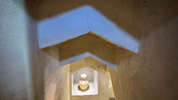
This doctoral research, titled Reading between the Rooms: Expressions of Reuse in Lived Interiors, examines how interior reuse can be read when it emerges through lived practices, inherited spatial habits, and gradually evolving forms of user agency. Within the dominant discourse of adaptive reuse, historical interiors are often approached through their formal authorship and design interventions. Yet, many interiors continue to gather meaning through less-visible processes of everyday occupation, maintenance, accumulated memory, and the gradual adjustments by which people make space inhabitable. This research begins from the premise that such processes require a more careful language of reading and adopts the term “lived interiors” to define their significance in the reuse discourse.
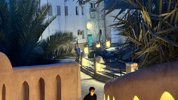
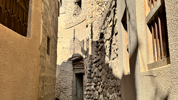
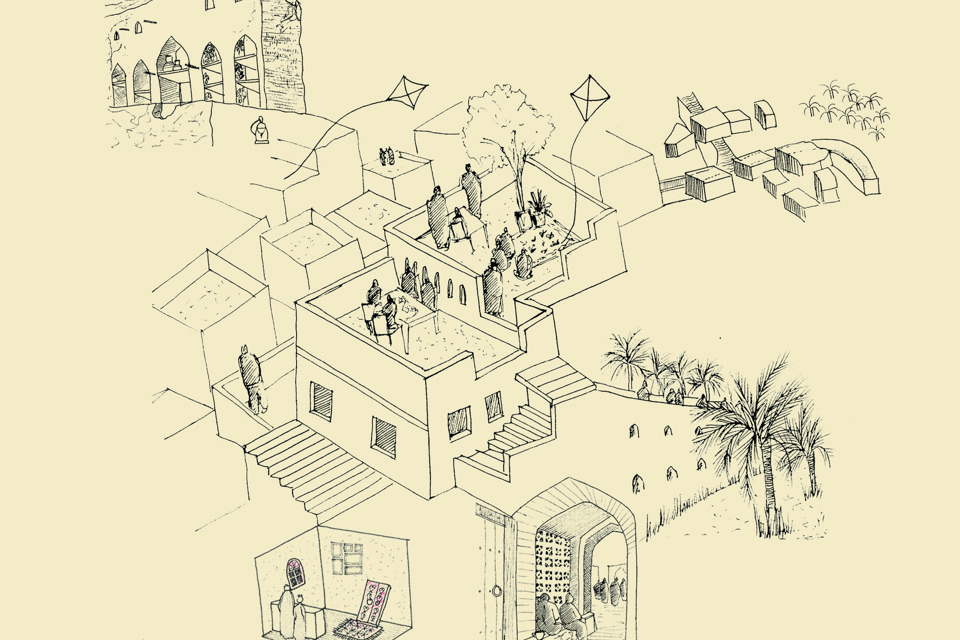
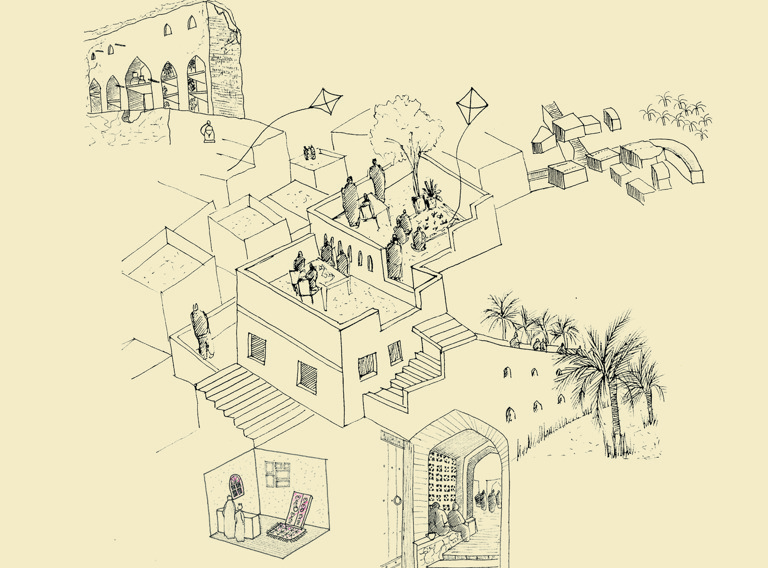
The thesis, therefore, develops a methodology for documenting and articulating Expressions of Reuse. Drawing from Christopher Alexander’s A Pattern Language, Bernard Rudofsky’s Architecture Without Architects, and Lina Bo Bardi’s empathetic reading of ordinary spatial culture in the essays of Stones Against Diamonds, the research proposes a way to read and document reuse that captures the intangible layers and embedded sociocultural frameworks that shape its continuation. The methodology is developed through the case study of Harat-al-Aqr, a historic quarter in Nizwa, Oman, where a recent community-led revival has reactivated its urban fabric of dwellings, ruins, shared thresholds, agricultural lands and shared infrastructure.
Through repeated fieldwork, site observation, photography, sketching, mapping, informal conversations, archival research, and pedagogical testing with students in Oman and Belgium, the thesis translates the quarter’s lived reality into a vocabulary of expressions of reuse. These expressions are organised as reuse actions, community habits, and cultural drivers, moving from tangible interventions to the social and cultural forces that sustain them. They reveal how reuse in Harat-al-Aqr is shaped by relationships among dwellings and landscapes, interiors and their thresholds, residents and visitors, and long-standing traditions and contemporary needs.
Rather than presenting Harat-al-Aqr as a model to be replicated elsewhere, the thesis offers the methodology developed through this site as a transferable way of reading reuse. It allows incremental, informal, and vernacular forms of reuse to enter the discourse with greater critical attention, while preserving their specificity, contradictions, and openness. In doing so, the research contributes to interior architecture by positioning the lived interior as a site where accumulated memory, user agency, and continued transformation can be read as part of reuse itself.
Date and location
- Friday December 4th 2026
- 14h00 - 16h00: Defence
- the defence can be attended in person or followed online
- faculty of Architecture and Arts, Building E, Agoralaan, 3590 Diepenbeek - room E-B4
Registration
More information