
Public Defence Doctoral Thesis: Oliva Gonda
Oliva Gonda has the pleasure to invite you to the defence of her doctoral thesis:
The socio-economic effects of solar photovoltaic (pv) technology on rural agriculture - a systems thinking approach.
About the defence
This study examines the socio-economic effects of solar photovoltaic water pumping systems (SPVWPS) on rural agricultural livelihoods in mainland Tanzania, with a focus on understanding how institutional frameworks, stakeholder dynamics and community interact to shape outcomes across irrigation and livestock keeping contexts. Specifically, the study examines the institutional framework and drivers shaping the planning, implementation and adoption of SPVWPS for productive use in agriculture, analyses their socio-economic effects across irrigation and livestock keeping contexts, and develops a conceptual framework for enhancing the productive use of SPVWPS in rural areas.
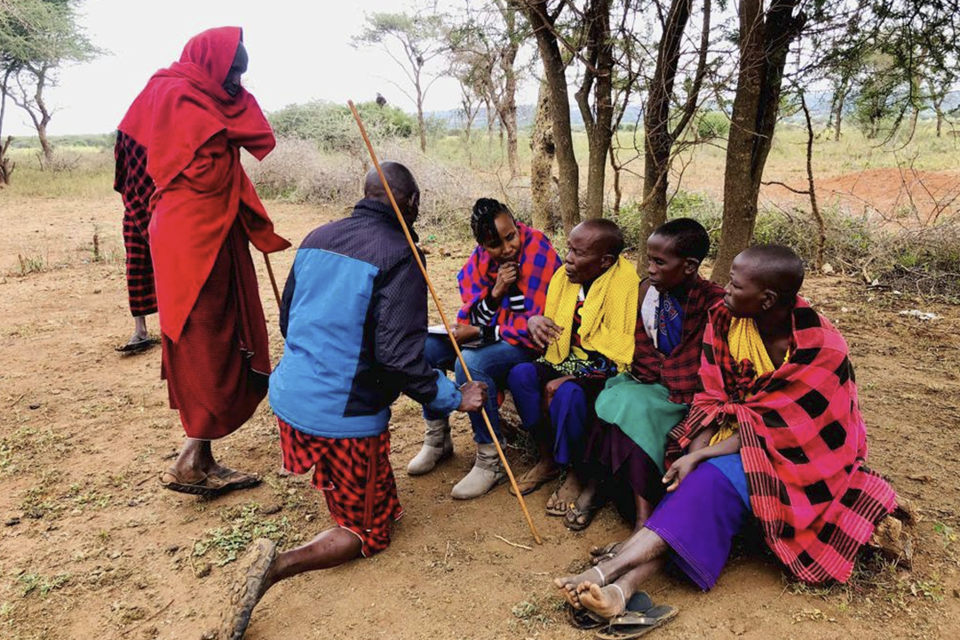
The study employs concurrent mixed methods design grounded in systems thinking theory, integrating qualitative data from semi-structured interviews, focus group discussions with quantitative survey and field observations across three purposively selected case study areas in Iringa and Dodoma for irrigation, and Manyara for livestock keeping. System Dynamics (SD) methodology is applied to construct Causal Loop Diagrams (CLDs) that map the feedback relationships among the economic, social and institutional factors shaping SPVWPS uptake and socio-economic effects. A pilot study refined the research focus from off-grid solar mini-grids to SPVWPS for agricultural productive use, and data were analysed using NVivo 12 Plus for qualitative analysis and SAS software for quantitative descriptive statistical analysis.
The findings reveal that SPVWPS generate multidimensional socio-economic effects that extend beyond energy provision alone. Economically, solarisation improves agricultural productivity through increased crop yields, expanded cultivated areas and crop diversification, whilst reducing operating costs and generating additional household income through water sales and employment creation. Socially, SPVWPS deliver important benefits including time savings, improved hygiene, food security, social cohesion and knowledge and exposure to modern agricultural practices. These effects are context-dependent, however, and mediated by governance, market access, community organisational capacity and sociocultural dynamics, conditions that vary significantly across the three case study areas. Furthermore, the study finds that the delivery of SPVWPS is characterised by a fragmented institutional landscape rooted in weak structural governance, overlapping mandates among REA, RUWASA, NIRC and district councils, and the absence of standardised solar planning requirements within local government systems. Whilst Tanzania's national frameworks broadly endorse solar PV for productive use, this strategic coherence does not extend to the operational level where sector budgets, procurement standards and local development plans do not consistently specify solar-powered systems as the default design option for off-grid rural infrastructure. The policy alignment matrix developed in this study confirms that resolving institutional fragmentation requires sectoral harmonisation across vertical and horizontal regulatory dimensions.
The study concludes that effective rural solarisation requires a hybrid governance approach that balances top-down and bottom-approaches, and that policy harmonisation across vertical, horizontal, regulatory dimensions is essential for enhancing solarisation in rural areas. A conceptual framework for enhancing SPVWPS in rural areas comprising three reinforcing and balancing loops grounded in empirical evidence is proposed to guide policy makers, energy planning and implementation. The study proposes a systemic intervention that strengthen stakeholder relationships across hierarchical levels to enhance the productive use of SPVWPS in rural agriculture and accelerate progress towards multiple Sustainable Development Goals across Sub-Saharan Africa (SSA).
Promotors
- Prof. dr. ir. arch. Griet Verbeeck (UHasselt)
- Prof. dr. Wilbard Kombe (ARDHI)
Co-promotors
- Prof. dr. Wim Deferme (UHasselt)
- Dr. Sarah Phoya (ARDHI)
Date and location
- Dinsdag November 24th 2026
- 14h00 - 16h00: Defence
- faculty of Architecture and Arts, Building E, Agoralaan, 3590 Diepenbeek - room E-B20