
The Microfiche Reader: A Window onto Knowledge in Miniature
Anyone who now browses digital archives with ease can scarcely imagine that research once began by threading a film strip beneath a heavy metal hood. The microfiche reader - with its lamp, lenses, and projection screen - served for decades as the bridge between the past and the researcher.
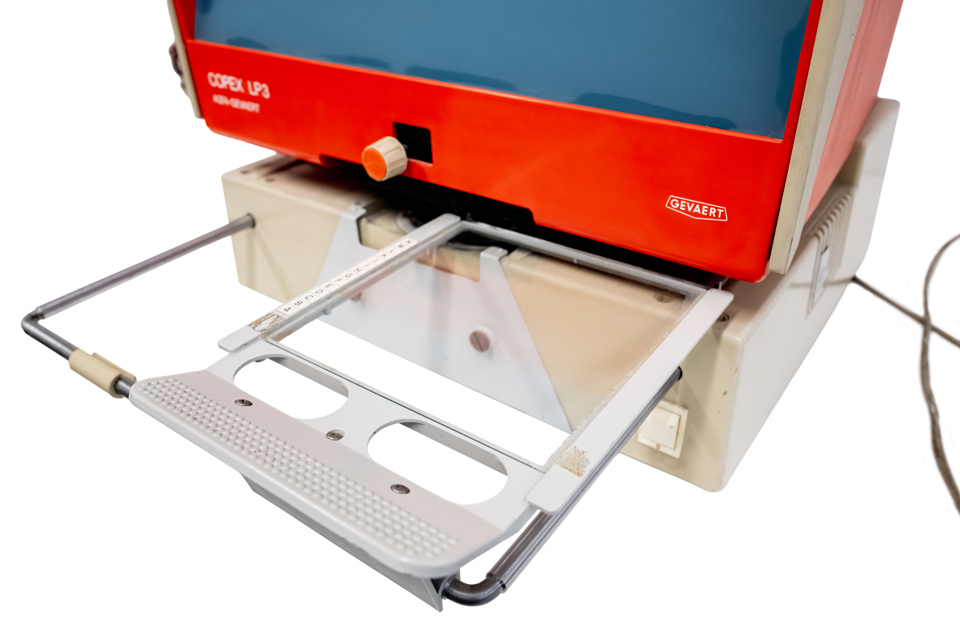
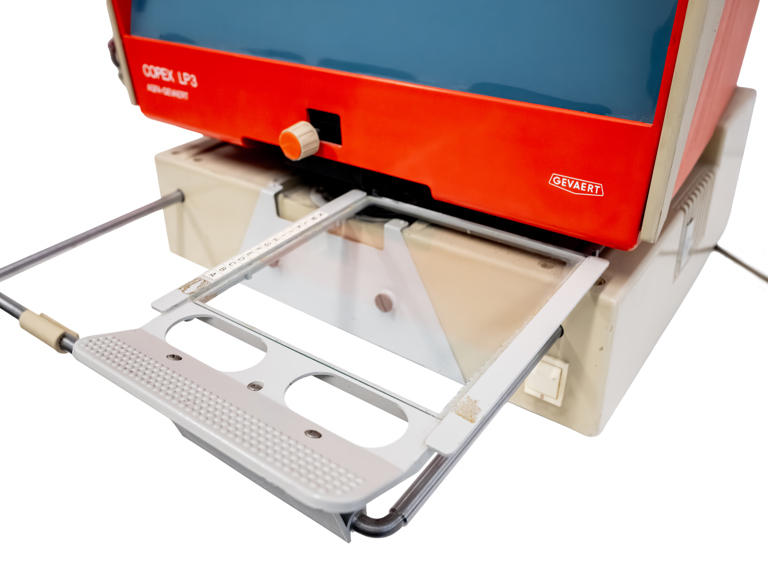
In libraries and archives, the microfiche reader provided access to newspapers, manuscripts, and journals that were too bulky, too valuable, or too fragile for everyday handling. At the touch of a button, a miniature page would appear life-size on the screen, after which the user could scroll and adjust the focus, quite literally illuminating the past.
How a microfiche reader works
A microfiche reader enlarges images stored on microfiches: small transparent sheets of film. Inside the machine, a lamp shines through the fiche, and a lens enlarges and projects the image onto a matte screen. By moving the fiche manually, the user can leaf through the pages. Some models also have a printer for making instant paper copies of selected fragments.
The promise of miniature knowledge
Microfilm and microfiche reached their peak in the twentieth century, long before the digital age. Governments, libraries, and research institutions used them on a massive scale to store large document collections compactly and safely. A single fiche or reel of film could contain thousands of pages while taking up only a fraction of the space of a bookcase. At the same time, fragile originals were spared. From medieval manuscripts to complete newspaper runs, everything could be photographed and preserved in miniature.
A cumbersome but faithful partner
Working with microfiches, however, required patience. Researchers had to go to a library or archive, request the correct fiche, and search through the material by hand. Taking notes was cumbersome, and the machine itself - often a large, unwieldy piece of equipment - took up a great deal of space. The film, moreover, could become scratched or stained, while the bright projection light accelerated wear. Careful handling was therefore essential.
From analogue to digital
Digitisation has now largely displaced microfilm and microfiche. Scanners convert old films into digital images that can be searched quickly. Optical character recognition (OCR) even makes it possible to recognise text within those images, including handwritten material.
For universities and archives, the microfiche reader has therefore acquired a new role: no longer as a working device, but as a heritage object. It tells the story of how, before the digital age, access to knowledge was organised through technical ingenuity. It shows that even in a world without search bars or Wi-Fi, vast systems of information existed - built out of light, lenses, and film.


