AI with a Human Face: What Erik Brynjolfsson Taught Us About Smarter, Kinder Machines
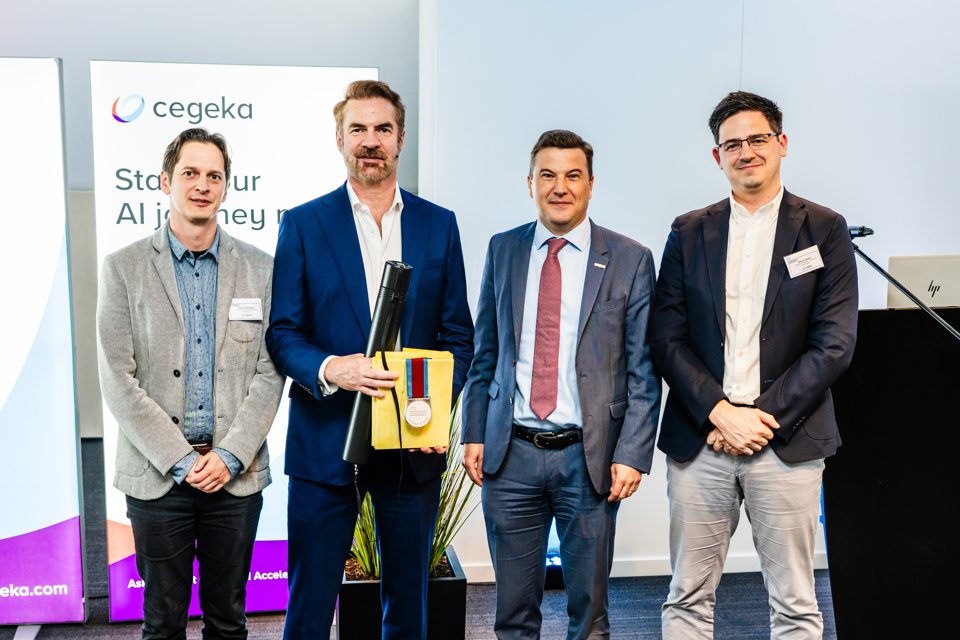
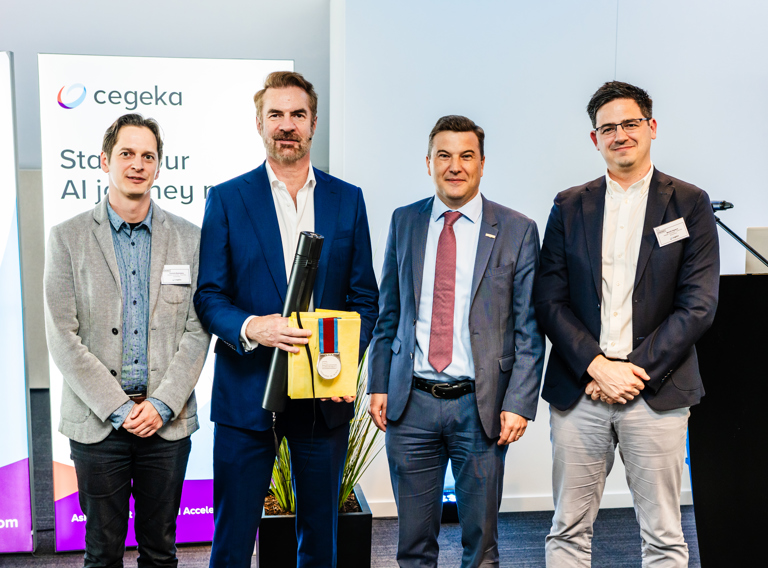
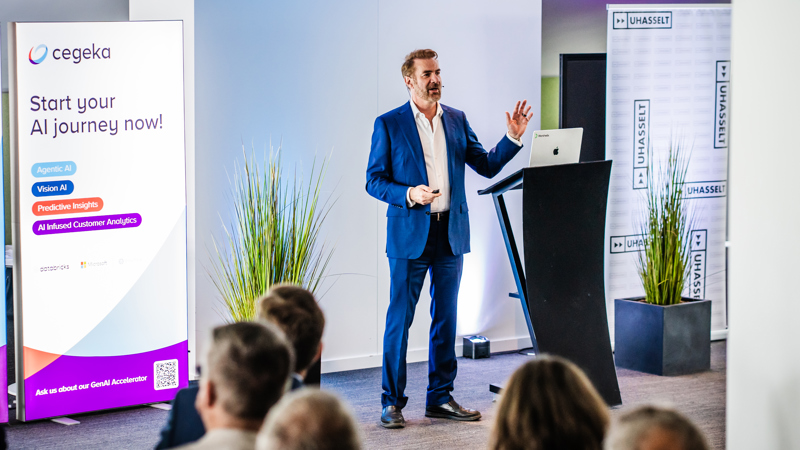
What do radiologists, parking apps, and burnout prevention have in common? They were all part of the conversation when our Faculty of Business Economics UHasselt awarded an honorary doctorate to Stanford professor and AI thought leader Erik Brynjolfsson. At Corda Campus, with students, researchers, and tech insiders in the crowd, Brynjolfsson gave a keynote that was equal parts inspiring and cautionary tale. The message? AI doesn’t have to steal your job—or your soul. It can actually make work better. And with UHasselt and Cegeka leading the charge, that future might be closer (and more local) than you think.
Erik Brynjolfsson vs. the Robot Takeover
If your idea of AI involves robots replacing everyone at work while humans sip sad coffee in unemployment lines—Brynjolfsson has good news. That’s not inevitable. In his keynote, he warned against what he calls the Turing Trap: the tendency to build machines that mimic humans instead of helping them. History shows that automation alone tends to concentrate wealth and opportunity, while augmentation spreads the benefits. So instead of designing AI that tries to be you, we should build tools that boost you—your creativity, your judgment, your very human weirdness. Smarter tech and smarter humans? Now that’s a power couple.
AI4Business – Helping Humans and Algorithms Work Together
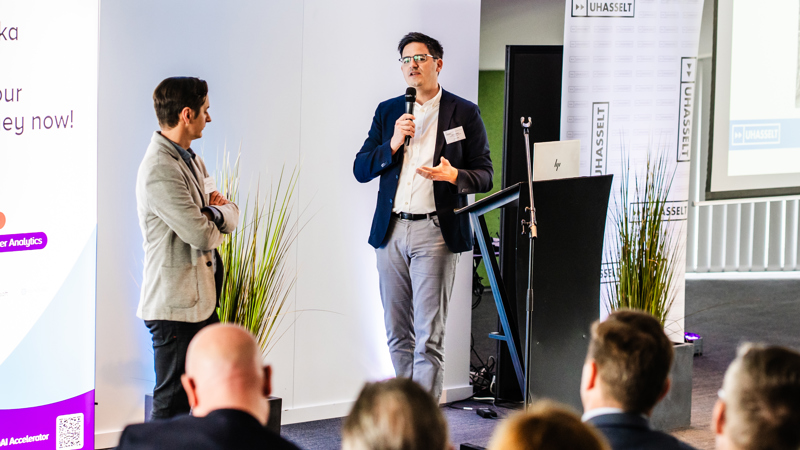
Luckily, this isn’t just TED Talk material. At our Faculty of Business Economics, professors Yannick Bammens and Benoît Depaire are putting theory into action with AI4Business—a research cluster that helps local companies use AI without losing sleep (or control). Their secret sauce? Mixing business brains, IT savvy, and local know-how to help SMEs move from “Should we be doing something with AI?” to “Wow, this actually works.” From pilot projects to practical frameworks, they’re making AI adoption less buzzwordy and more business-savvy. Because let’s face it: not every firm has a PhD in machine learning—or wants one. But everyone could use a digital sidekick.
UHasselt’s Take – Keep It Smart, Keep It Human
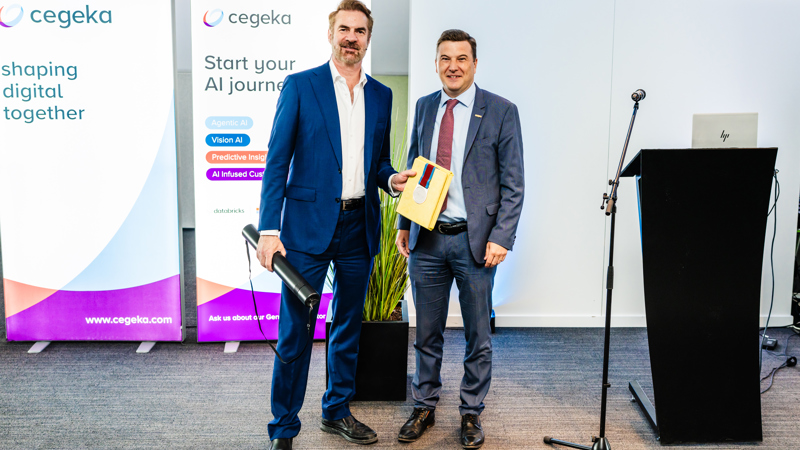
UHasselt isn’t just cheering from the sidelines. Rector Bernard Vanheusden opened the event by reminding everyone: technology might be fast, but ethics, laws, and social trust take their time. And universities? We're in it for the long haul. We don’t just build knowledge—we launch it into action. Whether it’s teaching students to ask the right (and uncomfortable) questions or helping policymakers and entrepreneurs navigate uncharted waters, we’re here to make sure AI doesn’t just scale—but scales well. Because progress without principles is just… a really fast mess.
Cegeka’s AI – All Brains, No Black Box
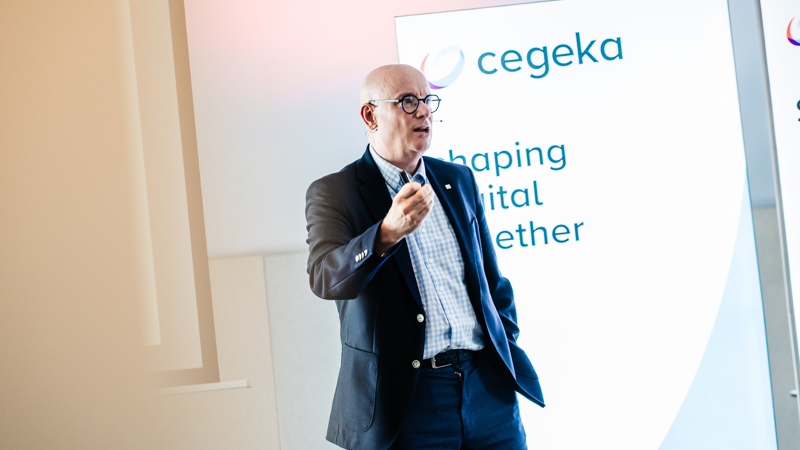
Enter Cegeka, the tech partner in this event, who showed that being AI-driven doesn’t mean losing your moral compass. VP of Data and AI Gregory Verlinden laid out their “AI Balanced Journey”—a fancy name for “Let’s innovate without freaking people out.” Their tools tackle everything from smart energy grids to mental well-being apps, and they come with guardrails: transparency, explainability, kill switches (yes, really). Because nothing says “We’ve thought this through” like a big red off-button. Their message? Responsible AI isn’t a buzzkill—it’s a business advantage. And if you're still thinking AI is only for Silicon Valley—think again.
Conclusion:
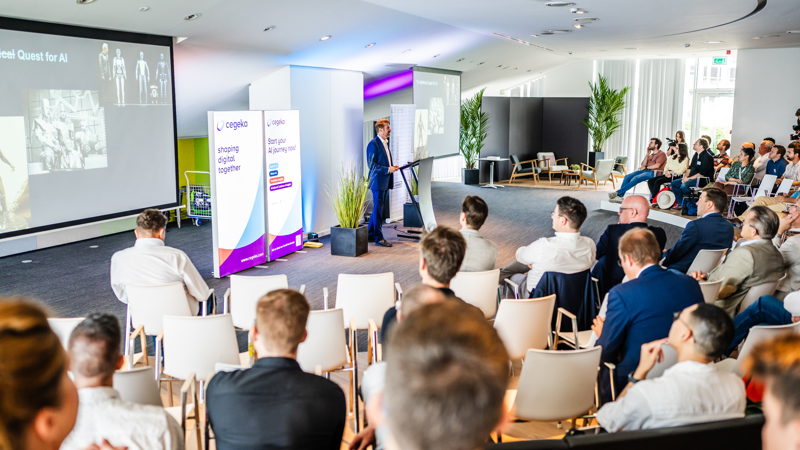
In the end, this wasn’t just an honorary doctorate handed over with a handshake and a smile (though yes, Professor Brynjolfsson did earn every bit of that recognition). It was a statement—about the kind of future UHasselt wants to help shape. One where AI doesn’t just live in code and algorithms, but actually improves how we work, live, and lead. With global thinkers, local innovators, and an audience full of curious minds, we didn’t just honour a brilliant career—we sparked a bigger conversation. One where the smartest thing about AI might just be how it helps us stay human.


